July 06, 2026 | by: Kuoda Authors


There is a moment, usually somewhere around the second day, when a family trip to Peru clicks. The kids stop asking about the wifi, someone spots their first llama, and the whole thing turns from a logistical worry into the trip everyone will still be talking about years later. Traveling Peru with kids is mostly a matter of design. Peru is a wonderful place to travel with children, but it is also high, big, and geographically complicated, and the gap between a magical family trip and an exhausting one comes down almost entirely to how the days are built.
Parents tend to arrive worried about the wrong things. The altitude is real and worth planning around, but it is manageable. The distances are long, but they can be made comfortable. What actually decides whether everyone has a good time is pace: matching the rhythm of the trip to the ages and energy in your particular family, and leaving enough downtime in the schedule so that nobody hits a wall. This is how we think about that, from the altitude down to the packing list.
Start Low: Managing Altitude with Kids
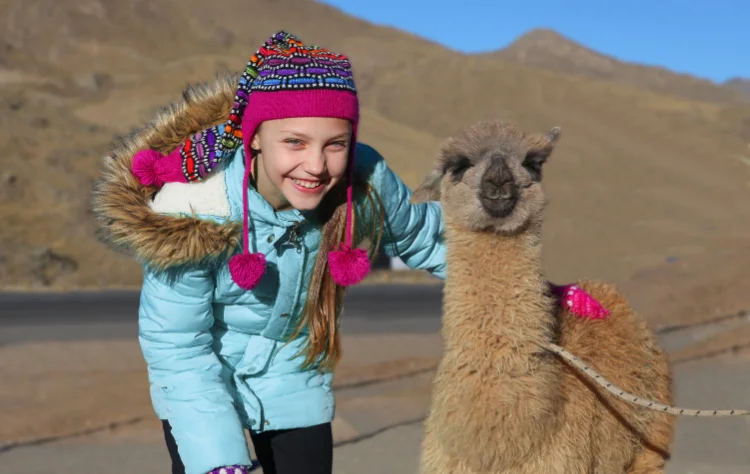
The single most useful thing to understand about Peru with children is that the famous places sit at very different heights, and the order you visit them in matters more than almost anything else. Cusco, where most people fly in, is the high one, at around 3,400 meters/ 11,000 feet. The Sacred Valley, half an hour down the road, is noticeably lower at roughly 2,800 meters/ 9,000 feet. And Machu Picchu itself, counterintuitively, is lower still, at about 2,430 meters, 8,000 feet. Many first-time visitors do exactly the wrong thing and overnight in Cusco the moment they land, not realizing that this could be made much more comfortable.
We flip that. For families, we almost always plan the first two or three nights in the Sacred Valley instead, letting everyone acclimatize gently at the lower elevation before heading up to Cusco later in the trip. It is a small change that prevents most of the headaches, literal and otherwise. Children actually tend to handle altitude reasonably well, but they are worse at telling you when something feels off, so the gentle approach matters more when they are along, not less.
Beyond the routing, the basics do the rest: arrive well hydrated, take the first day slow, skip the big hike on day one, and keep the local coca and muña tea on hand. If your itinerary climbs higher, to Lake Titicaca at around 3,800 meters/ 12,000 feet, we build that in later, once bodies have adjusted. Very young infants and altitude are worth a specific conversation with your pediatrician before you travel, and we are glad to design your itinerary around whatever they advise.
Pacing the Trip Around Your Children’s Ages
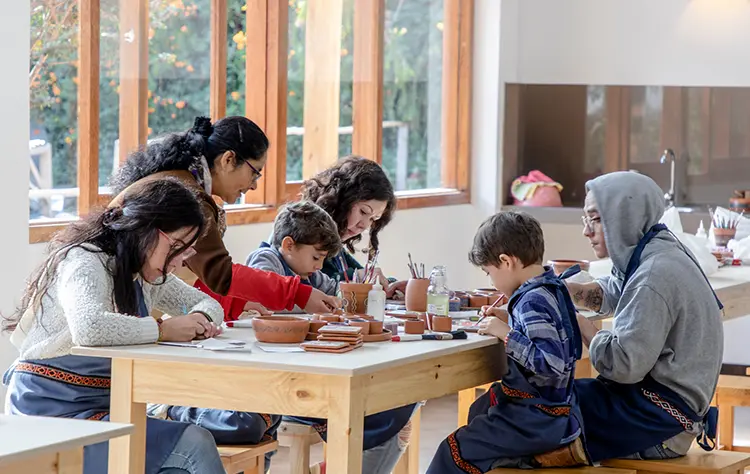
A seven-year-old and a fifteen-year-old want almost nothing in common from a holiday, and the fastest way to spoil a family trip is to pretend otherwise. For this reason, traveling Peru with kids works best when the itinerary is designed around the specific ages in the group rather than a generic “family” template. Younger children live for the hands-on and the tactile: shaping a pot that collapses twice before it holds, feeding an alpaca, pressing roasted cacao into chocolate. Teenagers usually want a challenge and a little independence, which the country supplies easily, whether that is mountain biking in the Sacred Valley, sandboarding the dunes near Ica, or a proper guided trek.
The other half of pacing is rest, and it is the part most itineraries skimp on. We build in unhurried mornings and deliberate downtime, because an archaeological site lands far better on a child who slept in than on one dragged out at dawn three days in a row. A good family day in Peru usually has one real anchor, a site or an activity, with room to breathe around it, rather than four things stacked back-to-back. The trip should have a heartbeat, not a checklist.
None of this means dumbing the country down. Children are perfectly capable of being gripped by a five-hundred-year-old fortress or a condor riding the thermals, as long as someone frames it as a story rather than a lecture. The art is in the framing and the timing, which is most of what we are doing behind the scenes. You can read more on the experiences themselves in The Best Things to Do in Peru.
The Experiences Children Actually Remember
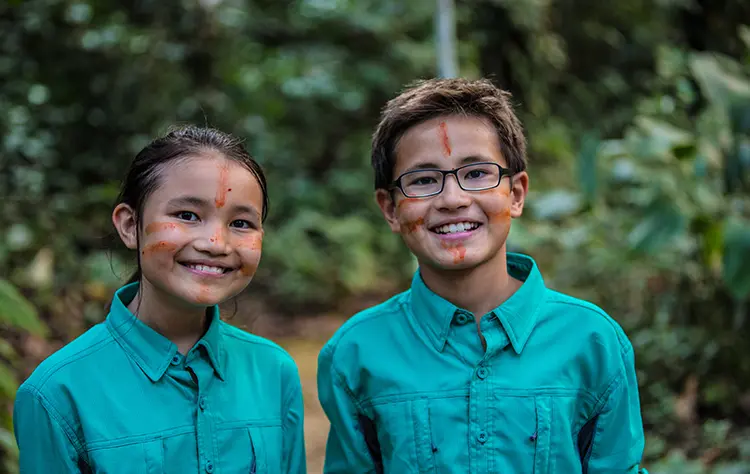
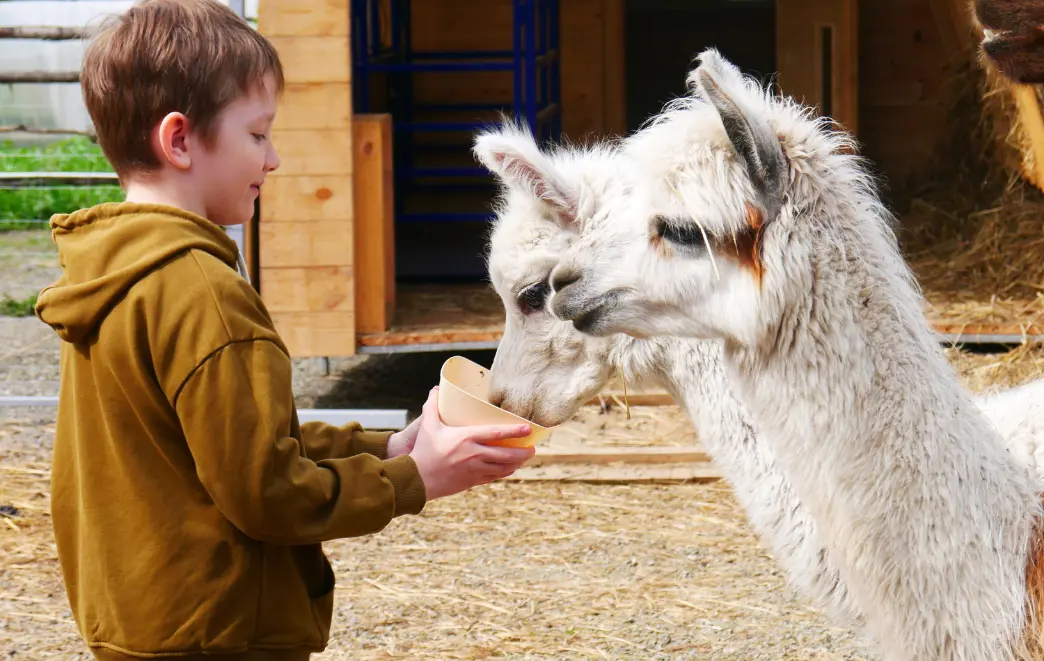
Ask a child a month after the trip what they loved, and it is almost never the thing on the postcard. It is the animals, the making, the moment they got to do something rather than look at it. Peru is unusually rich in exactly that. On the road between Cusco and Pisac, Awanakancha is a working llama and alpaca farm where kids can hand-feed the animals and watch weavers dye wool with plants and cochineal, a fascinating way to absorb how Andean textiles are made. Just outside Cusco, the Cochahuasi animal sanctuary shelters rescued Andean condors, spectacled bears, and pumas, and its conservation story lands hard with older children.
The making is just as powerful. A pottery workshop in the Sacred Valley, a chocolate session where they roast and grind the beans themselves, an afternoon learning a few weaving motifs from a community that has used them for centuries. These turn a passive trip into something a child feels ownership over. And the wildlife, if your itinerary reaches the Amazon or the Paracas coast, is the kind that rearranges a young imagination: giant otters and macaws in the Tambopata rainforest, sea lions and Humboldt penguins on a boat around the Ballestas Islands. We cover both regions in Peru Beyond Machu Picchu.
And what brings it all together is the guide. A field guide who can turn natural history into a treasure hunt, or a cultural guide who pitches the history at a twelve-year-old’s level without talking down, is worth more than any single site. We match families specifically with the guides who are good with children, because that pairing, more than the itinerary on paper, is what the trip actually runs on.
Family-Friendly Stays and the Logistics That Vanish
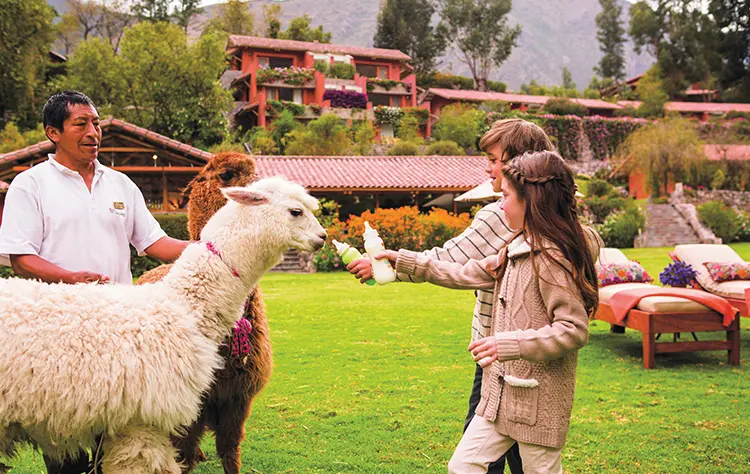
Where you stay shapes a family trip more than almost anything, because it is where the resting happens. We lean toward boutique properties in the Sacred Valley with genuine room for families: gardens and grounds where kids can decompress, pools, connecting or family suites, and a welcoming attitude that treats children as guests rather than a problem to manage. A hotel with horses, alpacas, or a big lawn will hand you an easy afternoon that no scheduled activity can.
Between the stays, logistics are where stress usually creeps into family travel, so that is exactly where the work goes. Private transfers in family-sized vehicles, timed so nobody waits around in a car park. Train tickets to Machu Picchu booked well ahead, with the seats chosen for the view. A packing brief before you leave, because the Andes swing from strong sun to cold nights in a single day and layers save everyone. If your trip includes the Amazon, some jungle areas recommend a yellow fever vaccination or malaria prevention, which is worth raising with a travel clinic a few weeks before departure. Securing the best family suites and child-friendly guides is also the main reason we ask families to plan early, which we explain in How Far in Advance Should You Plan a Trip to Peru?.
One quiet reassurance for parents of picky eaters: Peruvian food is friendlier to children than its reputation suggests. Grilled meats, rice, potatoes in every possible form, mild chicken stews, fresh juices, and chili that is almost always served on the side rather than cooked in. Most kids find something they love within a day, and the braver ones discover a whole new register, as we explore in A Culinary Journey Through Peru.
Your Family Journey Begins Here
A family trip to Peru is not really about the sites. It is about the version of your kids you meet there: the one who feeds an alpaca without flinching, who goes quiet in front of something five hundred years old, who comes home a little bigger than they left. Everything in this guide, the altitude routing, the pacing, the guides who know how to entrance a nine-year-old, exists to protect those moments and to keep the complicated parts off your plate entirely.
The rest is a conversation. Tell us who is coming, roughly when, and what your family loves to do, and we will build the itinerary around your specific ages, energy, and pace. A trip this personal takes time to design well, so the earlier we start, the more of it we can shape around you.
Start planning your private Peru journey →
FAQs
Is Peru a good destination for families with kids?
Yes, and an unusually rewarding one, as long as the trip is paced for altitude, interests, and ages. With private transfers, the right stays, and guides who are experts with children, it is comfortable and safe for families, from toddlers to teenagers.
What age should kids be to visit Machu Picchu?
There is no official minimum, but from at around five or six years old children tend to get the most out of it and manage the walking and the many stairs. For younger kids we slow the visit down and choose the gentler routes through the site. Strollers are not really possible on the uneven Inca stonework.
How do you handle the altitude with children?
By starting low. We first bring families into the Sacred Valley, at about 2,800 meters, for the first days rather than straight into Cusco at about 3,400 meters. Machu Picchu, at roughly 2,430 meters, is actually lower than Cusco, so the order of the trip does most of the work.
When is the best time to take kids to Peru?
The dry season, May to September, has the most reliable weather and lines up with many northern-hemisphere school holidays. That also makes July, around the Fiestas Patrias holidays, the busiest month, so book early if you plan to travel then.
How far ahead should we plan a family trip?
At least three months, and more for peak season. Family-sized suites and the best child-friendly guides are limited and go early, which is the main reason to start the planning with plenty of time.
Best Time to Visit Peru: When to Go by Region & Experience
Planning a journey to Peru is an exciting step toward exploring a land of extraordinary diversity, from the so...
Read Post
The Lost City Colombia and the Meaning of Reaching It
Some destinations are defined by what they are. Others by what it takes to reach them. The Lost City Col...
Read Post
Best Galápagos Cruises: Choosing the Right Way to Experience the Islands
The phrase “best Galápagos cruises” suggests comparison. Ships, cabins, amenities, itineraries. It invite...
Read Post
8 DAYS
Luxury Machu Picchu Tours: Unveiling Peru’s Timeless Wonders
Cusco, Lima, Machu Picchu, Sacred Valley

8 DAYS
Peru Family Vacation: Journey to Machu Picchu and Beyond
Cusco, Lima, Machu Picchu, Sacred Valley

11 DAYS
Amazon River Cruise: A Luxury Journey Through the Amazon
Lima, Cusco, Sacred Valley, Machu Picchu, Iquitos, Amazon River