June 08, 2026 | by: Kuoda Authors


Introduction
There is a certain point in a traveler’s life when destinations are no longer the question. The question becomes how. How to move through a place without friction. How to experience it without dilution. How to trust that what is unfolding is not only beautiful, but considered.
Private travel in South America is often spoken about in terms of exclusivity or access. In practice, it is something quieter and more precise. It is about understanding scale, geography, and culture well enough to move through them with ease. It is about knowing when to pause, when to shift course, and when to allow a place to reveal itself gradually.
South America does not reward speed. It rewards attention. And private travel, when designed properly, becomes less about seeing more and more about seeing clearly.
Private Travel South America: What It Really Requires
The idea of private travel South America is frequently reduced to logistics. A private guide. A driver. A curated itinerary. These are necessary, but they are not what define the experience.
What matters more is the thinking behind each decision.
Distances are vast, often deceptive on a map. Cultural rhythms shift not just between countries, but between regions within the same country. Altitude, climate, and infrastructure all shape how a journey should be structured.
Traveling through Peru, for example, is not simply about connecting Lima, the Sacred Valley, and Machu Picchu. It is about understanding how altitude is introduced. How the Sacred Valley acts as both a cultural and physical transition. How time in Cusco should be layered rather than compressed.
The same applies in Chile, where the stillness of the Atacama Desert asks for a different pace than the expansiveness of Patagonia. Or in Colombia, where the energy of Cartagena contrasts with the slower, more reflective rhythm of the Coffee Region.
Private travel, in this context, is less about privacy and more about precision. It allows the journey to be shaped around how a destination actually works, rather than how it is commonly packaged.
Designing Around the Traveler, Not the Destination
Listening Before Planning
Every well-designed journey begins before any destination is confirmed.
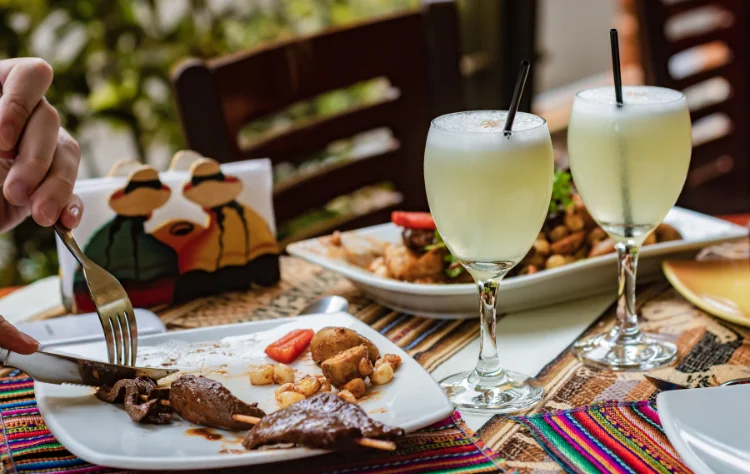
Some travelers are drawn to landscape and silence. Others are more engaged by culture, history, or food. Many are traveling with family, where pace and flexibility become essential. These distinctions matter far more than the country itself.
A traveler interested in archaeology will move through Peru differently than one focused on gastronomy. A couple seeking stillness in Patagonia will not experience it in the same way as a family traveling with teenagers.
Private travel South America, when approached thoughtfully, does not begin with “where do you want to go?” It begins with “how do you want to travel?”
From there, destinations begin to align naturally.
The Role of Pace
One of the most overlooked aspects of travel design is rhythm.
South America’s geography demands a considered pace. Not only because of distance, but because of the emotional weight of the places themselves. Machu Picchu, the Uyuni Salt Flats, the Galápagos Islands, the Amazon. These are not places to move through quickly.
A well-designed itinerary creates space around these moments. Time before. Time after. Space to absorb rather than immediately transition.
This is where private travel becomes meaningful. It allows for adjustment. A slower morning. A later departure. An additional night where it matters.
The journey begins to feel less like a sequence of movements and more like a continuous experience.
The Value of Local Presence
Why On-the-Ground Expertise Changes Everything
South America is not a region that can be understood remotely.
Conditions shift. Weather patterns affect access. Cultural nuances influence timing. Relationships matter, often quietly, but significantly.
Designing private travel South America through local presence changes how these variables are managed. It allows decisions to be informed not only by information, but by lived understanding.
In Peru, being based in Cusco is not incidental. It means knowing how the Sacred Valley feels in different seasons. It means understanding when a site is at its quietest. It means having long-standing relationships with guides, drivers, and local communities.
This is not something that can be replicated through distance.
Seamlessness as an Invisible Layer
When travel is well designed, logistics disappear.
Transitions feel natural. Timing feels intuitive. There is no sense of being rushed or delayed. Behind this is a significant amount of coordination, but it is never felt directly.
Private travel is often associated with comfort, but its real value lies in removing unnecessary friction. Flights align with the rhythm of the journey. Transfers are handled quietly. Adjustments are made without disruption.
What remains is the experience itself.
South America as a Collection of Distinct Worlds
Peru, Bolivia, and the Andes
The Andean region offers a layered experience of history, landscape, and living culture. In Peru, journeys often move between Lima, the Sacred Valley, and Cusco, with Machu Picchu as a natural culmination. In Bolivia, the Uyuni Salt Flats introduce a sense of scale that is difficult to contextualize until experienced.
Lake Titicaca, shared between Peru and Bolivia, offers a quieter, more reflective moment within a broader itinerary. Time here shifts the pace of the journey in a subtle but important way.
Chile and Argentina
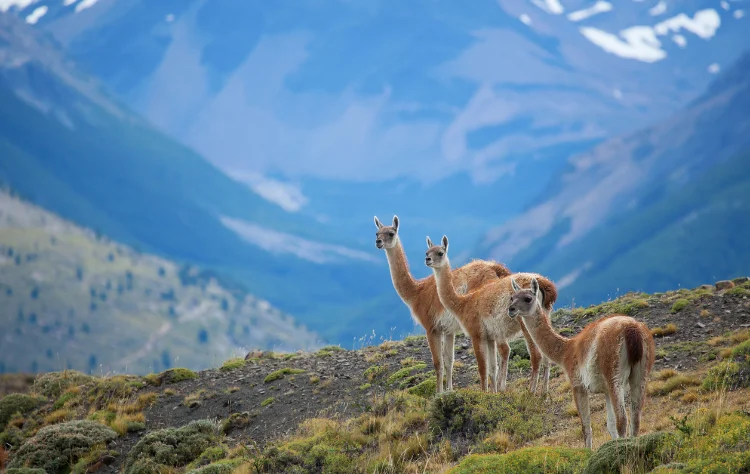
Further south, Chile and Argentina offer a different kind of immersion. Patagonia is defined by space and silence. The Atacama Desert, by contrast, is shaped by light, altitude, and geological texture.
In Argentina, Buenos Aires introduces an urban dimension that balances the natural intensity of Patagonia or the cultural depth of the northwest.
These regions require thoughtful sequencing. Moving directly between them without pause diminishes their impact.
Colombia and Ecuador
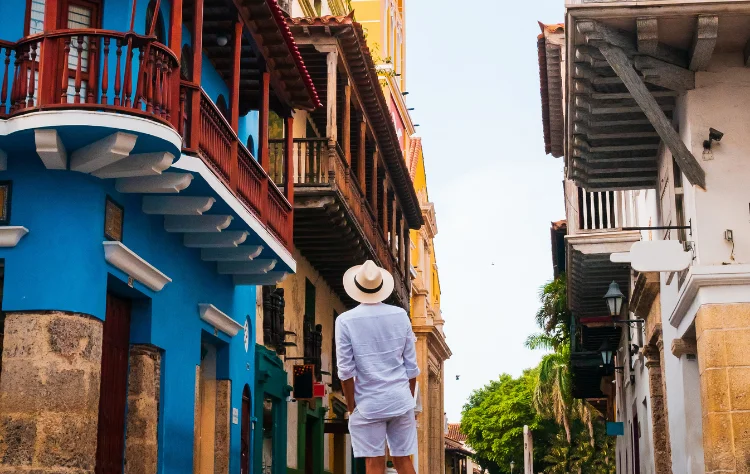
Colombia brings a sense of energy and contrast. Cartagena’s coastal warmth, the lush landscapes of the Coffee Region, and Bogotá’s cultural depth create a layered experience when approached with intention.
Ecuador, particularly the Galápagos Islands, introduces a different kind of travel altogether. Here, the focus shifts to observation and conservation. Time is structured around the natural environment rather than the traveler.
Private travel allows these differences to be respected rather than compressed.
Sustainability and Responsibility
Travel in South America carries a degree of responsibility, not as a statement, but as a practical reality.
Working with local communities, supporting regional economies, and minimizing environmental impact are not separate considerations. They are integrated into how journeys are designed.
This may take the form of selecting lodges that operate with environmental awareness, or experiences that are rooted in genuine cultural exchange rather than performance.
The intention is not to highlight sustainability, but to ensure it is present in a way that feels natural and unforced.
FAQs
What does private travel South America actually include?
It typically involves a fully customized itinerary, private guides and transportation, and a carefully designed flow between destinations. More importantly, it includes the thinking behind how each element fits together.
How far in advance should I plan private travel South America?
Most journeys are planned several months in advance, often between six and nine months. This allows for thoughtful design and access to preferred accommodations and experiences.
Is private travel South America suitable for families?
Yes, particularly for multigenerational travel. The flexibility of a private itinerary allows pace, activities, and accommodations to be adapted to different ages and interests.
How many countries should be included in one trip?
Fewer is often better. South America rewards depth over breadth. A well-designed journey typically focuses on one or two countries to allow for a more meaningful experience.
A More Considered Way to Move Through a Continent
Private travel South America is not defined by access or exclusivity. It is defined by understanding.
Understanding how a place unfolds. How a journey should feel from beginning to end. How to remove what is unnecessary and focus on what matters.
When this is done well, travel becomes quieter. More intuitive. Less about coordination and more about presence.
And in a region as complex and rewarding as South America, that difference is not subtle. It changes everything.
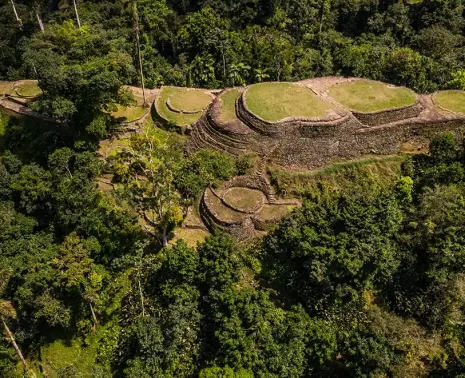
The Lost City Colombia and the Meaning of Reaching It
Some destinations are defined by what they are. Others by what it takes to reach them. The Lost City Col...
Read Post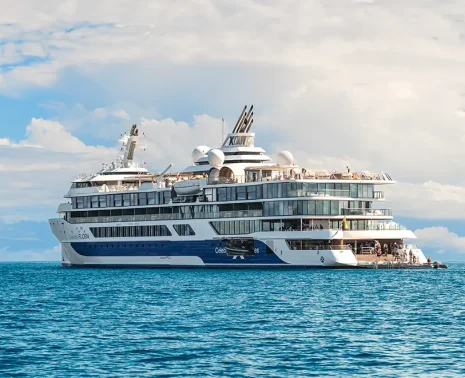
Best Galápagos Cruises: Choosing the Right Way to Experience the Islands
The phrase “best Galápagos cruises” suggests comparison. Ships, cabins, amenities, itineraries. It invite...
Read Post
Designing an Ecuador Itinerary with Intention: How to Experience the Country Beyond the Obvious
An Ecuador itinerary is often approached as a checklist. A few days in Quito, a quick passage through the Ande...
Read Post
8 DAYS
Luxury Machu Picchu Tours: Unveiling Peru’s Timeless Wonders
Cusco, Lima, Machu Picchu, Sacred Valley

8 DAYS
Peru Family Vacation: Journey to Machu Picchu and Beyond
Cusco, Lima, Machu Picchu, Sacred Valley

11 DAYS
Amazon River Cruise: A Luxury Journey Through the Amazon
Lima, Cusco, Sacred Valley, Machu Picchu, Iquitos, Amazon River