June 09, 2026 | by: Kuoda Authors


The question of Colombia things to do often leads to a list.
Cartagena’s streets. Medellín’s transformation. Coffee landscapes. Caribbean coastline.
Each of these is valid. None of them, on their own, explain how Colombia is best experienced.
What defines the country is not the variety of places, but the contrast between them. Each region carries its own tempo, its own atmosphere, and its own way of being understood. Moving between them is not simply a change in location, but a shift in rhythm.
To approach Colombia well is not to select activities. It is to recognize how those rhythms evolve across the journey.
Cartagena: Movement, Heat, and Immediate Immersion
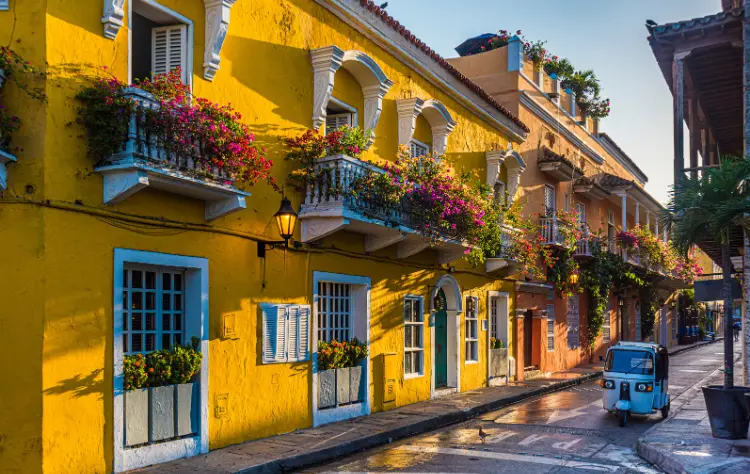
Cartagena does not require an introduction.
The city places you directly into its environment. Narrow streets, shifting light, the sound of daily life moving without pause. The experience is immediate.
What you do here is less about seeking out specific activities and more about how you move through the city.
Walking becomes the central act. Early mornings reveal a quieter version of the Old City, where the architecture and space can be observed without interruption. As the day progresses, the energy builds. By evening, the city feels entirely different again.
The experience changes not by doing more, but by moving through different moments of the same place.
The Caribbean Coast Beyond Cartagena
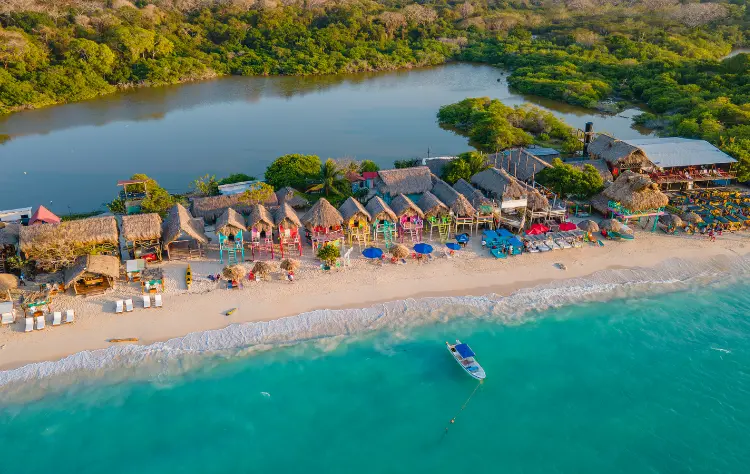
Leaving Cartagena alters the experience.
The coastline extends into areas where the pace slows and the environment becomes less structured. The focus shifts from movement to stillness.
What to do here becomes less defined.
Time is spent differently. Longer stretches of quiet, a closer relationship to the natural environment, and fewer external stimuli. The experience is shaped by absence rather than activity.
This contrast is essential.
Remaining only within the city provides intensity. Moving beyond it introduces balance.
The Coffee Region: Presence Over Activity
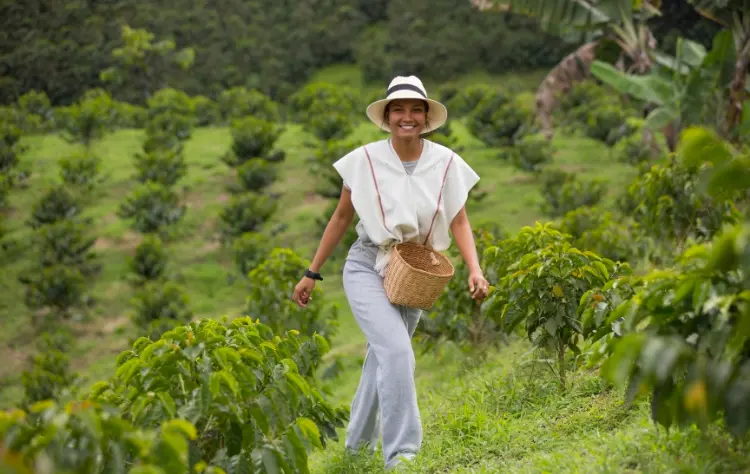
In Colombia’s coffee region, the question of what to do changes entirely.The landscape does not ask for movement. It asks for attention.
Rolling hills, working farms, and small communities create an environment where daily life continues at its own pace. Experiences here are often simple in structure, but complex in meaning.
Walking through the landscape, observing cultivation, spending time within a working hacienda. These are not activities in the traditional sense. They are ways of entering the environment.
From our base in South America, this is where many journeys shift. Travelers arrive expecting to do more, and leave understanding that doing less creates a deeper connection.
Medellín: Experiencing a City in Motion
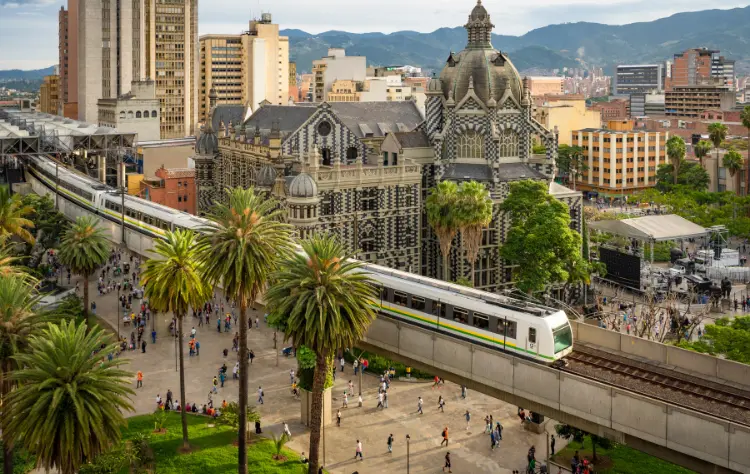
Medellín is often defined by its transformation. What is more interesting is how that transformation is experienced.
The city unfolds through its neighborhoods. Each area carries its own identity, and moving between them reveals different perspectives. Cable cars, public spaces, and urban design are not simply infrastructure. They are part of how the city communicates its evolution.
What to do in Medellín is not centered on a single landmark.
It is about observing how the city functions. How it moves. How daily life interacts with its surroundings.
The experience becomes one of understanding rather than visiting.
Bogotá: Depth Through Culture and Scale
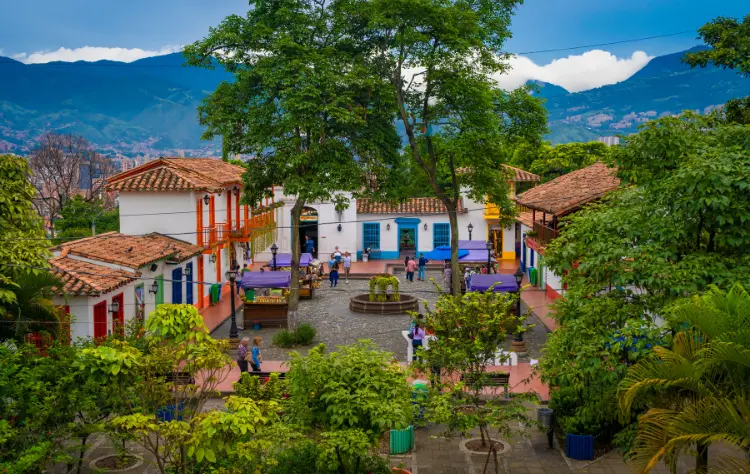
Bogotá introduces a different kind of engagement.
The city is expansive, and its cultural depth is layered rather than immediately visible. Museums, historic districts, and contemporary spaces coexist, but they do not present themselves all at once.
What to do here depends on how the city is approached.
Moving slowly allows for a more coherent experience. Focusing on specific areas creates continuity. Attempting to cover too much can fragment the journey.
Bogotá rewards selectivity.
The experience becomes richer when it is allowed to develop over time.
Where the Experience Changes Completely
Colombia’s diversity extends beyond its most recognized destinations.
Remote regions, national parks, and lesser-visited areas introduce entirely different environments. Access is often limited, and the experience is shaped by how it is structured.
Here, what to do is defined by the environment itself.
Guided exploration, time within nature, and a closer relationship to the landscape replace traditional activity-based travel. The pace adjusts again.
These regions are not always necessary, but when included thoughtfully, they redefine the journey.
The Risk of Trying to Do Too Much
Colombia invites inclusion.
Multiple regions, multiple experiences, a desire to see the full spectrum of what the country offers.
The challenge lies in how these elements are combined.
Moving too quickly between contrasting environments reduces their impact. The experience becomes a sequence of shifts rather than a coherent progression.
Spacing becomes essential.
Allowing each region to be experienced fully creates clarity. The journey begins to feel connected rather than assembled.
Designing a Journey Across Changing Rhythms
What to do in Colombia is ultimately shaped by how the journey is designed.
Each region introduces a new pace. The transition between them determines whether that shift feels natural or abrupt.
Through on-the-ground presence, these transitions are structured with intention. Movement aligns with the natural rhythm of each place. Time is allocated where it matters most.
The traveler does not need to manage this complexity.
The experience unfolds with continuity.
Sustainability Through Alignment
Colombia’s regions each carry their own environmental and cultural sensitivities.
Travel that aligns with these conditions supports long-term sustainability. Spending time within communities, engaging respectfully, and minimizing unnecessary movement all contribute to preserving the integrity of each destination.
This approach reflects a broader philosophy of travel that prioritizes depth and responsibility alongside experience .
FAQs
What are the main things to do in Colombia?
Cartagena, the coffee region, Medellín, Bogotá, and the Caribbean coast form the foundation of most journeys, each offering a distinct experience.
How many days are needed to explore Colombia?
A well-paced itinerary typically requires 10 to 14 days to allow for meaningful time in each region.
Is Colombia suitable for first-time travelers to South America?
Yes, particularly for those seeking a balance of culture, nature, and urban experience.
Can multiple regions be combined in one trip?
Yes, though careful sequencing is essential to maintain a cohesive and balanced journey.
A More Considered Way to Experience Colombia
Colombia is not defined by what there is to do.
It is defined by how each place feels when it is experienced in the right way.
When the journey is shaped with intention, the contrasts between regions become part of a larger continuity. The shifts in rhythm feel natural. The experience deepens rather than fragments.
What remains is not a list of activities, but a sense of movement through a country that reveals itself gradually.
And that begins with understanding that in Colombia, doing more is not the goal.
Experiencing each place fully is.
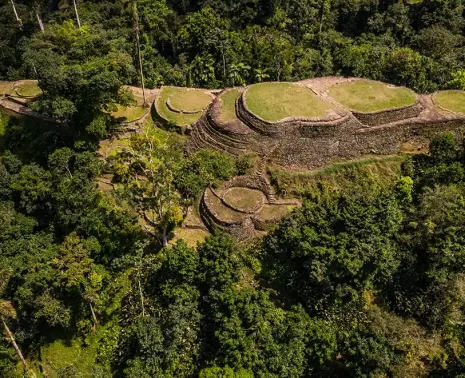
The Lost City Colombia and the Meaning of Reaching It
Some destinations are defined by what they are. Others by what it takes to reach them. The Lost City Col...
Read Post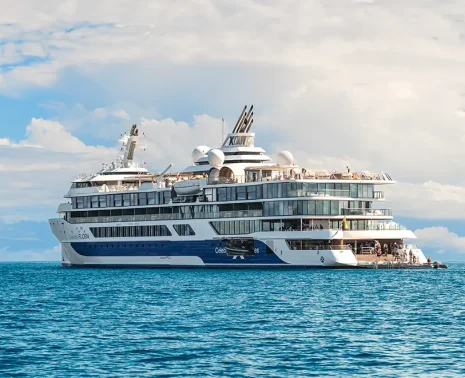
Best Galápagos Cruises: Choosing the Right Way to Experience the Islands
The phrase “best Galápagos cruises” suggests comparison. Ships, cabins, amenities, itineraries. It invite...
Read Post
Designing an Ecuador Itinerary with Intention: How to Experience the Country Beyond the Obvious
An Ecuador itinerary is often approached as a checklist. A few days in Quito, a quick passage through the Ande...
Read Post
8 DAYS
Luxury Machu Picchu Tours: Unveiling Peru’s Timeless Wonders
Cusco, Lima, Machu Picchu, Sacred Valley

8 DAYS
Peru Family Vacation: Journey to Machu Picchu and Beyond
Cusco, Lima, Machu Picchu, Sacred Valley

11 DAYS
Amazon River Cruise: A Luxury Journey Through the Amazon
Lima, Cusco, Sacred Valley, Machu Picchu, Iquitos, Amazon River