July 03, 2026 | by: Kuoda Authors


People ask us about the best things to do in Peru and the Peru travel experiences they should not miss, as if there were a single list, and we never quite know how to answer. The honest answer is that the country offers completely different experiences depending on who is asking. A textile collector and a birder can land at the same airport on the same morning and have a completely different journey by the end of the week. One spends her days in highland weaving villages. The other is up before dawn with a spotting scope. Both have the best itinerary for them.
So instead of ranking sites, this guide is built the way we actually plan trips in our office: around the traveler, not the map. Find the section below that sounds like you, and it will point you toward the regions, the experiences, and the pace that tends to suit that kind of person. If you recognize yourself in two or three of them at once, that is normal too. Some of the journeys we are proudest of are the ones that braid a few of these together.
For Culture Seekers: Living Andean Traditions in the Sacred Valley
Most people picture Peruvian culture as something kept behind glass. A museum case, a roped-off ruin, a plaque you read and walk past. The Sacred Valley quietly takes that idea apart within an hour of arriving. Here the past never really ended. It just kept going, woven into the same Tuesday-morning markets and planting seasons that have shaped it for centuries.
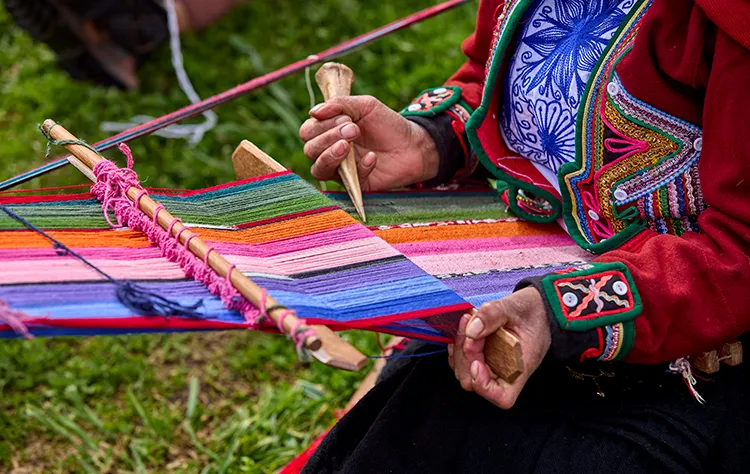
Go to Chinchero early, before the buses. You will find women at backstrap looms, the same kind their grandmothers used, working wool they spun themselves and dyed the day before with crushed cochineal and the yellow heads of q’olle flowers. Ask one of them what a pattern means and you rarely get a short answer. A single band of an awayo can hold a river, a mountain pass, a marriage, a harvest that failed in a year nobody alive remembers. We have watched guests walk in thinking they were buying a textile and walk out having been handed a piece of someone’s family. That shift, from object to story, is really why you come.
None of it runs on a strict timetable, which is exactly why it is so easy to miss. The festivals worth seeing are usually not the ones in the guidebooks; they are the ones a community holds for itself, on a date that moves with the rains. Getting into those rooms takes more than a ticket. It takes a guide who grew up two valleys over, who knows the weaver by name and knows which households are receiving visitors this season and which are grieving or planting and would rather not. Get that part right, and Peru stops performing for you and starts letting you in.
For Food Lovers: Peru’s Regional Cuisine, from Lima to the Amazon
The mistake most visitors make with Peruvian food is starting at the top, in one of Lima’s famous tasting menus, when the real story begins about four feet off the ground in a market. Go to Surquillo in the morning. The potato stalls alone will reset what you thought you knew, dozens of varieties in colors that look invented, some of them grown at altitudes where almost nothing else survives. Next to them sit the ajíes, the rocoto and ají amarillo that give half the country’s cooking its backbone, and crates of Amazonian fruit like aguaje and camu camu that even most Limeños treat as exotic.
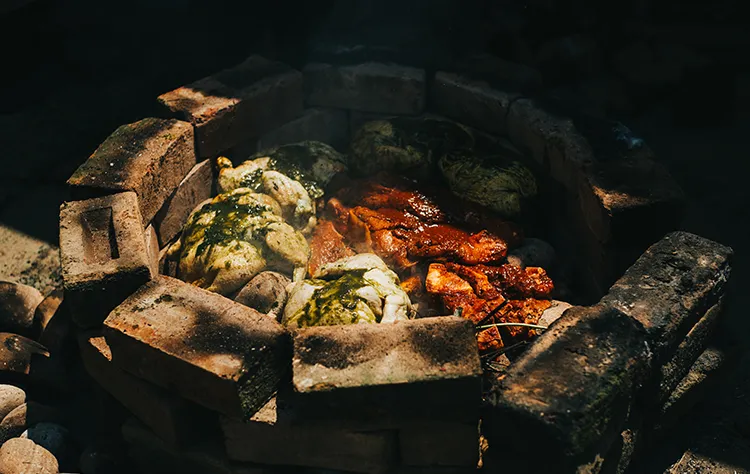
Head up into the Andes and the cooking slows right down. A proper pachamanca is not a dish so much as an afternoon. Lamb, pork, potatoes, fava beans, and herbs go into a pit lined with stones that have been heating in a fire for hours, everything gets buried under the earth, and then everyone waits. The wait is the point. By the time the mound is opened and the steam comes up smelling of smoke and huacatay, the meal has already turned into an event, with the cooks who built the oven hovering to make sure you understand what you are tasting. Drop down into the jungle and it shifts again, around river fish like paiche and parcels of rice and chicken steamed inside bijao leaves.
Some of the most memorable Peru travel experiences begin with what is served, but stay with you because of the people standing one or two steps behind it. The woman who has sold the same heirloom potatoes for thirty years. The family that still cooks pachamanca the way their grandparents did, because nobody ever told them to stop. The celebrated restaurants are wonderful, and we will happily book the best of them for you. But if you only ever eat in fancy dining rooms, you meet the chefs and miss everyone who taught them.
For Families: Kid-Friendly Experiences in the Sacred Valley
Parents usually arrive in Peru worried about the wrong thing. They worry the children will be bored at the ruins, when the real variable is pace and altitude. Cusco sits high enough that a kid who sprints off the plane and straight up a hillside will feel it by dinner. Plan the first day or two to be gentle and the whole trip changes character. Nobody is cranky, nobody is sick, and everyone has the energy left for the parts they will remember forever.
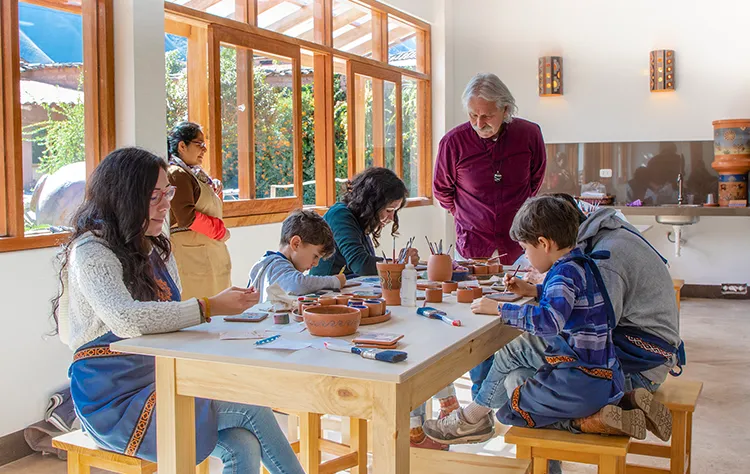
And the parts they remember are almost never the famous ones. It is the afternoon a ceramicist in the Sacred Valley lets them wreck three pots before the fourth one finally holds. It is a slow walk through a cloud forest with a guide who stops, points at an empty branch, waits, and then a bird none of you would have noticed drops into view as if on cue. At the Cochahuasi sanctuary outside Cusco, they can stand close to rescued condors and a spectacled bear and ask the questions that no museum label ever bothers to answer. These are not fillers between the “real” sights. For a child, they are the real sights.
The quieter skill is logistics, and it should be the part you never have to think about. Trains booked, transfers waiting, a rest morning dropped in exactly where the eight-year-old is going to crash. We build these trips around the specific ages and temperaments in your family, because a household with two teenagers wants something completely different from one traveling with a toddler and a grandparent. Pretending those are the same trip is how good intentions turn into a long week for everyone.
For Nature Lovers: Paracas, the Andes, and the Amazon Rainforest
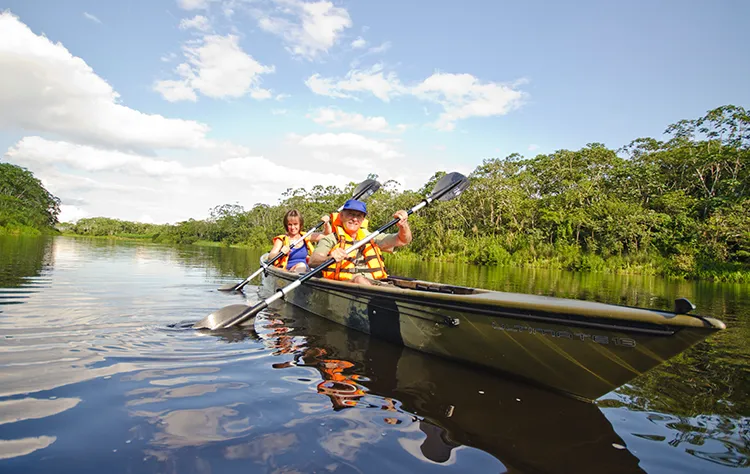
Peru does something geographically that still catches us off guard, and we live here. You can have breakfast on a desert coast and dinner under a rainforest canopy on the same day, having crossed the Andes somewhere in between. The wildlife keeps pace with the terrain the whole way. Each leg feels like a different planet.
Out on the Paracas peninsula, the Ballestas Islands are loud and crowded in the best possible way, packed with sea lions hauled up on the rocks, Humboldt penguins picking along the ledges, and so many seabirds that the air itself seems to move. Then you fly east and everything goes quiet. In the Tambopata reserve the mornings start before sunrise, drifting out to a clay lick where scarlet and red-and-green macaws gather in numbers that never photograph well because they are best witnessed in person. An afternoon on Lake Sandoval is slower still, the canoe barely moving while hoatzins crash around overhead like badly built helicopters and a family of giant otters works the far bank.
This kind of travel asks for patience, and it hands the reward to whoever is willing to sit and wait rather than tick a box and move on. The one thing it should never ask for is stress. The weak link in any Andes-to-Amazon trip is always the connection: the small plane, the river transfer, the lodge boat that leaves on its own schedule and waits for no one. Lock those down well in advance and the only thing left for you to do is watch and enjoy.
For Active Travelers: Trekking Beyond the Inca Trail (Huayhuash and Lares)
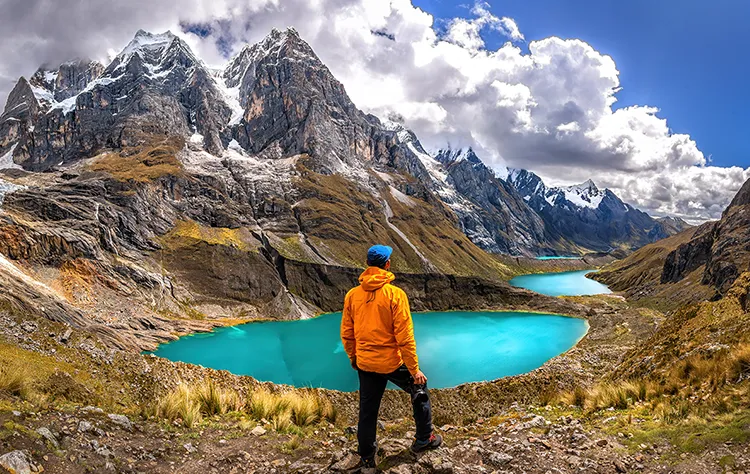
If your idea of a great trip is the one your legs still remember a month later, we have good news and a small confession. The good news is that Peru is full of high-country worth walking. The confession is that the Inca Trail, the route everyone has heard of, is also the busiest, and on a peak morning it can feel less like wilderness and more like a queue with a spectacular view. There are quieter ways to earn the same reward.
The Cordillera Huayhuash is the serious one, a tight knot of ice peaks and glacial lakes north of Lima that asks a great deal and gives back the kind of solitude most trekkers never find. The Lares Valley is the human one, lower and softer, where the days are measured less in summits and more in the herding families you pass and share coca with along the way. Salkantay and Ausangate live between those two poles, each with a temperament of its own. And if you are willing to leave the Cusco orbit altogether, the north opens right up. We are still a little evangelical about Kuélap, a stone fortress in the clouds above the Utcubamba Valley that predates Machu Picchu and, frankly, rivals it, with a fraction of the crowds.
None of these are weekend jaunts you can improvise. The altitude is real, the trails are remote, and a good outcome depends on acclimatizing properly and having people beside you who know the terrain when you are days from the nearest road. Do it right and you walk away with the thing that has become almost impossible to buy, which is a mountain that is, for a few hours, completely yours.
For Couples: Private, Romantic Escapes Across the Andes
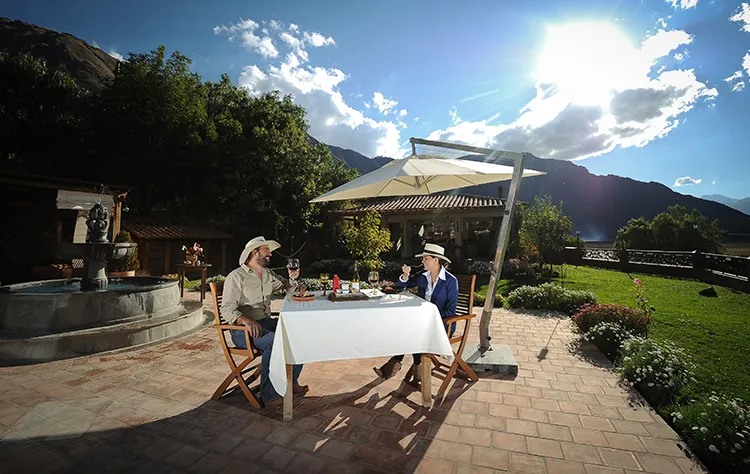
Couples often ask us for the most luxurious version of Peru, and over the years we have learned that luxury here is rarely about the room. It is about timing and access, the ability to be somewhere when almost no one else is. Machu Picchu at first light, the mist still burning off the terraces and the day-trip crowds a full hour away, is a different place than Machu Picchu at noon. So is a ruin you have entirely to yourselves because your guide knew to run the usual route backwards.
The lodging matters too, of course, but in a particular way. The properties we love most in the Sacred Valley are the ones that feel less like hotels and more like a private house someone happened to leave open for you, where dinner appears when you are hungry rather than when a buffet decides to open. Pair a place like that with a guide who can read the two of you, who senses when to tell the story and when to step back and let you have the moment in silence, and the whole trip settles into something that feels unmistakably yours.
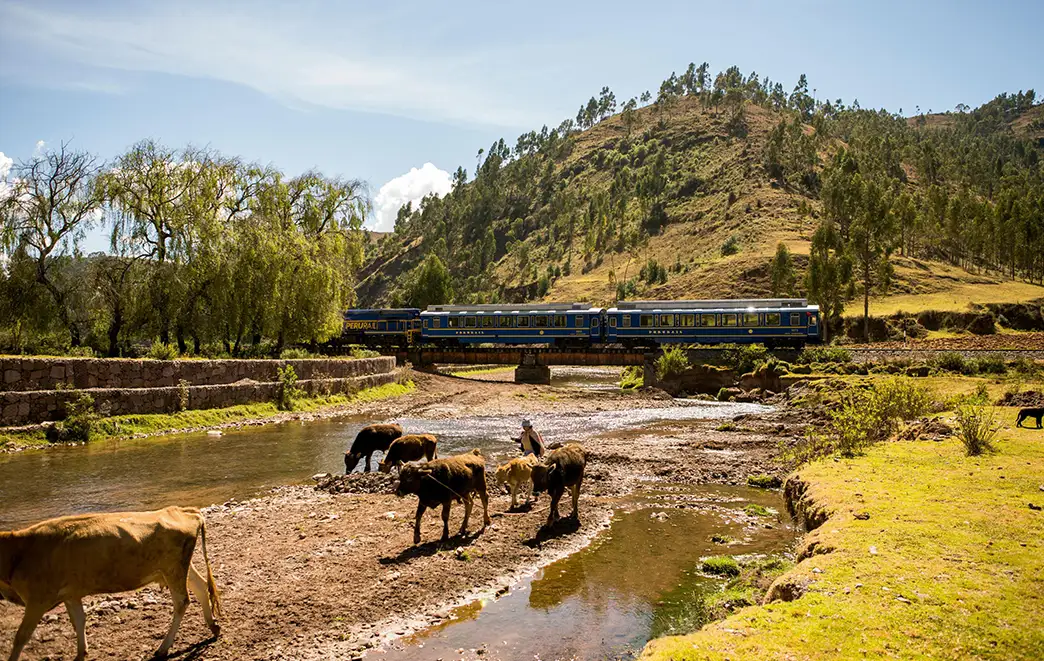
Even the travel between places can carry its own romance if you let it. The Belmond Hiram Bingham turns the run to Machu Picchu into an event in itself, lunch and a pisco sour rolling past while the valley climbs outside the window. The Andean Explorer does much the same across the altiplano toward Lake Titicaca, the light going long and gold over a landscape most people only ever glimpse from a bus. The aim of all of it is simple. Keep your time together yours, away from the noise that usually tags along with travel.
How Kuoda Designs Your Peru Journey
Everything above only works because none of it comes off the shelf. We do not run fixed departures or hand the same fortnight to everyone who calls. Our real job, as a team based here in Peru rather than abroad, is to listen to how you already imagine the trip and then build the scaffolding underneath it that you are never meant to notice: the boutique hotels that match your taste, the specialist guides who happen to be obsessed with the same things you are, the flights and trains and transfers stitched together so your days move without a visible seam.
It also means the trip bends to you and not the other way around. A honeymoon and a three-generation reunion are moving through the same country at completely different speeds, and the itinerary has to understand that difference before anyone packs a bag. That is the part we care about most, and it is why planning a Peru journey with us is a conversation rather than a checkout.
How Far in Advance Should You Plan a Trip to Peru?
A trip built this carefully needs a little runway, and we would rather be straight with you about why than pretend everything is available on demand. The lodges worth staying in are small. The best guides get requested by name months in advance. The best Peru travel experiences only look effortless because someone secured the details early, including the logistics that tie the Andes to the Amazon. Leave it too late and the trip still happens, it just quietly loses a notch of quality in places you would never have chosen to compromise.
Three months ahead is our usual recommended minimum, and more is better for the busy windows, with six months being a good amount if you are looking at the busier months. July is the clearest example. It is the single busiest travel month in Peru, lifted by the Fiestas Patrias holidays around the 28th, when much of the country is on the move at the same time. If your dates land in that stretch, start early. The lead time is not a hurdle to clear, but the first step we use to build the trip around you. We lay out the full reasoning in How Far in Advance Should You Plan a Trip to Peru?
FAQ
What is the best time to visit Peru?
The dry season, roughly May through September, gives you the most dependable weather across both the Andes and the Amazon. July is the busiest month, lifted by the Fiestas Patrias holidays around July 28 and 29, so if you are set on traveling then, reserve well ahead.
How many days do you need in Peru?
Seven to eight days is enough to do Cusco, the Sacred Valley, and Machu Picchu justice without rushing. Add the Amazon, Lake Titicaca, or the coast and you are looking at ten to fourteen, and the country rewards the longer stay.
Is Peru a good destination for families with children?
Yes, as long as the pace is right. Hands-on activities and built-in rest days carry mixed ages well. The main thing to plan around is the altitude in Cusco and the Sacred Valley, which is best handled with a slower first couple of days.
What is there to do in Peru beyond Machu Picchu?
A great deal more than most first-time visitors expect, from the Tambopata rainforest and the wildlife-rich Paracas coast to the northern fortress of Kuélap and the trekking around Huayhuash and Lares. Our guide, Peru Beyond Machu Picchu, maps it out.
How far in advance should I book a trip to Peru?
At least three months for a custom itinerary, and earlier still for peak periods like July. That lead time is what locks in the best lodges, the ideal Machu Picchu permits, the right guides, and the timing that lets everything flow.

Luxury Vacations South America: A More Considered Way to Experience the Continent
Luxury vacations South America are often described through scale. Vast landscapes, iconic sites, a sense of di...
Read Post
What to Do in Bolivia: Experiencing the Country Through Altitude, Isolation, and Depth
The question of what to do in Bolivia is often approached with curiosity. Salt flats, high-altitude cities,...
Read Post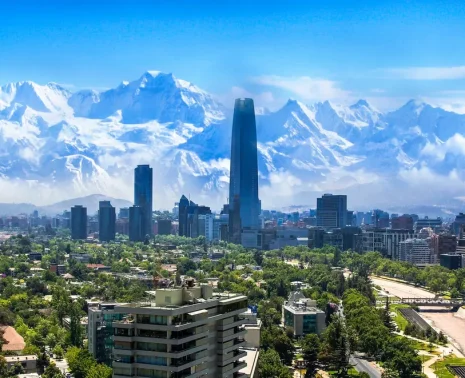
Chile Curated Journeys and the Art of Traveling Through Contrast Thoughtfully
Chile is a country shaped by distance and contrast. The Atacama Desert feels almost extraterrestrial in its...
Read Post
8 DAYS
Luxury Machu Picchu Tours: Unveiling Peru’s Timeless Wonders
Cusco, Lima, Machu Picchu, Sacred Valley

8 DAYS
Peru Family Vacation: Journey to Machu Picchu and Beyond
Cusco, Lima, Machu Picchu, Sacred Valley

11 DAYS
Amazon River Cruise: A Luxury Journey Through the Amazon
Lima, Cusco, Sacred Valley, Machu Picchu, Iquitos, Amazon River