April 07, 2026 | by: Kuoda Authors


In Ecuador, the rainforest begins where the Andes descend.
Within a short flight from the capital, altitude gives way to humidity, and páramo grasslands transition into dense canopy. Rivers widen. Sound replaces skyline. Orientation shifts from horizon to understory.
For travelers researching the Ecuador rainforest, the question is not whether to visit. It is how to enter this ecosystem without diminishing it. How to balance comfort with immersion. How to experience biodiversity through knowledge rather than spectacle.
The Ecuadorian Amazon is compact yet biologically dense. It rewards travelers who move deliberately.
The Ecuador Rainforest: Access Without Excess

Unlike larger Amazon regions in neighboring countries, the Ecuador rainforest offers relatively efficient access. From Quito, a short flight east reaches Coca, the primary gateway to the Amazon basin.
From there, travel continues by motorized canoe along winding tributaries of the Napo River. The journey itself becomes transition. Urban density dissolves into layered green.
The rainforest is not entered abruptly. It is approached.
Luxury here is defined by thoughtful logistics. Private transfers, coordinated luggage handling, and clear sequencing ensure that the shift from mountain capital to jungle lodge feels seamless.
Choosing the Right Lodge in the Ecuador Rainforest
The experience of the Ecuador rainforest is shaped largely by accommodation choice. Lodges vary significantly in location, scale, and ecological context.
Kuoda collaborates with small-scale properties situated within protected reserves, where biodiversity is richest and visitor numbers remain controlled.
Among the most refined options is Mashpi Lodge, located within a private cloud forest reserve. Though technically within the Chocó bioregion rather than the Amazon basin, Mashpi offers extraordinary immersion in rainforest biodiversity with sophisticated architectural design and scientific programming.
Within the Amazon proper, eco-luxury lodges positioned along remote tributaries provide spacious suites, open-air observation decks, and naturalist-led excursions. Elevated walkways allow guests to explore canopy levels without disrupting ground ecosystems.
Rooms are constructed from local materials. Ventilation is natural where possible. Interiors reflect place rather than mimic urban luxury.
The goal is immersion supported by comfort.
Biodiversity as Daily Encounter

The Ecuador rainforest holds one of the highest concentrations of species per hectare on the planet. Yet wildlife here does not present itself theatrically. It requires attentiveness.
Early morning canoe excursions reveal kingfishers and herons skimming water surfaces. Night walks introduce insects and amphibians whose colors appear only under flashlight beams. Parrot clay licks attract vibrant congregations at dawn.
Private naturalist guides interpret this complexity with nuance. The rainforest becomes intelligible rather than overwhelming.
Luxury in the Ecuador rainforest lies in access to expertise. The ability to ask questions in real time. The flexibility to adjust pace based on interest.
Cultural Presence in the Forest
The Amazon basin is not uninhabited wilderness. Indigenous communities have lived within these ecosystems for generations.
Visits are arranged respectfully and privately, focusing on exchange rather than performance. Conversations may center on medicinal plant knowledge, river navigation, or agricultural practices adapted to rainforest conditions.
Kuoda ensures that community interactions support local autonomy and contribute directly to regional livelihoods.
Engagement feels reciprocal rather than observational.
Pairing Rainforest With Andean Highlands

The Ecuador rainforest gains dimension when paired with the Andes.
A journey might begin in Quito, continue into cloud forest reserves, and then descend further into Amazon tributaries. Alternatively, rainforest immersion can follow exploration of colonial Cuenca or the Galápagos Islands.
The contrast between high-altitude architecture and dense jungle canopy underscores Ecuador’s geographic diversity.
Kuoda structures these transitions carefully. Flights are timed with consideration. Acclimatization is respected. Luggage logistics are managed discreetly.
The narrative remains coherent.
Seasonality and Climate
The Ecuador rainforest experiences rainfall year-round. Seasonal variation influences river levels rather than access.
High-water periods allow deeper canoe navigation into flooded forests. Lower-water months reveal trails and riverbanks.
Temperature remains warm and humid throughout the year. Lodge design mitigates heat through airflow and shaded construction.
Understanding seasonal patterns enhances expectations and comfort.
Sustainability in Practice

Rainforest ecosystems are fragile. Responsible travel requires infrastructure designed to minimize impact.
Kuoda partners with lodges that implement waste management systems, renewable energy where feasible, and wildlife protection protocols. Visitor numbers remain limited.
Private itineraries reduce environmental strain and allow flexible scheduling that avoids peak congestion.
Through the Kaypi Kunan Foundation, Kuoda supports broader community initiatives across South America, reinforcing stewardship beyond the immediate journey.
Recognition as a Tripadvisor Travelers’ Choice 2025 winner reflects sustained trust from travelers who value integrity alongside refinement.
Frequently Asked Questions About the Ecuador Rainforest
How many nights are ideal in the Ecuador rainforest?
Three to four nights allow for meaningful wildlife observation and cultural interaction without fatigue.
Is the Ecuador rainforest comfortable for luxury travelers?
Yes. Eco-luxury lodges provide spacious accommodations, private bathrooms, and attentive service while maintaining environmental integrity.
Is wildlife guaranteed?
While sightings vary, biodiversity is abundant. Expert naturalist guides significantly enhance observation opportunities.
Can the rainforest be combined with the Galápagos?
Absolutely. Many travelers pair Amazon immersion with the Galápagos Islands for ecological contrast within one country.
Entering Without Disturbing
The rainforest does not reveal itself quickly.
It requires attention. Stillness. Willingness to move at its tempo.
The Ecuador rainforest offers immersion not through spectacle, but through layered understanding. When designed with discretion, expertise, and ecological respect, the experience becomes less about witnessing nature and more about inhabiting it briefly.
The canopy closes overhead. The river continues forward.
And perspective shifts quietly.
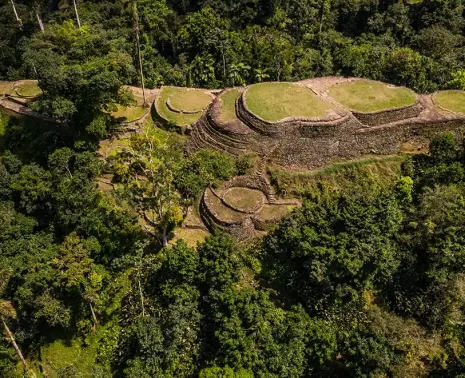
The Lost City Colombia and the Meaning of Reaching It
Some destinations are defined by what they are. Others by what it takes to reach them. The Lost City Col...
Read Post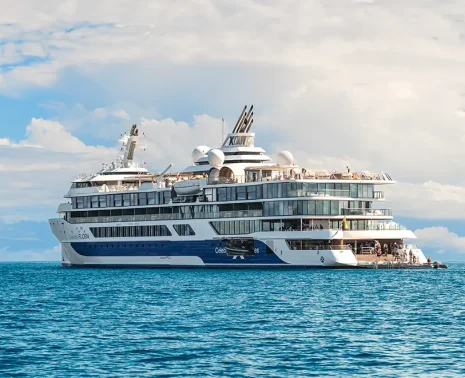
Best Galápagos Cruises: Choosing the Right Way to Experience the Islands
The phrase “best Galápagos cruises” suggests comparison. Ships, cabins, amenities, itineraries. It invite...
Read Post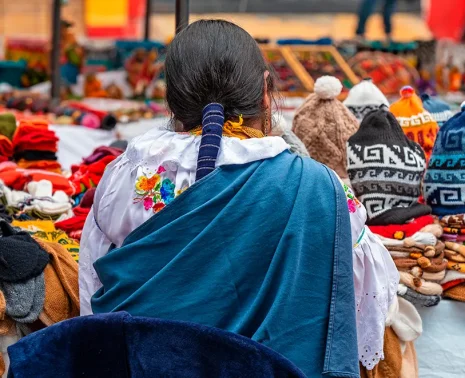
Designing an Ecuador Itinerary with Intention: How to Experience the Country Beyond the Obvious
An Ecuador itinerary is often approached as a checklist. A few days in Quito, a quick passage through the Ande...
Read Post
8 DAYS
Luxury Machu Picchu Tours: Unveiling Peru’s Timeless Wonders
Cusco, Lima, Machu Picchu, Sacred Valley

8 DAYS
Peru Family Vacation: Journey to Machu Picchu and Beyond
Cusco, Lima, Machu Picchu, Sacred Valley

11 DAYS
Amazon River Cruise: A Luxury Journey Through the Amazon
Lima, Cusco, Sacred Valley, Machu Picchu, Iquitos, Amazon River