May 13, 2026 | by: Kuoda Authors


Introduction
Bolivia does not lend itself to casual sequencing.
Distances are long, yet not always apparent on a map. Altitude shapes not only the landscape, but the body’s response to it. Infrastructure varies by region, requiring careful coordination rather than improvisation.
For travelers considering a Bolivia travel itinerary, the central question is not where to go. It is how to arrange the journey so that each environment can be experienced fully, without fatigue or fragmentation.
Bolivia rewards clarity. It asks for a structure that supports both its geography and its pace.
A Bolivia Travel Itinerary Begins With Acclimatization

Any well-designed Bolivia travel itinerary begins in La Paz.
At over 3,600 meters above sea level, the city introduces travelers immediately to altitude. Its setting within a canyon creates dramatic elevation shifts, visible from nearly every vantage point.
Rather than filling the first days with activity, Kuoda designs this phase as an adjustment period. Light exploration, private guided visits, and time for rest allow the body to acclimate naturally.
Cable car routes connecting different parts of the city provide an effortless way to understand its layout while minimizing physical strain.
This initial pause establishes the rhythm for the rest of the journey.
Moving Into the Altiplano

Beyond La Paz, the Altiplano extends outward in wide, open expanses.
Travel through this region reveals Bolivia’s scale. Villages appear intermittently. Agricultural patterns follow the terrain. The landscape feels continuous and unbroken.
Excursions to sites such as Tiwanaku Archaeological Site introduce historical context that predates the Inca, grounding the journey in a deeper timeline.
Movement here is deliberate. Distances require time. Kuoda ensures that private transfers and carefully timed departures maintain comfort throughout.
The Altiplano becomes a transition rather than a barrier.
Salar de Uyuni: Center of the Journey

For many travelers, the defining element of a Bolivia travel itinerary is the Salar de Uyuni.
The salt flats introduce a landscape that resists scale. Horizon extends in all directions. Surface texture shifts with the seasons.
Private excursions allow travelers to move beyond standard routes, reaching areas where the sense of isolation remains intact. Timing is adjusted to align with light conditions, whether early morning stillness or late afternoon reflection.
Accommodation in the region reflects its remoteness. Lodges are selected for their proximity to the flats and their ability to provide comfort without disconnecting from the environment.
The Salar becomes both visual and experiential center.
Extending Into High-Altitude Deserts
For those seeking greater immersion, the journey can extend beyond the salt flats into the surrounding high-altitude deserts.
Colored lagoons, geothermal fields, and volcanic formations create a sequence of environments that feel increasingly remote. Flamingos gather in mineral-rich waters. Geysers release steam into cold morning air.
These regions require additional planning. Roads are long and conditions variable. Kuoda designs these extensions with flexibility and experienced guiding to ensure that the experience remains fluid.
The itinerary expands while maintaining coherence.
Lake Titicaca: Water at Elevation
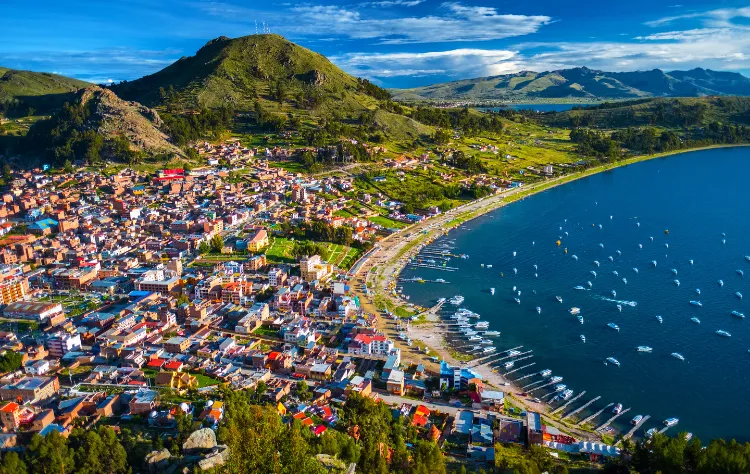
A Bolivia travel itinerary often includes time at Lake Titicaca.
The lake introduces contrast. Water replaces salt and desert. Communities live along its edges and across its islands, maintaining traditions that have persisted for generations.
From the Bolivian side, travelers access Isla del Sol, where walking paths and open landscapes provide a quieter experience.
Time here is structured around movement across water. Private boats connect points of interest while allowing for unhurried observation.
The lake offers a moment of stillness within the broader journey.
Designing Transitions Between Regions
One of the most critical elements of a Bolivia travel itinerary is how regions connect.
Flights between La Paz and Uyuni reduce travel time significantly, while overland routes provide scenic depth when time allows. Each option serves a different purpose.
Kuoda ensures that transitions align with the overall pacing of the journey. Early departures are balanced with rest periods. Transfers remain private and coordinated.
The goal is continuity, even as landscapes shift dramatically.
Accommodation and Comfort
In Bolivia, luxury is defined by context.
Hotels in La Paz provide comfort within a complex urban environment. Lodges in Uyuni prioritize location and access to remote landscapes. Properties near Lake Titicaca emphasize views and quiet.
Kuoda selects accommodations that align with each region’s character while maintaining consistent standards of service and privacy.
Rooms are positioned to frame the landscape. Design remains understated. Comfort supports exploration rather than overshadowing it.
Sustainability and Cultural Awareness
Bolivia’s environments and communities require careful engagement.
High-altitude ecosystems are sensitive to disruption. Cultural traditions depend on respectful interaction. Tourism, when managed thoughtfully, can support both preservation and local economies.
Kuoda collaborates with partners who prioritize responsible practices, including environmental management and community involvement.
Through the Kaypi Kunan Foundation, Kuoda supports broader initiatives across South America that reinforce education and long-term development.
Recognition as a Tripadvisor Travelers’ Choice 2026 winner reflects continued trust among travelers who value thoughtful travel design.
Frequently Asked Questions About a Bolivia Travel Itinerary
How many days are ideal for Bolivia?
Ten to twelve days allow for exploration of La Paz, Uyuni, and Lake Titicaca with appropriate pacing.
Is altitude a concern throughout the itinerary?
Yes. Most regions sit above 3,000 meters. Gradual acclimatization is essential.
Should Uyuni be visited by air or overland?
Flights offer efficiency, while overland travel provides a more immersive experience. The choice depends on time and preference.
Can Bolivia be combined with other countries?
Yes. Bolivia integrates well with southern Peru or northern Chile for a broader Andean journey.
A Journey That Requires Structure
Bolivia does not lend itself to improvisation.
Its landscapes demand time. Its altitude requires adjustment. Its distances benefit from careful planning.
A well-designed Bolivia travel itinerary allows these elements to align. The journey unfolds with clarity rather than complexity.
And in that clarity, Bolivia reveals its depth.
Best Time to Visit Peru: When to Go by Region & Experience
Planning a journey to Peru is an exciting step toward exploring a land of extraordinary diversity, from the so...
Read Post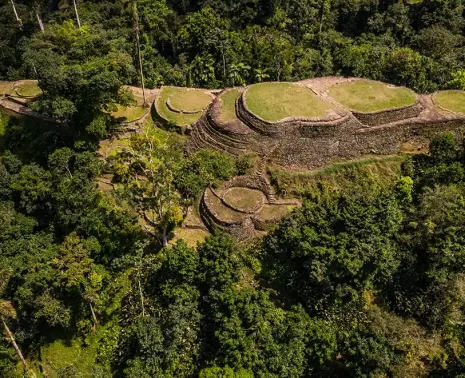
The Lost City Colombia and the Meaning of Reaching It
Some destinations are defined by what they are. Others by what it takes to reach them. The Lost City Col...
Read Post
Best Galápagos Cruises: Choosing the Right Way to Experience the Islands
The phrase “best Galápagos cruises” suggests comparison. Ships, cabins, amenities, itineraries. It invite...
Read Post
8 DAYS
Luxury Machu Picchu Tours: Unveiling Peru’s Timeless Wonders
Cusco, Lima, Machu Picchu, Sacred Valley

8 DAYS
Peru Family Vacation: Journey to Machu Picchu and Beyond
Cusco, Lima, Machu Picchu, Sacred Valley

11 DAYS
Amazon River Cruise: A Luxury Journey Through the Amazon
Lima, Cusco, Sacred Valley, Machu Picchu, Iquitos, Amazon River