April 17, 2026 | by: Kuoda Authors


In the Sacred Valley of Peru, agriculture has always been an act of adaptation. Terraces climb steep Andean slopes. Rivers carve narrow gorges. Communities shape land carefully, generation after generation.
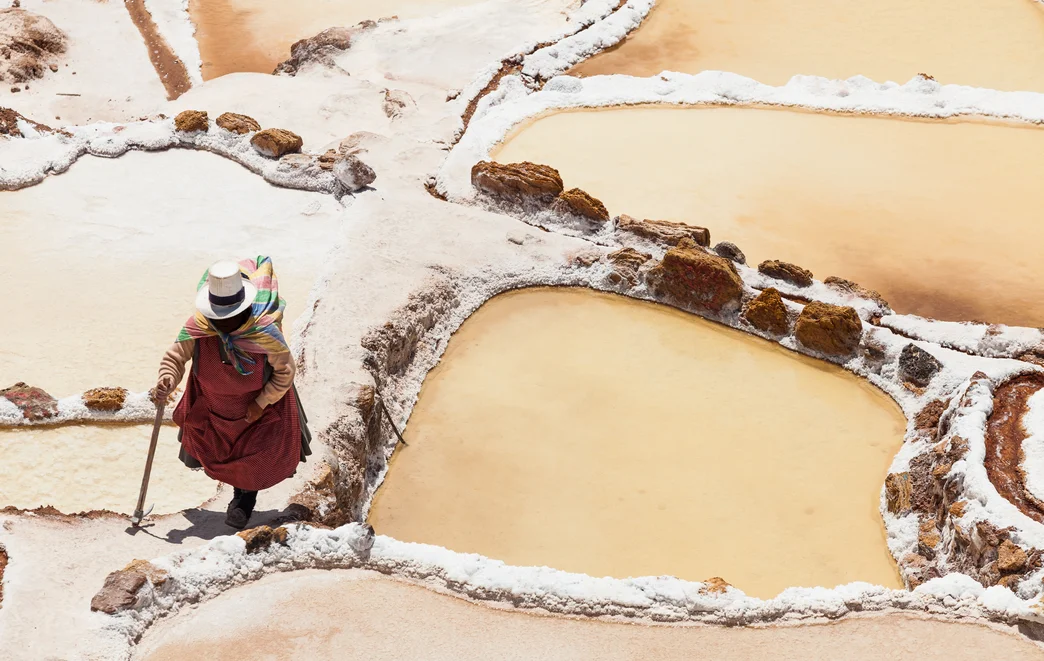
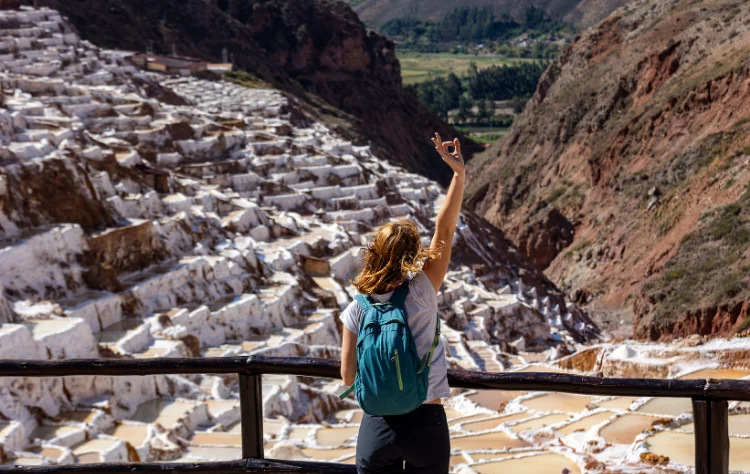
Among the valley’s most quietly remarkable sites are the Peru salt mines of Maras. Hundreds of shallow pools cascade down a mountainside, each one filled by a natural saline spring that has flowed here since pre-Inca times.
For travelers researching Peru salt mines, the interest often begins visually. The geometric pattern of white basins against red earth is striking. Yet the true significance of Maras lies not in its symmetry, but in its continuity. This is not a relic. It is a working system.
Experiencing it properly requires context, timing, and thoughtful integration into a broader Sacred Valley journey.
The Peru Salt Mines as Living Infrastructure
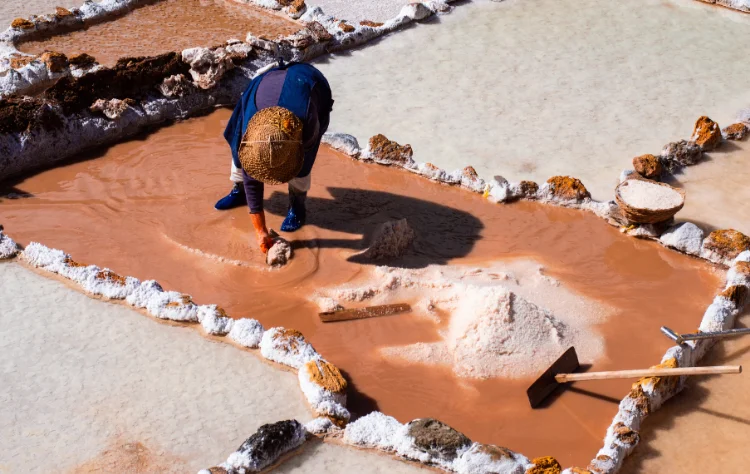
Located near the Andean village of Maras, the salt pans are fed by a subterranean stream rich in minerals. As water flows into individual pools, it evaporates under high-altitude sun, leaving crystallized salt behind.
The method has remained largely unchanged for centuries.
Unlike monumental Inca sites built for empire, the Peru salt mines represent communal labor and shared stewardship. Families maintain specific pools, passing responsibility through generations. The landscape is therefore both economic and cultural.
A private visit with a knowledgeable local guide transforms the experience. Rather than simply observing from a viewpoint, travelers gain insight into how water is channeled, how salt quality varies, and how the community organizes production.
The setting becomes intelligible.
Integrating Maras Into the Sacred Valley
The Sacred Valley, stretching between Cusco and Machu Picchu, offers agricultural terraces, colonial villages, and Inca engineering at scale. The Peru salt mines are part of this larger narrative.
Pairing Maras With Moray
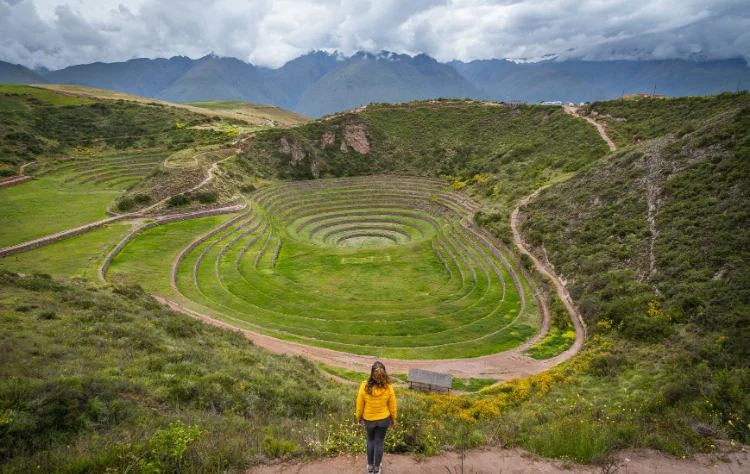
Nearby lies Moray, a series of circular terraces believed to have functioned as an agricultural laboratory. The concentric rings create microclimates, allowing experimentation with crops at varying elevations.
Visiting Moray and the Peru salt mines together reveals the Andean relationship with resource management. One site reflects agricultural adaptation. The other demonstrates mineral extraction rooted in natural geology.
A well-paced itinerary avoids rushing between them. Morning light is often best for Maras, when the white salt pans reflect the sun softly and crowds remain minimal. Private transportation ensures flexibility.
Sacred Valley as Agricultural Continuity
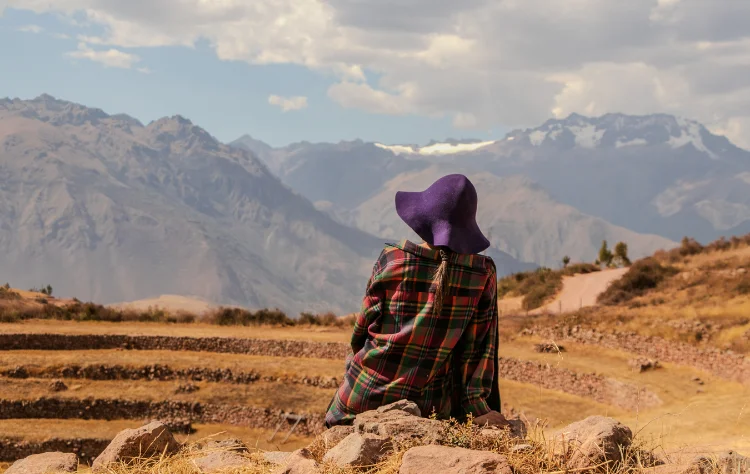
The valley’s villages, including Urubamba and Ollantaytambo, provide context for understanding how Andean communities have sustained themselves for centuries.
Lunch at a countryside hacienda overlooking fields of quinoa and maize deepens appreciation for the valley’s fertility. Conversations with local farmers or artisans, arranged respectfully and privately, reinforce the connection between landscape and livelihood.
The Peru salt mines are not isolated attractions. They are threads within a broader agricultural tapestry.
Perspective and Timing
Maras has grown in popularity, and mid-day visits can feel congested. The distinction between a superficial stop and a meaningful encounter lies in timing and pacing.
Kuoda’s on-the-ground coordination in Cusco allows for early arrival or alternative routing. Private guides manage entrance flow, ensuring space for observation and photography without intrusion.
Altitude remains moderate compared to Cusco, but gradual acclimatization is still advisable. Integrating Maras after a night or two in the Sacred Valley rather than immediately upon arrival enhances comfort.
Luxury here is not exclusivity. It is ease.
From Maras to Machu Picchu
Many travelers incorporate the Peru salt mines into a broader journey that culminates at Machu Picchu.
The contrast is instructive. Machu Picchu represents imperial vision and architectural precision. Maras reflects communal continuity and daily labor. Both illustrate different dimensions of Andean ingenuity.
Traveling between these sites seamlessly requires careful coordination of trains, private transfers, and accommodations. Boutique lodges in the Sacred Valley offer restorative calm before continuing onward.
Kuoda’s deep local presence in Cusco ensures that logistics remain invisible. Travelers focus on understanding rather than navigation.
Sustainability and Community Stewardship
The Peru salt mines are managed by local families organized into a cooperative structure. Revenue from salt production supports the surrounding community.
Responsible visitation contributes to economic sustainability, provided it respects site regulations and avoids environmental disruption. Private travel reduces congestion and allows for slower, more considerate engagement.
Kuoda prioritizes guides who approach Maras with cultural sensitivity, reinforcing that this is not a museum but a working landscape.
Through the Kaypi Kunan Foundation, Kuoda maintains long-term community initiatives in Peru, aligning travel with reciprocity rather than extraction.
Recognition as a Tripadvisor Travelers’ Choice 2025 winner reflects sustained trust from travelers who value cultural depth and thoughtful design.
Frequently Asked Questions About Peru Salt Mines
How much time is needed at the Peru salt mines?
Approximately one to two hours allows for meaningful exploration when paired with Moray or other Sacred Valley sites.
Are the salt mines physically demanding to visit?
Paths involve uneven terrain and gradual slopes, but most travelers find them manageable with comfortable footwear and measured pacing.
Is it possible to purchase salt directly?
Yes. Locally harvested salt products are available for purchase, supporting the cooperative that maintains the site.
Can Maras be visited year-round?
Yes. Dry season months from May to September offer clearer skies, though the site remains accessible throughout the year.
A Landscape of Continuity
The Peru salt mines are quiet in their significance. They do not rise dramatically from the earth. They step gently downward, pool by pool, shaped by gravity and sun.
What endures is not only the salt itself, but the method. Water flows. Evaporation occurs. Families return to harvest.
In a region defined by imperial ruins and sweeping vistas, Maras offers something subtler. It reveals how communities sustain themselves across centuries.
When integrated into a private, thoughtfully paced Sacred Valley journey, the experience becomes more than visual. It becomes instructive.
And that, ultimately, is the value of traveling here with intention.
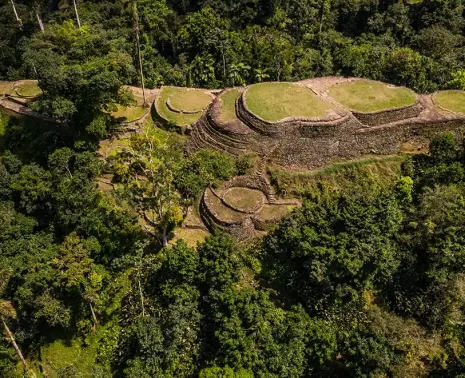
The Lost City Colombia and the Meaning of Reaching It
Some destinations are defined by what they are. Others by what it takes to reach them. The Lost City Col...
Read Post
Best Galápagos Cruises: Choosing the Right Way to Experience the Islands
The phrase “best Galápagos cruises” suggests comparison. Ships, cabins, amenities, itineraries. It invite...
Read Post
Designing an Ecuador Itinerary with Intention: How to Experience the Country Beyond the Obvious
An Ecuador itinerary is often approached as a checklist. A few days in Quito, a quick passage through the Ande...
Read Post
8 DAYS
Luxury Machu Picchu Tours: Unveiling Peru’s Timeless Wonders
Cusco, Lima, Machu Picchu, Sacred Valley

8 DAYS
Peru Family Vacation: Journey to Machu Picchu and Beyond
Cusco, Lima, Machu Picchu, Sacred Valley

11 DAYS
Amazon River Cruise: A Luxury Journey Through the Amazon
Lima, Cusco, Sacred Valley, Machu Picchu, Iquitos, Amazon River