April 16, 2026 | by: Kuoda Authors


In Ecuador, mountains are not distant scenery. They are structure.
The Andes run like a spine through the country, shaping climate, agriculture, architecture, and identity. Cities rise at high elevation. Volcanoes define horizons. Valleys cultivate grains and traditions that predate colonial arrival.
For travelers searching for mountains in Ecuador, the deeper question is rarely about elevation statistics. It is about how to enter this high-altitude world thoughtfully. How to experience Andean landscapes without rushing between viewpoints. How to integrate culture and geography into a cohesive journey.
The Ecuadorian Andes reward patience. They require rhythm.
Mountains in Ecuador as Living Geography
Ecuador’s portion of the Andes is compact yet dramatic. Snow-capped summits rise above cultivated valleys. Active volcanoes sit alongside fertile farmland.
The mountains in Ecuador are not isolated wilderness. They are inhabited, cultivated, and culturally expressive.
Cotopaxi: Symmetry and Stillness
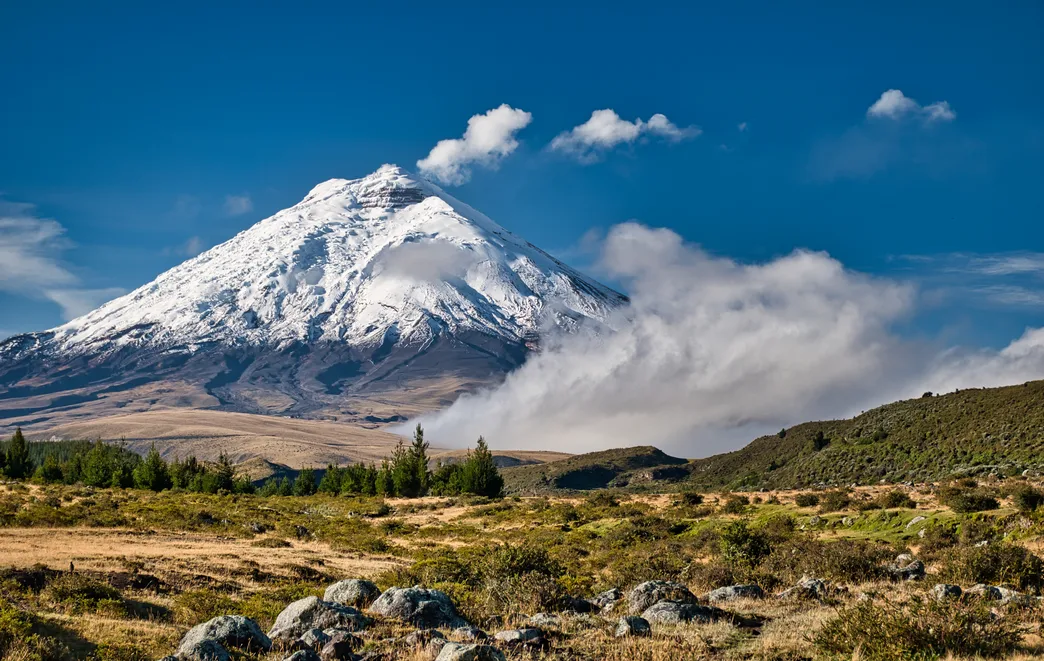
Cotopaxi is among the world’s highest active volcanoes. Its near-perfect cone dominates the surrounding national park, often mirrored in small highland lakes.
The experience here is less about ascent and more about perspective. Gentle horseback rides across páramo grasslands. Short hikes at moderate altitude. Quiet observation of wild horses and Andean foxes moving across open terrain.
A thoughtfully designed stay in a historic hacienda at the park’s edge allows immersion without physical strain. Evenings unfold beside fireplaces, altitude softened by architectural warmth.
Mountains in Ecuador such as Cotopaxi illustrate how volcanic power coexists with agricultural continuity.
Chimborazo: Height and Horizon
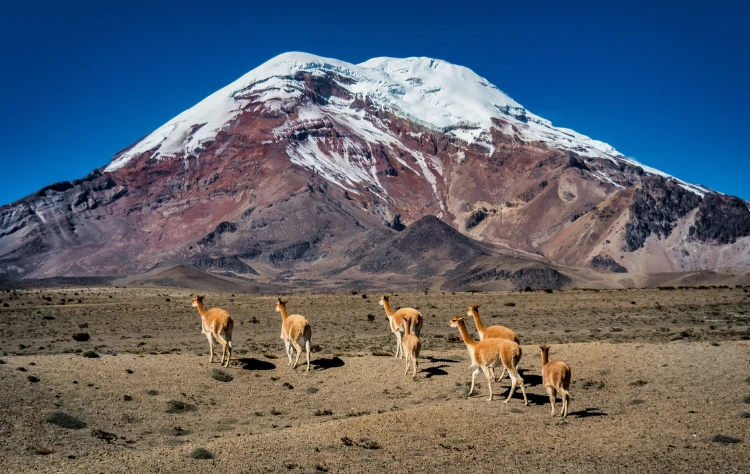
Further south, Chimborazo rises as Ecuador’s highest peak. Due to the Earth’s equatorial bulge, its summit is the point on the planet farthest from the Earth’s center.
Yet the experience is not defined by record-setting claims. The surrounding reserve offers wide, open landscapes where vicuñas graze quietly.
Visits are paced carefully. The altitude here exceeds 4,000 meters in certain areas. Private guides adjust itineraries according to comfort and acclimatization. The goal is not conquest, but appreciation.
In these highlands, light shifts quickly. Clouds roll across peaks. Silence deepens.
The Avenue of the Volcanoes
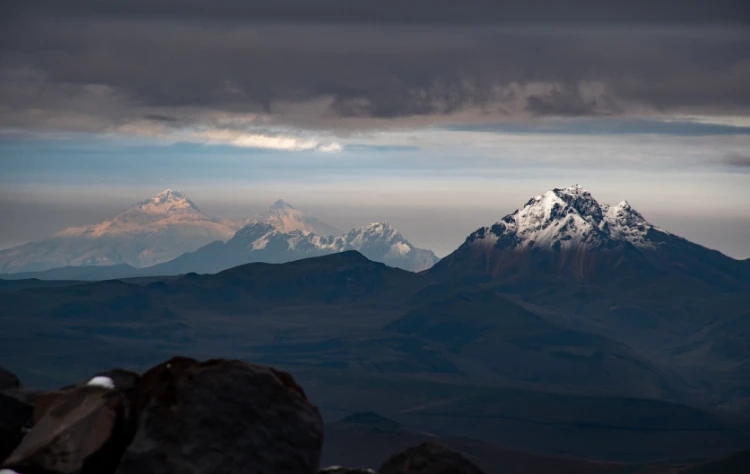
The corridor between Quito and Riobamba is often referred to as the Avenue of the Volcanoes. Here, multiple peaks punctuate the skyline.
Quito itself sits within this Andean basin, framed by volcanic ridges. Exploring the city before venturing deeper into the mountains provides intellectual grounding. Colonial architecture, indigenous markets, and contemporary galleries contextualize the surrounding landscape.
Traveling through the highlands might include visits to indigenous communities near Otavalo, where textile traditions reflect centuries of Andean heritage. Agricultural terraces demonstrate adaptation to slope and climate.
Mountains in Ecuador are inseparable from the people who inhabit them.
Designing a High-Altitude Journey
Altitude shapes experience physically and emotionally. Ecuador’s mountains require gradual acclimatization, particularly for travelers arriving from sea level.
Kuoda structures Andean itineraries with care. Two nights in Quito allow adjustment before moving toward higher reserves. Private transfers eliminate unnecessary fatigue. Activities are sequenced thoughtfully, alternating exploration with rest.
Boutique haciendas and mountain lodges provide comfort grounded in authenticity. Thick adobe walls insulate against cold evenings. Large windows frame volcanic silhouettes at dawn.
The luxury here is subtle. It lies in preparedness and pacing.
Pairing Mountains With Contrast
The mountains in Ecuador gain dimension when paired with contrasting ecosystems.
From Andes to Cloud Forest
Descending from high altitude into Cloud Forest Ecuador introduces a dramatic shift in biodiversity. Moisture increases. Vegetation thickens. Birdlife multiplies.
This transition reinforces how altitude shapes ecological zones within short distances.
From Highlands to the Galápagos
Combining Andean landscapes with the Galápagos Islands creates an elegant narrative of geological diversity. Volcanic origins connect the mainland peaks with the archipelago’s lava fields.
Kuoda ensures seamless coordination between regions. Flights, transfers, and accommodations align without friction.
The mountains become one chapter within a broader exploration.
Responsible Presence in Fragile Terrain
High-altitude ecosystems recover slowly from disruption. Páramo grasslands and glacial environments are sensitive to foot traffic and climate change.
Kuoda partners with lodges and guides who adhere to environmental regulations and support conservation initiatives. Private travel minimizes strain compared to large group excursions.
Community engagement in Andean villages is facilitated respectfully, emphasizing exchange rather than observation.
Through the Kaypi Kunan Foundation, Kuoda maintains long-term initiatives across South America, reinforcing stewardship grounded in continuity.
Recognition as a Tripadvisor Travelers’ Choice 2025 winner reflects sustained trust among travelers who value integrity and design precision.
Frequently Asked Questions About Mountains in Ecuador
What is the best time to visit the mountains in Ecuador?
June through September generally offers clearer skies, though the Andes can be visited year-round. Weather patterns vary by elevation.
Is high altitude difficult for travelers?
With gradual acclimatization and thoughtful pacing, most travelers adjust comfortably. Private guides monitor conditions and adapt activities as needed.
Can the mountains be explored without strenuous hiking?
Yes. Many experiences focus on scenic drives, moderate walks, and cultural immersion rather than intensive trekking.
How many nights are ideal in the Andean region?
Three to five nights allow for acclimatization, exploration of multiple reserves, and integration with cultural experiences.
The Line of the Horizon
Mountains define Ecuador’s identity. They shape agriculture, architecture, and memory.
Traveling among them is not about summiting peaks. It is about observing how altitude influences life. How communities cultivate resilience. How light shifts across volcanic slopes at dusk.
When designed thoughtfully, a journey through the mountains in Ecuador feels measured and coherent.
The landscape rises steadily. Perspective expands quietly.
And understanding follows.
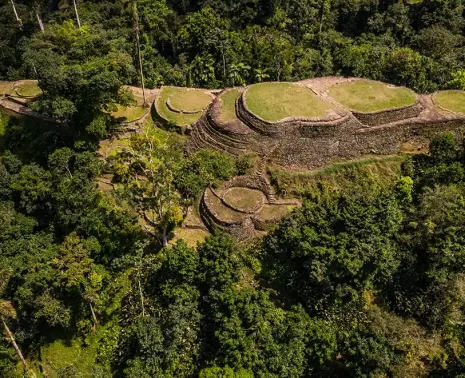
The Lost City Colombia and the Meaning of Reaching It
Some destinations are defined by what they are. Others by what it takes to reach them. The Lost City Col...
Read Post
Best Galápagos Cruises: Choosing the Right Way to Experience the Islands
The phrase “best Galápagos cruises” suggests comparison. Ships, cabins, amenities, itineraries. It invite...
Read Post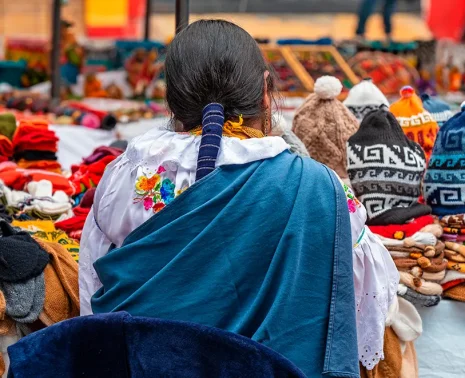
Designing an Ecuador Itinerary with Intention: How to Experience the Country Beyond the Obvious
An Ecuador itinerary is often approached as a checklist. A few days in Quito, a quick passage through the Ande...
Read Post
8 DAYS
Luxury Machu Picchu Tours: Unveiling Peru’s Timeless Wonders
Cusco, Lima, Machu Picchu, Sacred Valley

8 DAYS
Peru Family Vacation: Journey to Machu Picchu and Beyond
Cusco, Lima, Machu Picchu, Sacred Valley

11 DAYS
Amazon River Cruise: A Luxury Journey Through the Amazon
Lima, Cusco, Sacred Valley, Machu Picchu, Iquitos, Amazon River