July 12, 2026 | by: Kuoda Authors


Bolivia is rarely the first country travelers imagine when planning luxury travel in South America.
And that is precisely part of its power.
Bolivia has not been softened for expectation in the same way as many globally recognized destinations. The country remains raw in places, operationally complex in others, and emotionally intense throughout much of the journey. Yet for travelers seeking depth rather than familiarity, Bolivia often becomes one of the most memorable experiences in South America precisely because it feels less filtered.
Luxury travel Bolivia is not about insulating travelers from the destination.
It is about allowing travelers to engage with the country’s extraordinary landscapes, Indigenous cultures, and high-altitude environments with enough continuity, comfort, and thoughtful pacing that the experience can be absorbed fully rather than simply endured physically.
Bolivia rewards travelers who arrive open to discomfort in the right places, silence in others, and a version of luxury built more around perspective than excess.
Bolivia Changes How Travelers Experience Scale
Few countries alter perception as dramatically as Bolivia.
The altiplano stretches outward in ways that feel almost abstract. Lake Titicaca introduces stillness at extreme altitude. Colonial cities remain layered with Indigenous identity and political history. The Salar de Uyuni removes visual reference points almost entirely during certain seasons, creating landscapes that feel closer to atmosphere than geography.
This scale affects travelers emotionally as much as visually.
Luxury travel Bolivia works best when itineraries acknowledge that the country requires adjustment:
- physically
- psychologically
- rhythmically
Travelers moving too quickly through Bolivia often spend much of the experience managing altitude, transfers, or fatigue rather than engaging deeply with the environments surrounding them.
The strongest journeys create gradual immersion into the country’s pace and elevation.
Altitude Is Not a Side Detail
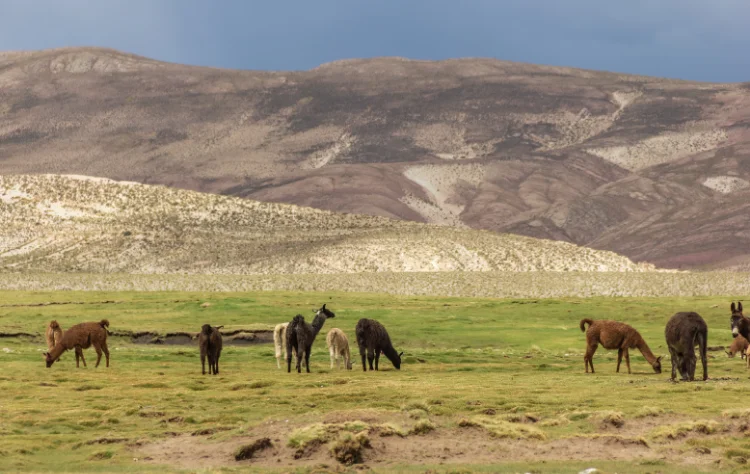
One of the biggest mistakes travelers make in Bolivia is underestimating altitude.
This is not merely a logistical consideration. Altitude shapes:
- energy
- pacing
- appetite
- sleep
- emotional rhythm
- how travelers experience landscapes themselves
La Paz alone sits at an elevation where many travelers require time simply to adjust physically. The Salar de Uyuni and broader altiplano regions extend these conditions further.
Luxury travel Bolivia depends heavily on sequencing because the country does not respond well to rushed movement.
Strong itineraries often begin with lower-intensity pacing, allowing travelers to acclimate gradually before introducing more remote or physically demanding environments. Recovery time matters. Slower mornings matter. The order in which destinations are combined matters enormously.
This is where local expertise becomes essential.
From within South America, designing Bolivia journeys requires operational awareness that goes beyond hotel selection or transportation coordination. Understanding how altitude interacts with travelers individually changes the quality of the experience significantly.
The strongest Bolivia itineraries feel calm despite the environmental intensity surrounding them.
The Salar de Uyuni and the Luxury of Silence
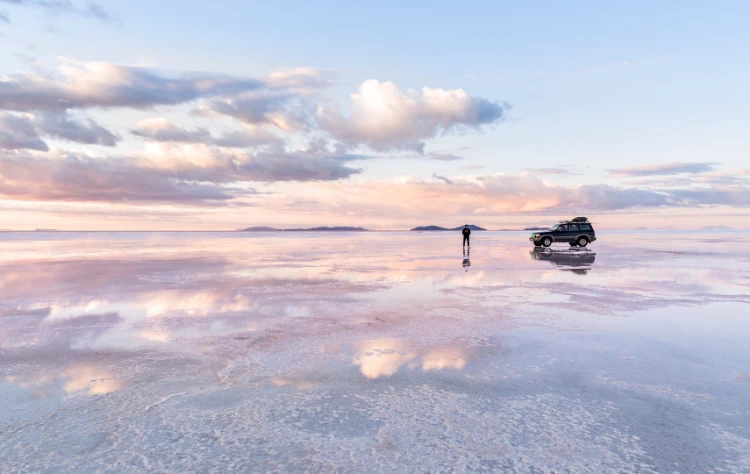
The Salar de Uyuni is one of those places that travelers struggle to describe accurately afterward.
Photographs capture the visual abstraction of the salt flats, particularly during reflection season when sky and ground dissolve into one another. But the emotional experience of the Salar comes less from imagery and more from atmosphere.
Silence becomes noticeable here.
Distances feel disorienting. Light changes continuously across the flats. Travelers lose traditional spatial reference points and begin relating to the landscape differently. The environment feels exposed, immense, and strangely calming all at once.
Luxury travel Bolivia in the Salar region depends less on activity density and more on how thoughtfully travelers move through the environment.
The strongest experiences allow:
- slower pacing
- overnight immersion
- changing light conditions
- time away from heavily trafficked routes
- thoughtful sequencing between remote lodges and landscape exploration
This is not a destination that benefits from rushing.
The Salar reveals itself through repetition and environmental stillness rather than through singular moments alone.
La Paz and Bolivia’s Cultural Complexity
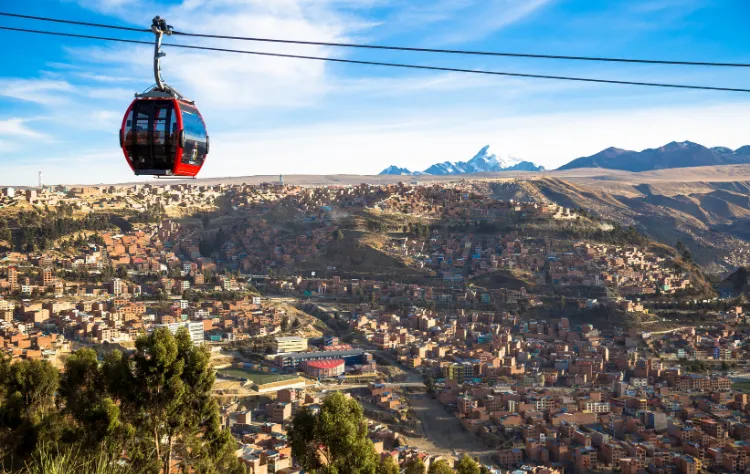
Travelers often arrive in La Paz expecting chaos and leave recognizing complexity instead.
The city operates vertically, socially, and culturally in ways that challenge easy interpretation. Cable cars cross above densely layered neighborhoods. Indigenous traditions remain deeply visible within daily life. Contemporary Bolivia exists alongside ancient cultural structures rather than replacing them.
Luxury travel Bolivia becomes more meaningful when La Paz is approached through perspective rather than surface observation.
The city rewards travelers who engage with:
- political history
- Indigenous identity
- evolving gastronomy
- urban geography
- local markets
- contemporary cultural life
Private guiding matters enormously here because understanding changes perception. What initially feels overwhelming often becomes deeply coherent once travelers begin understanding the social and historical structures shaping the city.
La Paz is not polished. But it is intellectually and culturally rich in ways many travelers do not anticipate.
Bolivia and the Meaning of Luxury
Luxury in Bolivia operates differently than in more conventionally refined destinations.
The country’s infrastructure remains less standardized. Distances can be demanding. Conditions are sometimes unpredictable. Yet these realities are part of what creates Bolivia’s depth rather than limitations to overcome entirely.
Luxury travel Bolivia succeeds when the journey balances authenticity with thoughtful operational care.
This means:
- strong logistical coordination
- carefully sequenced pacing
- excellent local guiding
- strategically chosen accommodations
- enough comfort to preserve energy without disconnecting travelers from the destination itself
The goal is not to soften Bolivia completely. It is to make deeper engagement possible.
Travelers seeking Bolivia are often looking for something different from polished predictability. They are looking for perspective, rarity, and experiences that still feel emotionally real rather than overly curated for tourism consumption.
Bolivia Within a Larger South America Journey
Bolivia becomes particularly powerful when combined thoughtfully with neighboring countries.
Peru and Bolivia create continuity through Andean culture and high-altitude landscapes while still feeling emotionally distinct. Chile’s Atacama Desert transitions naturally into the Salar de Uyuni geographically, though the emotional tone changes considerably between the two countries.
Sequencing matters tremendously here.
Travelers arriving in Bolivia after Peru often benefit from gradual acclimatization already established in the Andes. Combining Bolivia with Chile creates fascinating environmental contrast between desert stillness and Bolivia’s more culturally layered altiplano.
The strongest South America journeys use Bolivia carefully because the country leaves a lingering emotional intensity that can easily be disrupted by rushed transitions afterward.
Sustainability and Cultural Respect
Bolivia also demands a thoughtful approach to responsible travel.
The country’s cultural traditions, Indigenous communities, and fragile high-altitude ecosystems require travelers to move with awareness rather than extraction-focused tourism habits. Responsible travel here involves:
- slower pacing
- stronger local partnerships
- cultural respect
- smaller-scale experiences
- understanding local context rather than consuming it superficially
Travel becomes more meaningful when travelers approach Bolivia with humility rather than expectation.
The country gives a great deal to travelers willing to engage with it thoughtfully.
FAQs
What are the best destinations for luxury travel Bolivia?
Many travelers combine La Paz, the Salar de Uyuni, Lake Titicaca, and Sucre to experience Bolivia’s cultural and environmental diversity through a balanced itinerary.
Is Bolivia good for luxury travel?
Yes, though luxury in Bolivia is defined more through thoughtful pacing, strong logistics, cultural depth, and immersive experience rather than traditional excess or predictability.
How many days should I spend in Bolivia?
Most travelers benefit from spending at least 8 to 12 days in Bolivia, especially when allowing proper altitude acclimatization and slower pacing across remote regions.
When is the best time for luxury travel Bolivia experiences?
The best timing depends on whether travelers want dry-season landscapes or reflection conditions on the Salar de Uyuni. Different seasons create dramatically different visual and atmospheric experiences.
A Country That Resists Simplification
Luxury travel Bolivia often leaves travelers remembering atmosphere more than itinerary structure itself. The country reveals itself through altitude, silence, distance, and cultural continuity that feels deeply rooted rather than performative. Bolivia does not always make itself easy immediately. But that difficulty is often part of what gives the experience its emotional weight. Over time, travelers begin to realize that the country’s power lies not in polished perfection, but in the rare feeling of encountering places that still ask something of the traveler in return: patience, openness, and the willingness to experience the world from a slightly different perspective than before.
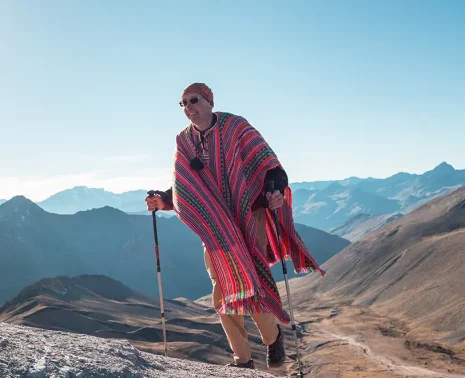
Best Time to Visit Peru: When to Go by Region & Experience
Planning a journey to Peru is an exciting step toward exploring a land of extraordinary diversity, from the so...
Read Post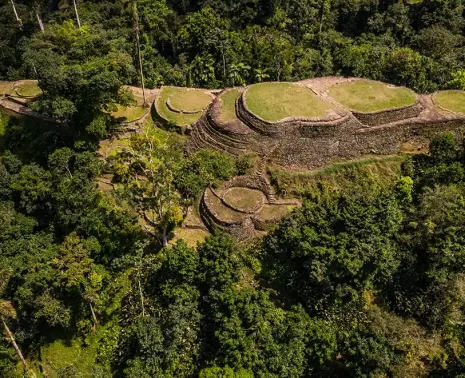
The Lost City Colombia and the Meaning of Reaching It
Some destinations are defined by what they are. Others by what it takes to reach them. The Lost City Col...
Read Post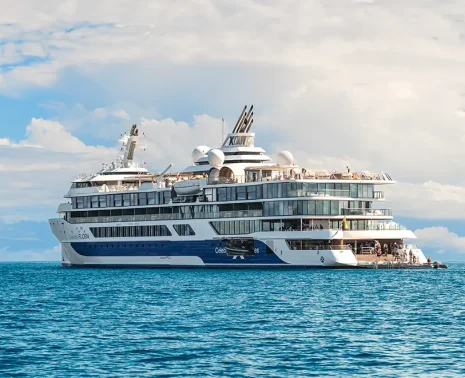
Best Galápagos Cruises: Choosing the Right Way to Experience the Islands
The phrase “best Galápagos cruises” suggests comparison. Ships, cabins, amenities, itineraries. It invite...
Read Post
8 DAYS
Luxury Machu Picchu Tours: Unveiling Peru’s Timeless Wonders
Cusco, Lima, Machu Picchu, Sacred Valley

8 DAYS
Peru Family Vacation: Journey to Machu Picchu and Beyond
Cusco, Lima, Machu Picchu, Sacred Valley

11 DAYS
Amazon River Cruise: A Luxury Journey Through the Amazon
Lima, Cusco, Sacred Valley, Machu Picchu, Iquitos, Amazon River