July 04, 2026 | by: Kuoda Authors


If you are wondering how far in advance to plan a trip to Peru, the short answer is at least three months, and for a lot of trips, more. If your dates fall in the busy stretch from June through August, or if the Inca Trail is on your list, we would rather hear from you five or six months out, and sometimes earlier than that. We know it sounds like a lot of runway for a holiday, and we understand the instinct to book Peru the same week you decide to go. But the gap between a good trip here and a frustrating one tends to open up months before anyone boards a plane.
We do not say this to manufacture urgency. We say it because we watch it play out every season. The lodges worth staying in are small. The guides worth requesting by name are few. And some of the most coveted experiences in the country run on government quotas that have nothing to do with how much you are willing to spend, such as permits to visit Machu Picchu. Lead time is the raw material we work with, and the more of it we have, the better the trip we can build around you. Here is what that actually looks like, without the sales gloss.
The Honest Timeline, by Season
If you want one number to hold onto when deciding how far in advance to plan a trip to Peru, three months is our floor for a fully custom itinerary, and that assumes your dates sit outside the busiest windows. From there it slides earlier depending on when you want to go and what you want to do.
For the peak dry-season months of June, July, and August, plan on four to six months, and treat the earlier end as the safe one. July is the most competitive month of the year in Peru, partly because the weather is at its best and partly because the Fiestas Patrias holidays around the 28th put much of the country on the move at the same time. We have had travelers reach out in February for late-July dates and already find their first choices gone. The shoulder months of April, May, September, and October are gentler, and six to twelve weeks is often enough, though the standout lodges and ideal Machu Picchu permits still go early. Low season, November through early March, gives you the most wiggle room, sometimes only a few weeks, with the trade-off of more rain in the highlands.
One caveat sits above all of this, and it earns a section of its own.
The Inca Trail Is the Real Deadline
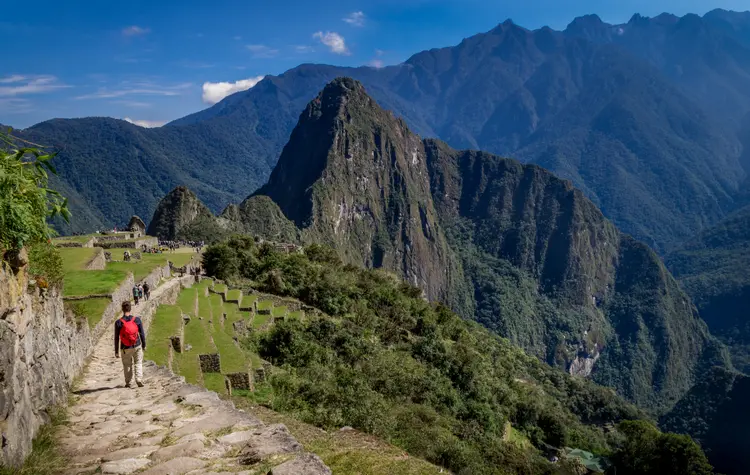
If your trip includes the Classic Inca Trail, the planning clock is not really yours to set. The Peruvian government caps the trail at 500 people per day, and once you subtract the guides, cooks, and porters who make each trek run, only around 200 of those spots go to actual trekkers. The permits are released months ahead on a fixed schedule, they are tied to your passport, and they cannot be refunded or transferred once issued. For June, July, and August departures they routinely sell out four to six months in advance, and the most sought-after July dates can vanish within a day or two of going on sale the October before.
In practice, this means the Inca Trail is the first thing we lock down, before flights, before hotels, sometimes before the rest of the itinerary has even taken shape. The trail also closes completely every February for maintenance, with no exceptions, so February trips reach Machu Picchu another way. If your preferred dates are already gone by the time we talk, it is not the end of the trip. The Salkantay and Lares routes are superb in their own right and do not draw from the same permit pool, and there is always the train. But if the Classic Inca Trail specifically is the dream, the honest advice is to commit early, even up to a year in advance, because no amount of local connection lets us conjure a permit the Ministry of Culture has already issued to someone else.
We weigh the route options in more detail in our guide, Peru Beyond Machu Picchu, if you are still deciding.
Why the Best Lodges, Trains, and Guides Go First
Permits are the hard ceiling, but the softer scarcity is just as real, and it shapes a trip more than people expect. The boutique properties we love are small by design, sometimes a dozen rooms, sometimes fewer, and a converted Sacred Valley hacienda or a remote Amazon lodge has no overflow wing to fall back on. When a particular room with a particular view is the reason to stay somewhere at all, that room books out, and a month’s notice usually means choosing from what is left rather than what is best.
The same goes for the trains and the people. The Belmond Hiram Bingham to Machu Picchu and the Andean Explorer across the altiplano run limited seats on limited departures, and they fill in high season. The guides matter even more, and the good ones get requested by name. Only a handful of people in this country can walk you through Inca astronomy at Ollantaytambo, or read a textile in a way you are still thinking about a year later, and those few are spoken for early. Part of what an early start quietly buys you is the right person standing beside you at the right ruin.
None of this is about exclusivity for its own sake. It is about making sure the version of Peru you get is the one you pictured, rather than the one that happened to still have space.
Customization Needs Room to Breathe

There is a real difference between a trip that is booked and a trip that is designed, and most of that difference is time. When everything is arranged at the last minute, you end up on the path of least resistance: the standard route, the hotel with space, the group departure that had an opening. It works, in the sense that you will see Machu Picchu, eat well, and come home happy enough. But the moments that become people’s favorite memories are rarely the standard ones.
A dinner cooked by a family in their own kitchen. A specialist in pre-Columbian metalwork joining you for an afternoon because the subject happens to fascinate you. A quiet detour to a festival only locals know is happening that week. These are the pieces that take time to set up, because they run on people and permissions rather than a booking button. Give us a few months and the itinerary can keep evolving as we learn what you actually care about. The first draft is almost never the final one, and that is the whole point.
Your part in this is small and pleasant. Tell us what a perfect day looks like, what pace feels natural, what you would never forgive yourself for missing. Ours is the orchestration underneath it, which is exactly the part that rewards a head start.
Choosing the Right Season, and Why July Is Its Own Case
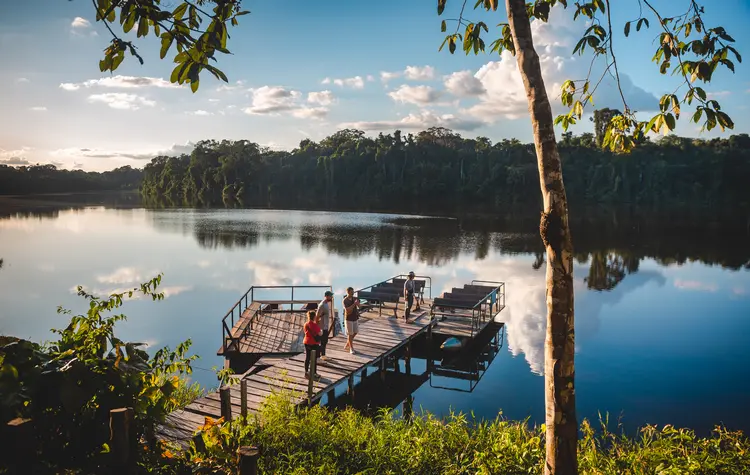
Peru does not have a single season; it has several running at once, and which window suits you depends entirely on where you are headed. The Andes and the Amazon share a dry season from roughly May to September, which is why those months are both the most popular and the most reliable, with clearer mountain views, firmer trails, and easier wildlife spotting along the rivers. The rainy season, November through March, brings greener landscapes and far thinner crowds, along with genuine downpours in the highlands and the February Inca Trail closure.
The coast keeps almost the opposite calendar. Lima and the south coast stay grey and cool through the Andean dry season and turn sunniest from December to March, which is worth knowing if Paracas or the beaches are a key part of your plan. Lining up these overlapping calendars is half the reason to begin early. With a few months in hand, we can steer your dates toward the conditions that fit your specific trip, whether that means the crispest Andean skies or the lush shoulder-season green with hardly anyone else around.
July deserves its own flag, as we mentioned. It carries the best weather of the year and the energy of Fiestas Patrias, the independence holidays around the 28th and 29th, when cities fill with parades and the whole country seems to be traveling at once. It is a wonderful time to be here. It is also the single hardest stretch to secure the good rooms, guides, and permits, which loops straight back to the same advice: if July is your month, start early.
Planning Your Peru Trip with Kuoda
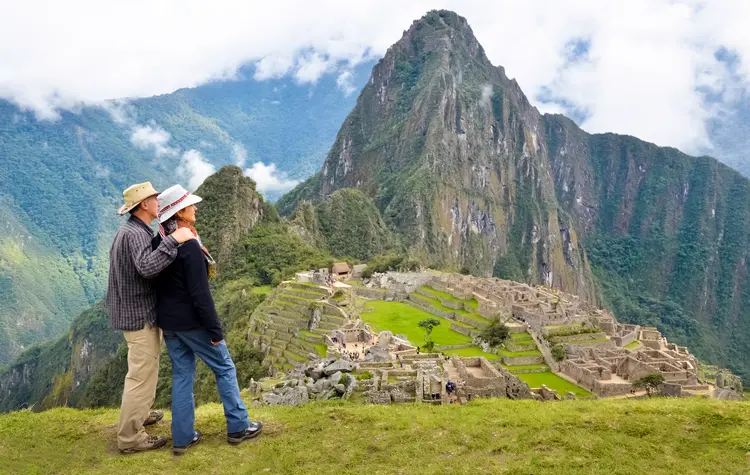
When you are ready to plan a trip to Peru, we do not need much to begin. A sense of who is traveling, roughly when, and what matters most to you: the experiences you would build the whole trip around, the pace that feels right, the things you would happily skip. From there we start shaping an itinerary, and the conversation moves back and forth until it fits.
The complexity is ours to carry. Permits, lodges, trains, guides, and the seams between regions all happen in the background, so the trip lands on you as something that feels effortless and unmistakably your own. The only thing we ask is the one thing we cannot create for you, which is a little time. Reach out with your initial vision, and let us handle the rest.
Start Planning Your Peru Journey →
Frequently Asked Questions
How far in advance should I plan a trip to Peru?
At least three months for a custom itinerary, and four to six months if you are traveling in the peak season of June through August or including the Classic Inca Trail. For July specifically, earlier is better, since it is the busiest month of the year.
How far ahead do I need to book the Inca Trail?
For peak-season dates in June, July, and August, four to six months ahead, and the most popular July dates can sell out within days of release, usually the October before. Permits are capped at roughly 200 trekkers per day, tied to your passport, and the trail closes every February.
What is the best time of year to visit Peru?
The dry season, May to September, gives the most reliable weather in the Andes and the Amazon and is ideal for trekking and Machu Picchu. The coast runs the other way, staying sunniest from December to March.
Can you plan a trip to Peru at the last minute?
Yes, especially outside peak season, though your options narrow quickly. The best lodges, guides, and Machu Picchu and Inca Trail permits are the first to go, so a last-minute trip usually means working with what is still available rather than what is ideal.
Is it worth visiting Peru during Fiestas Patrias in July?
It is a memorable time, with independence celebrations across the country and the best weather of the year, but it is also the most competitive travel window and the busiest time with large crowds. If you want to be here for it, plan several months ahead.

Luxury Vacations South America: A More Considered Way to Experience the Continent
Luxury vacations South America are often described through scale. Vast landscapes, iconic sites, a sense of di...
Read Post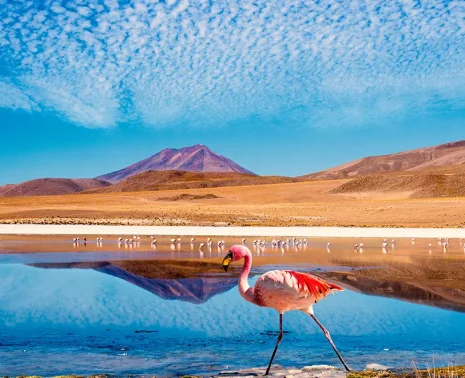
What to Do in Bolivia: Experiencing the Country Through Altitude, Isolation, and Depth
The question of what to do in Bolivia is often approached with curiosity. Salt flats, high-altitude cities,...
Read Post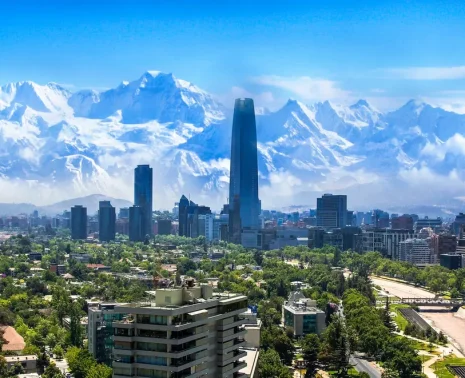
Chile Curated Journeys and the Art of Traveling Through Contrast Thoughtfully
Chile is a country shaped by distance and contrast. The Atacama Desert feels almost extraterrestrial in its...
Read Post
8 DAYS
Luxury Machu Picchu Tours: Unveiling Peru’s Timeless Wonders
Cusco, Lima, Machu Picchu, Sacred Valley

8 DAYS
Peru Family Vacation: Journey to Machu Picchu and Beyond
Cusco, Lima, Machu Picchu, Sacred Valley

11 DAYS
Amazon River Cruise: A Luxury Journey Through the Amazon
Lima, Cusco, Sacred Valley, Machu Picchu, Iquitos, Amazon River