May 11, 2026 | by: Kuoda Authors


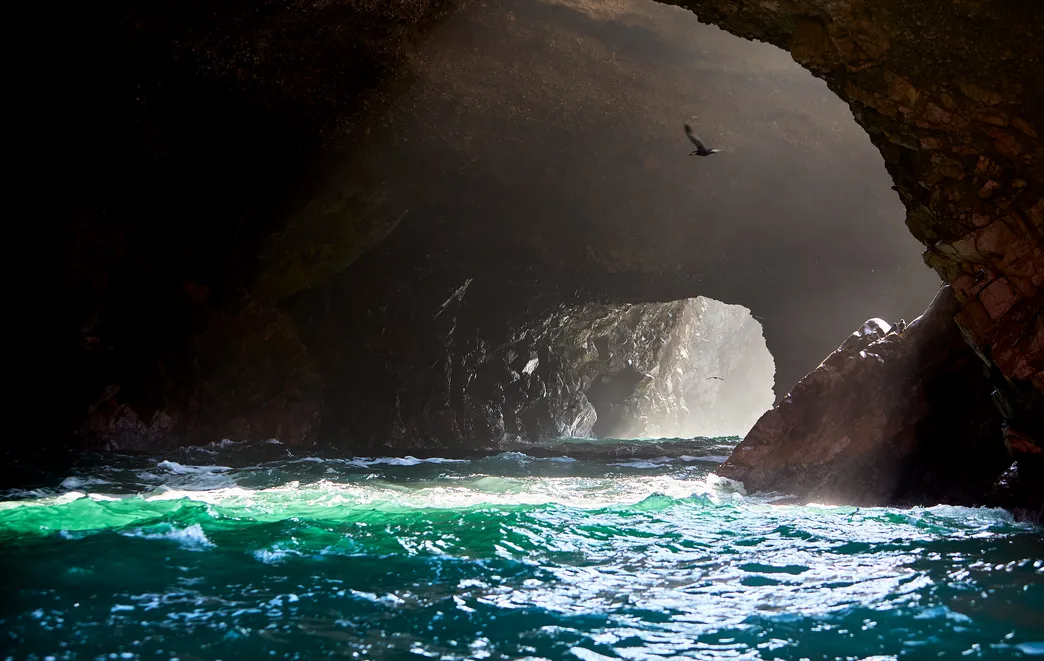
South of Lima, where Peru’s desert coastline meets the Pacific Ocean, the landscape begins to change. Sand dunes descend toward cold ocean waters, fishing boats line quiet harbors, and seabirds circle above rocky outcrops rising from the sea.
It is here that travelers encounter the Ballestas Islands.
Often referred to simply as ballestas, these small islands off the coast of Paracas hold one of the most concentrated collections of marine wildlife along Peru’s shoreline. Sea lions gather on rocky beaches, thousands of birds nest along cliff faces, and Humboldt penguins move between the ocean and sheltered coves.
Yet the true value of visiting the Ballestas Islands lies not in the number of animals seen, but in understanding the ecological story unfolding along Peru’s Pacific coast.
Approached thoughtfully, this short coastal excursion becomes a meaningful introduction to one of the richest marine ecosystems in South America.
Ballestas and the Pacific Marine Ecosystem
The wildlife surrounding the Ballestas Islands exists because of a powerful ocean current.
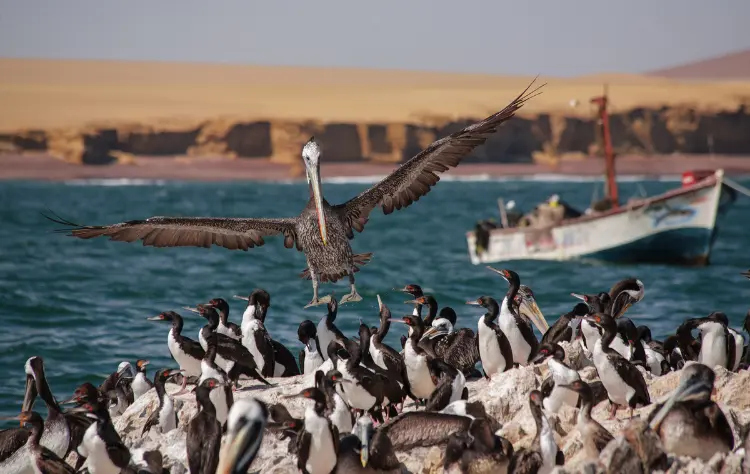
The Humboldt Current flows northward along the Pacific coast of South America, bringing cold, nutrient-rich waters from the Antarctic region. These nutrients fuel enormous populations of fish, which in turn support seabirds, marine mammals, and other wildlife.
As boats approach the islands, the scale of this ecosystem becomes visible. Pelicans glide low across the water. Cormorants cluster along cliff edges. Sea lions gather in large colonies along protected rocks.
The Ballestas Islands function as a sanctuary where marine life thrives within the larger coastal ecosystem of Peru.
Wildlife Encounters Around the Ballestas Islands
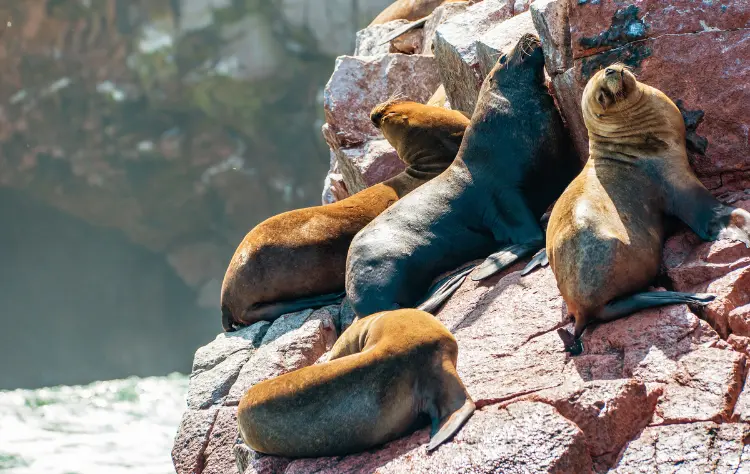
For many visitors, the highlight of the Ballestas experience is the abundance of wildlife visible from the water.
Sea lions dominate the shoreline. Their colonies occupy rocky platforms where adults rest while younger animals move between land and sea.
Birdlife appears equally abundant. The Peruvian booby and the guanay cormorant nest in large numbers along steep cliffs. These species historically contributed to one of Peru’s most unusual natural resources: guano.
Guano, accumulated bird droppings used as fertilizer, once formed the basis of a significant export industry in Peru during the nineteenth century. Today, harvesting is carefully managed to protect both birds and their habitat.
Among the most remarkable residents of the Ballestas Islands is the Humboldt penguin. Adapted to cold Pacific waters, these penguins are among the few penguin species found outside Antarctica.
Seeing them along Peru’s desert coast offers a surprising reminder of how ecosystems defy expectation.
The Candelabra Geoglyph
Before reaching the islands themselves, boats often pass a mysterious symbol carved into the coastal hillside.
Known as the Paracas Candelabra, the massive geoglyph resembles a trident or candlestick etched into the desert. Visible only from the sea, its origin remains debated among archaeologists.
Some theories link it to ancient Paracas culture. Others suggest maritime navigation markers used by early sailors.
Regardless of its origin, the Candelabra offers an intriguing glimpse into the region’s ancient coastal history before the wildlife encounter even begins.
Paracas: Gateway to the Ballestas Islands
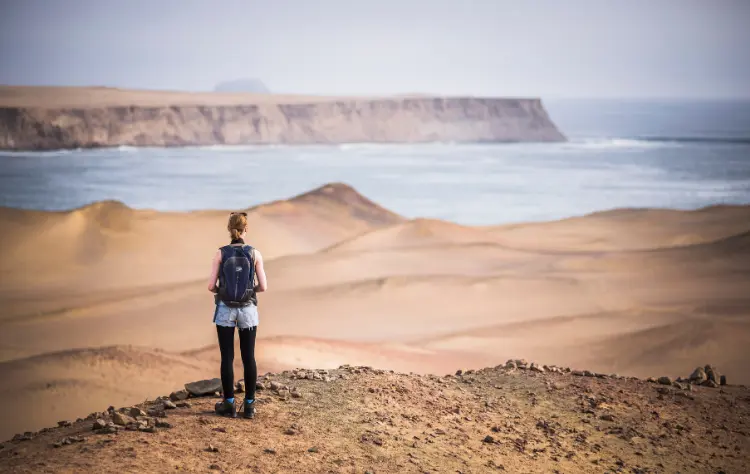
Most journeys to the Ballestas Islands begin in the coastal town of Paracas.
Located about four hours south of Lima, Paracas sits beside a protected marine reserve where desert cliffs meet open ocean. The area is known for dramatic coastal landscapes shaped by wind and water.
Paracas provides a natural pause within a broader Peru journey. Travelers often spend a night here, allowing time for early morning wildlife excursions before continuing inland toward the Andes.
Private transfers and carefully timed departures ensure that the experience remains smooth and unhurried.
Integrating Ballestas Into a Broader Peru Journey
The Ballestas Islands are rarely visited in isolation. Instead, they form part of a wider exploration of southern Peru.
After coastal time in Paracas, many travelers continue to the desert oasis of Huacachina near Ica or fly onward to Cusco to begin exploration of the Andes and eventually Machu Picchu.
This transition from coastal ecosystems to highland civilizations reveals the remarkable geographic diversity of Peru within a relatively short distance.
Kuoda designs these itineraries carefully, ensuring that each region complements the next rather than competing for attention.
Responsible Wildlife Observation
The wildlife of the Ballestas Islands depends on careful protection.
Boats are required to maintain respectful distances from nesting sites and marine colonies. Visitors remain aboard vessels while circling the islands, minimizing disturbance to animals.
Responsible tourism practices help ensure that wildlife continues to thrive within this fragile marine environment.
Kuoda works with experienced operators who prioritize safety, environmental awareness, and respectful wildlife viewing.
Through the Kaypi Kunan Foundation, Kuoda supports broader initiatives across Peru that strengthen community development and environmental stewardship.
Recognition as a Tripadvisor Travelers’ Choice 2026 winner reflects Kuoda’s ongoing commitment to thoughtful travel experiences across South America.
Frequently Asked Questions About Ballestas
What animals can be seen at the Ballestas Islands?
Visitors commonly observe sea lions, seabirds such as pelicans and cormorants, and occasionally Humboldt penguins.
How long does a Ballestas Islands excursion last?
Most boat excursions last around two hours, departing from the harbor in Paracas.
When is the best time to visit the Ballestas Islands?
Wildlife can be observed year-round, though early morning departures typically provide calmer ocean conditions.
Can the Ballestas Islands be visited as a day trip from Lima?
While technically possible, most travelers prefer to stay overnight in Paracas to avoid a rushed schedule.
Where Desert Meets Ocean
Along Peru’s southern coast, the meeting of desert and sea creates an unexpected richness of life.
The Ballestas Islands remind visitors that even the most arid landscapes can support vibrant ecosystems when ocean currents and geography align.
Experiencing ballestas thoughtfully reveals more than wildlife. It reveals the delicate balance between environment, history, and conservation that defines Peru’s Pacific coast.
And within that balance, the journey gains a deeper sense of place.

Fun Facts About Peru: What They a Reveal About How to Experience the Country
Fun facts about Peru are often presented as curiosities. Unexpected details. Numbers. Cultural references t...
Read Post
Discover the Secrets of Inti Raymi: Why Some Rituals Are Worth More Than a Thousand Monuments
There are days in Cusco when the city seems to hold its breath. It is not just the chill of June, which always...
Read Post
Otavalo: Culture, Craft, and the Living Highlands of Ecuador
High in Ecuador’s northern Andes, the town of Otavalo occupies a cultural landscape shaped by centuries of t...
Read Post
8 DAYS
Luxury Machu Picchu Tours: Unveiling Peru’s Timeless Wonders
Cusco, Lima, Machu Picchu, Sacred Valley

8 DAYS
Peru Family Vacation: Journey to Machu Picchu and Beyond
Cusco, Lima, Machu Picchu, Sacred Valley

11 DAYS
Amazon River Cruise: A Luxury Journey Through the Amazon
Lima, Cusco, Sacred Valley, Machu Picchu, Iquitos, Amazon River