February 20, 2026 | by: Kuoda Authors


A Place Often Named, Rarely Understood
For many travelers, the Galápagos exist primarily as an ecosystem. A collection of islands defined by endemic species, volcanic terrain, and scientific legacy. What is less often explored is the human geography that quietly sustains this fragile archipelago.
The galapagos islands capital city is not a ceremonial title or an abstract administrative label. It is a lived-in place, shaped by daily rhythms, local institutions, and a relationship with nature that is practical rather than performative. Understanding this city is not essential for every traveler, but for those who value context, it offers a deeper sense of where the Galápagos begin.
The capital of the Galápagos Province is Puerto Baquerizo Moreno, located on San Cristóbal Island. It is here that governance, education, conservation administration, and everyday life intersect. It is also where many journeys into the archipelago quietly start or end.
Why the Capital City Matters to Thoughtful Travelers
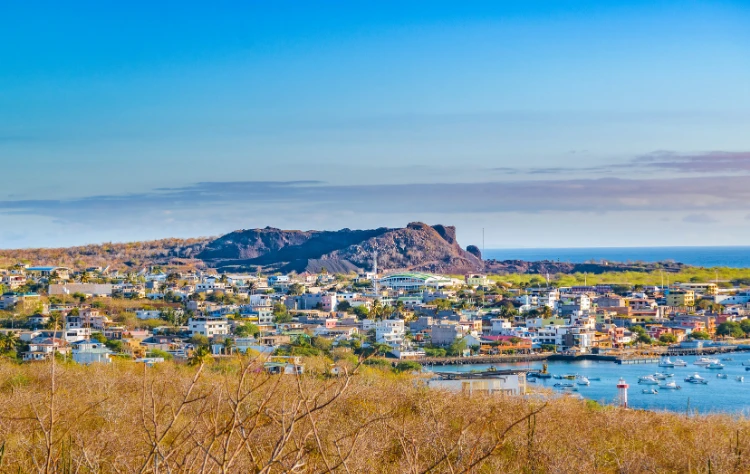
San Cristóbal is not a destination designed to impress. Its appeal lies elsewhere. It offers a grounding point, a sense of continuity between land and sea, between people and place.
For travelers accustomed to seamless experiences, the capital city provides orientation without spectacle. This is where environmental regulations are administered, where the Galápagos National Park Directorate maintains its presence, and where residents balance livelihoods with conservation responsibilities.
Understanding the capital city helps travelers appreciate that the Galápagos are not a pristine museum. They are a living territory. A place where policy, science, and community coexist in careful balance.
San Cristóbal’s Quiet Character
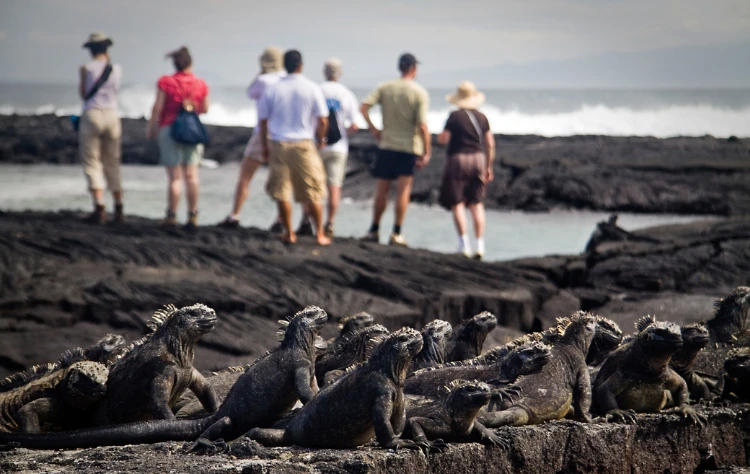
Unlike other inhabited islands in the archipelago, San Cristóbal retains a sense of calm that feels unforced. The streets of Puerto Baquerizo Moreno are walkable and unpretentious. Fishing boats share the harbor with research vessels. Sea lions rest on benches not as attractions, but as neighbors.
There is no pressure to perform or consume. Life unfolds at a measured pace. Cafés open early to serve locals heading to work. Schools and municipal buildings sit alongside small family-run businesses. The city functions first for its residents, and that clarity shapes the visitor experience in subtle ways.
This atmosphere resonates with travelers who value ease over entertainment and observation over immersion-by-force.
A Cultural and Administrative Anchor
As the capital of the province, Puerto Baquerizo Moreno houses institutions that quietly influence the entire archipelago. Immigration controls, environmental permits, and conservation oversight all trace back to offices here.
One of the most revealing places to visit is the Interpretation Center, which provides historical and ecological context without dramatization. Exhibits explain human settlement, conservation challenges, and the evolving relationship between residents and protected land.
For Kuoda travelers, experiences like this are never treated as obligatory stops. They are offered as context, available when curiosity calls, and easily integrated into a thoughtfully paced itinerary.
The Capital City as a Starting Point
While many Galápagos itineraries focus on vessels and remote islands, San Cristóbal offers a gentle transition into the region. Beginning a journey here allows travelers to acclimate to the environmental ethos that governs the archipelago.
Land-based stays on San Cristóbal can complement a private yacht journey or stand on their own for those seeking a slower approach. Boutique accommodations emphasize simplicity, comfort, and environmental responsibility rather than excess. Logistics remain discreet, handled with precision, allowing travelers to move through the island without friction.
This is where Kuoda’s role as a local experience curator becomes essential. The capital city rewards subtle planning. Timing, access, and local relationships matter more than volume.
Human Presence in a Protected Landscape
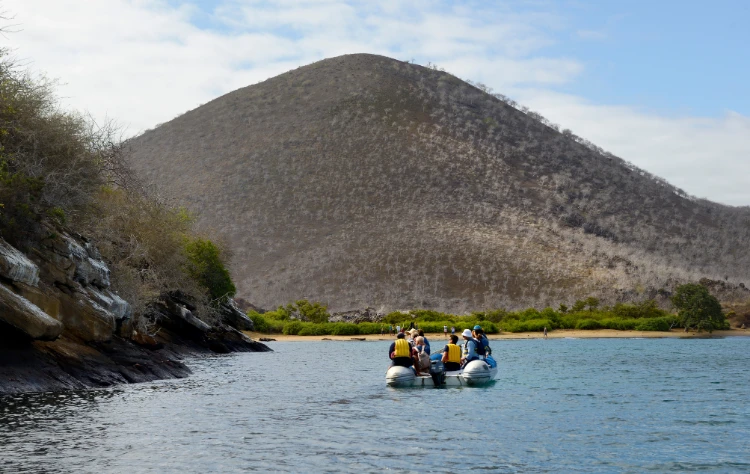
The Galápagos often inspire conversations about preservation. In San Cristóbal, those conversations feel practical rather than abstract. Residents live with regulations that shape daily decisions. Fishing quotas, waste management systems, and visitor limits are part of the civic fabric.
Travelers who spend time in the capital city gain a more nuanced understanding of conservation as lived practice. This perspective aligns naturally with Kuoda’s approach to climate-positive travel and community engagement through the Kaypi Kunan Foundation. These efforts are integrated quietly, without framing travel as virtue or sacrifice.
The result is an experience that feels informed, respectful, and grounded.
How Kuoda Approaches the Galápagos Capital City
Kuoda does not design itineraries around checklists or reputations. When San Cristóbal is included, it is because it adds coherence and meaning to the journey.
Private transfers, carefully selected accommodations, and access to knowledgeable local guides allow the capital city to reveal itself naturally. There is space to observe, to learn, and to move at a pace that respects both the traveler and the destination.
As a Tripadvisor Travelers’ Choice 2025 winner, Kuoda’s reputation rests on precisely this kind of restraint. Logistics fade into the background. Experiences feel intentional rather than orchestrated.
Frequently Asked Questions
What is the galapagos islands capital city?
The galapagos islands capital city is Puerto Baquerizo Moreno, located on San Cristóbal Island. It serves as the administrative and civic center of the Galápagos Province.
Is the capital city worth visiting during a Galápagos trip?
For travelers interested in cultural context and a quieter introduction to the islands, the capital city offers insight into local life and conservation governance without disrupting the rhythm of a nature-focused journey.
Can Kuoda include San Cristóbal in a private itinerary?
Yes. Kuoda designs fully customized itineraries that may include time in San Cristóbal when it complements the traveler’s interests, pacing preferences, and overall journey design.
Does visiting the capital city support sustainable travel?
Spending time in the capital city contributes to the local economy and fosters understanding of how conservation and community coexist in the Galápagos, aligning naturally with responsible travel principles.
A Beginning Rather Than a Highlight
The capital city of the Galápagos is not meant to stand out. It is meant to hold things together.
For travelers who appreciate places that function quietly, with integrity and intention, San Cristóbal offers a meaningful point of connection. It grounds the Galápagos in human reality, without diminishing the wonder that lies beyond its shores.
Kuoda approaches this place as it does all destinations. With local knowledge, thoughtful design, and a respect for rhythm that allows experiences to unfold naturally. The result is not a louder journey, but a more complete one.

Pampas Argentina and the Art of Stillness in the Southern Cone
A Landscape Defined by Continuity There are places that announce themselves immediately, and others that ...
Read Post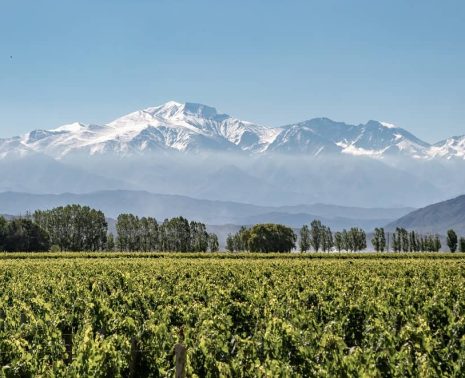
A Mendoza Wine Trip Shaped by Landscape, Craft, and Time
Wine regions often announce themselves through excess. Mendoza does not. It reveals itself gradually, throu...
Read Post
A Peru Family Trip Designed for Curiosity, Comfort, and Shared Perspective
Family travel has a way of clarifying priorities. As children grow and interests mature, the most meaningfu...
Read Post
8 DAYS
Luxury Machu Picchu Tours: Unveiling Peru’s Timeless Wonders
Cusco, Lima, Machu Picchu, Sacred Valley

8 DAYS
Peru Family Vacation: Journey to Machu Picchu and Beyond
Cusco, Lima, Machu Picchu, Sacred Valley

11 DAYS
Amazon River Cruise: A Luxury Journey Through the Amazon
Lima, Cusco, Sacred Valley, Machu Picchu, Iquitos, Amazon River