May 17, 2026 | by: Kuoda Authors


Introduction
Bolivia does not present itself easily.
It sits at altitude, both geographically and culturally. Landscapes feel expansive rather than defined. Cities rise above 3,500 meters, where the air alters pace and perception. Movement requires adjustment. Observation requires patience.
For travelers planning a Bolivia trip, the question is not what to include. It is how to approach a country that resists simplification. How to move through environments that are both visually striking and physically demanding. How to experience depth without forcing it into narrative.
Bolivia rewards those who allow it to remain what it is.
A Bolivia Trip Begins With Altitude
Altitude defines much of Bolivia’s geography.
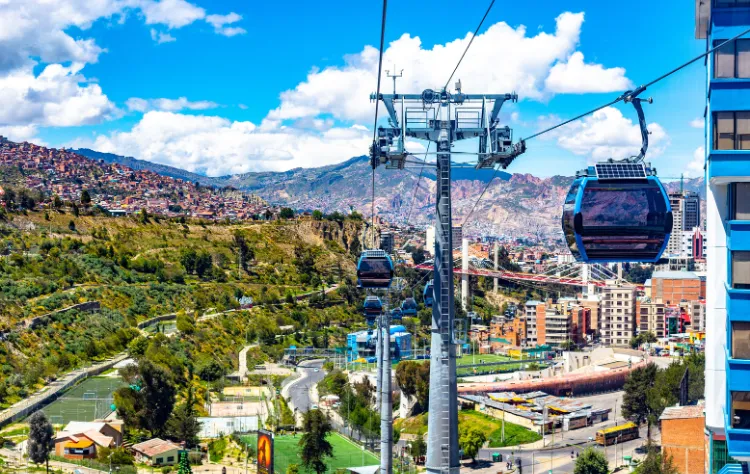
In La Paz, one of the highest administrative capitals in the world, the city unfolds within a steep canyon. Cable cars connect neighborhoods suspended along the slopes, offering a perspective that feels both urban and aerial.
Arriving here requires adaptation. The body slows. Movement becomes measured. This shift is not a limitation but an introduction to the rhythm of the Andes.
Kuoda designs itineraries that allow time for acclimatization, ensuring that travelers engage with the environment comfortably and without urgency.
A Bolivia trip begins with understanding this pace.
The Altiplano: Landscape Without Interruption
Beyond La Paz, the Altiplano extends outward in vast, open plains.
Here, horizon replaces skyline. Villages appear intermittently, often shaped by agricultural cycles and traditional practices. The landscape feels continuous, with little visual interruption.
This environment defines much of the Bolivian experience. It invites observation rather than movement.
Traveling through the Altiplano requires careful coordination. Distances can be deceptive. Roads are long and often remote. Kuoda ensures that transitions remain seamless through private transport and thoughtful scheduling.
The experience becomes one of immersion rather than transit.
Salar de Uyuni: Scale and Reflection
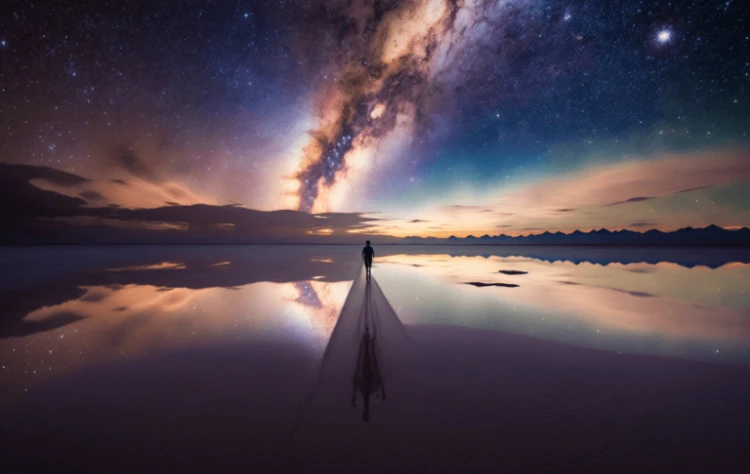
Among the most recognizable landscapes in Bolivia is the Salar de Uyuni.
At over 10,000 square kilometers, it is the largest salt flat in the world. During the dry season, its surface forms geometric patterns that extend across the horizon. During the wet season, a thin layer of water creates reflective conditions where sky and ground appear indistinguishable.
The experience of the Salar is shaped by timing and access. Private excursions allow travelers to reach remote areas where the sense of scale remains uninterrupted.
Accommodation in this region reflects its isolation. Carefully selected lodges offer comfort while maintaining connection to the surrounding landscape.
A Bolivia trip often finds its visual center here, though the meaning of the experience extends beyond photography.
Cultural Continuity in the Andes
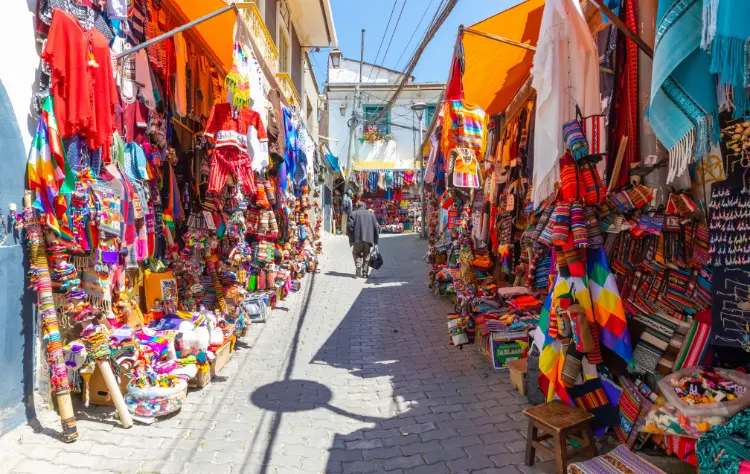
Bolivia’s cultural identity remains closely tied to Indigenous traditions.
Markets, festivals, and daily life reflect practices that have continued for generations. Textile weaving, agricultural methods, and ceremonial traditions remain visible throughout the country.
Visiting sites such as Tiwanaku Archaeological Site introduces the deeper historical context. This pre-Inca civilization shaped many of the cultural foundations that persist today.
Engagement with local communities is approached carefully. Kuoda arranges experiences that prioritize respect and authenticity, allowing travelers to observe and understand without intrusion.
Culture in Bolivia is not presented. It is lived.
Lake Titicaca: Water at Altitude
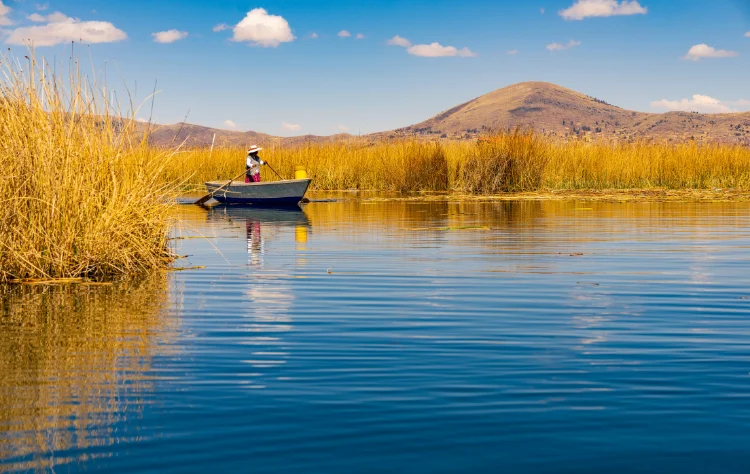
On the border between Bolivia and Peru lies Lake Titicaca, the highest navigable lake in the world.
The lake introduces a different dimension to the Bolivian landscape. Water softens the surrounding terrain. Islands support communities that maintain distinct cultural practices.
Visiting the lake often includes time on the Bolivian side, where quieter, less-visited islands offer a more intimate experience. Private boat transfers and guided visits allow for meaningful engagement with local traditions.
The lake provides contrast within a country defined by land.
Designing a Bolivia Trip Thoughtfully
Bolivia requires careful itinerary design.
Distances, altitude, and infrastructure all influence how the journey unfolds. Attempting to include too many regions risks fatigue and fragmentation.
Kuoda approaches a Bolivia trip with selection and sequencing. Key regions are chosen based on interest and combined in a way that allows for acclimatization and rest.
Private transfers, experienced guides, and carefully chosen accommodations ensure that logistics remain unobtrusive.
The journey feels continuous, even when the geography is not.
Accommodation and Comfort
Luxury in Bolivia is defined differently than in other destinations.
Properties emphasize location and context over scale. Lodges in remote regions provide access to landscapes that would otherwise remain difficult to reach.
In La Paz, boutique hotels offer comfort within the city’s unique topography. In Uyuni, lodges are designed to integrate with the salt flat environment, often using local materials.
Kuoda selects accommodations that align with the character of each region while maintaining consistent standards of service and comfort.
The experience remains grounded.
Sustainability and Responsible Travel
Bolivia’s landscapes and communities require careful engagement.
High-altitude ecosystems are sensitive to disruption. Cultural traditions depend on respectful interaction.
Kuoda partners with local operators who prioritize sustainability, community collaboration, and environmental awareness.
Private travel reduces impact and allows for more controlled interaction with fragile environments.
Through the Kaypi Kunan Foundation, Kuoda supports broader initiatives across South America that reinforce education and community development.
Recognition as a Tripadvisor Travelers’ Choice 2025 winner reflects continued trust among travelers who value thoughtful and responsible travel design.
Frequently Asked Questions About a Bolivia Trip
How many days are ideal for a Bolivia trip?
Ten to twelve days allow for exploration of key regions such as La Paz, Uyuni, and Lake Titicaca with appropriate pacing.
Is altitude a concern in Bolivia?
Yes. Many regions sit above 3,000 meters. Gradual acclimatization and thoughtful itinerary design are essential.
When is the best time to visit Bolivia?
The dry season from May to October offers clearer conditions, while the wet season creates reflective landscapes on the Uyuni salt flats.
Can Bolivia be combined with Peru or Chile?
Yes. Bolivia integrates naturally with southern Peru or northern Chile for a broader Andean journey.
A Country That Requires Perspective
Bolivia does not conform to expectation.
Its landscapes stretch beyond immediate comprehension. Its cultures remain deeply rooted. Its pace resists acceleration.
Experiencing a Bolivia trip thoughtfully means allowing space for adjustment. For observation. For understanding that develops gradually.
And in that gradual understanding, the country reveals its depth.
Best Time to Visit Peru: When to Go by Region & Experience
Planning a journey to Peru is an exciting step toward exploring a land of extraordinary diversity, from the so...
Read Post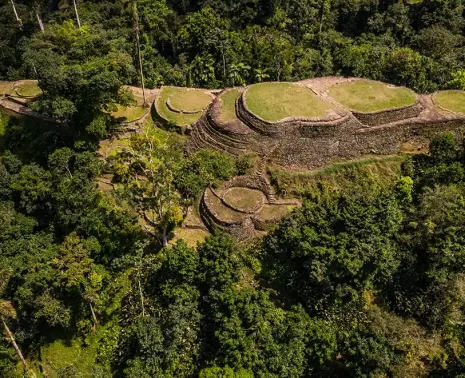
The Lost City Colombia and the Meaning of Reaching It
Some destinations are defined by what they are. Others by what it takes to reach them. The Lost City Col...
Read Post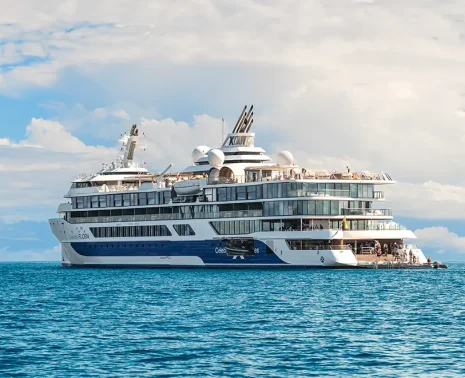
Best Galápagos Cruises: Choosing the Right Way to Experience the Islands
The phrase “best Galápagos cruises” suggests comparison. Ships, cabins, amenities, itineraries. It invite...
Read Post
8 DAYS
Luxury Machu Picchu Tours: Unveiling Peru’s Timeless Wonders
Cusco, Lima, Machu Picchu, Sacred Valley

8 DAYS
Peru Family Vacation: Journey to Machu Picchu and Beyond
Cusco, Lima, Machu Picchu, Sacred Valley

11 DAYS
Amazon River Cruise: A Luxury Journey Through the Amazon
Lima, Cusco, Sacred Valley, Machu Picchu, Iquitos, Amazon River