April 24, 2026 | by: Marisol Machaca


The Atacama Desert does not announce itself loudly. It reveals itself through silence.
High-altitude plateaus stretch toward distant volcanoes. Salt flats shimmer under relentless sun. Night skies deepen into almost improbable clarity. It is often described as the driest desert on Earth, yet dryness alone does not define it.
When travelers search for Atacama Desert facts, what they are often seeking is reassurance. They want to understand the environment before entering it. They want to know what makes it unique, and how to experience it without discomfort or superficiality.
Facts, in this case, are not trivia. They are orientation.
Atacama Desert Facts That Shape the Experience
Understanding the Atacama begins with geography. Located in northern Chile, stretching roughly 1,000 kilometers along the Pacific coast, the desert lies between the Andes Mountains and the Chilean Coastal Range. This positioning creates a rain shadow effect that severely limits precipitation.
Some regions have recorded no measurable rainfall for decades.
Yet this dryness produces unexpected beauty.
Fact 1: It Is One of the Driest Places on Earth
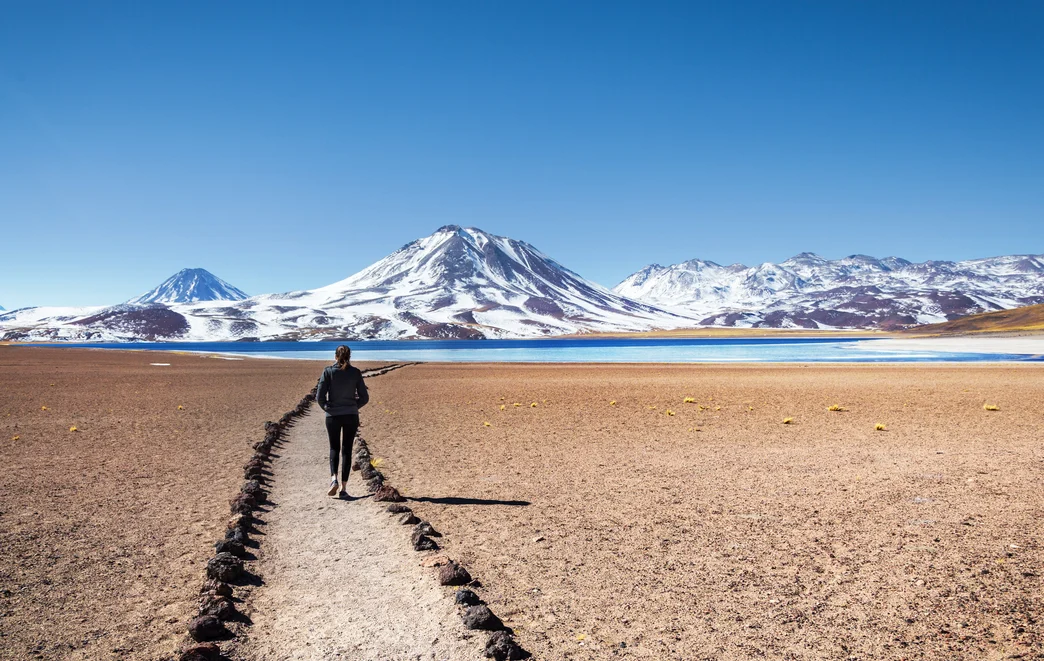
The Atacama Desert’s aridity is the result of three converging forces: the cold Humboldt Current offshore, the Andes blocking moisture from the Amazon Basin, and the subtropical high-pressure system over the Pacific.
This combination creates an environment where evaporation exceeds rainfall almost entirely.
For travelers, this means extraordinary clarity. Landscapes appear sharply defined. Colors feel concentrated. Sunsets unfold in gradual, unfiltered gradients.
It also means preparation is essential. Altitude, sun exposure, and temperature variation require pacing and hydration. A thoughtfully designed journey accounts for these realities, integrating rest periods and gradual acclimatization.
Fact 2: Altitude Influences Every Activity
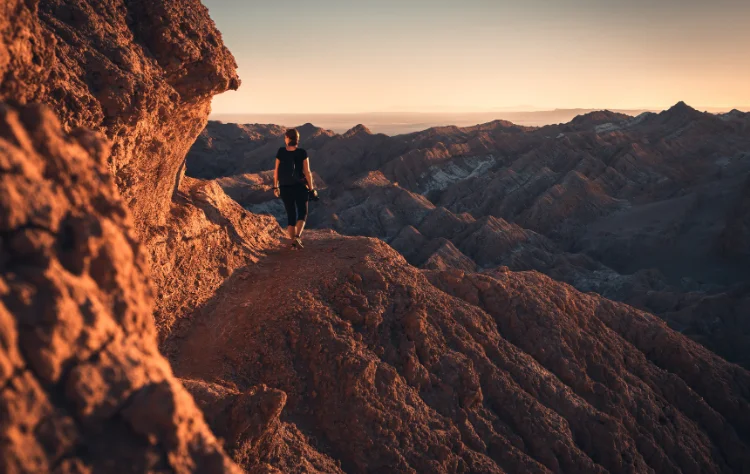
Many of the Atacama’s most striking landscapes sit above 3,000 meters. The town of San Pedro de Atacama rests at approximately 2,400 meters above sea level.
Higher still are the Altiplanic lagoons and the Tatio geysers.
This elevation shapes experience. Oxygen levels are lower. Mornings can be unexpectedly cold. Even short walks feel different.
A refined itinerary builds in gradual ascent. Private guides monitor pace carefully. Lodge selection matters. The best properties incorporate architectural design that buffers temperature shifts and provides restorative comfort.
Luxury here is physiological awareness.
Fact 3: The Desert Is Alive, Quietly
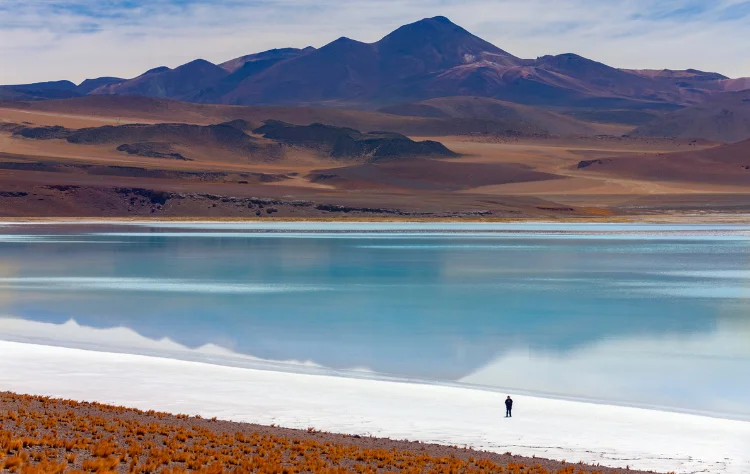
Despite its dryness, the Atacama hosts adapted species of flamingos, vicuñas, foxes, and hardy plant life that bloom unexpectedly after rare rainfall events.
At Laguna Chaxa, flamingos move delicately across mineral-rich waters within the Salar de Atacama. Their reflection against snow-capped volcanoes creates an almost surreal contrast.
The apparent emptiness conceals resilience.
Understanding these Atacama Desert facts transforms the experience from scenic to ecological. A knowledgeable naturalist guide explains how microclimates support life and how ancient trade routes once crossed these same plains.
Fact 4: The Night Sky Is Among the Clearest on Earth
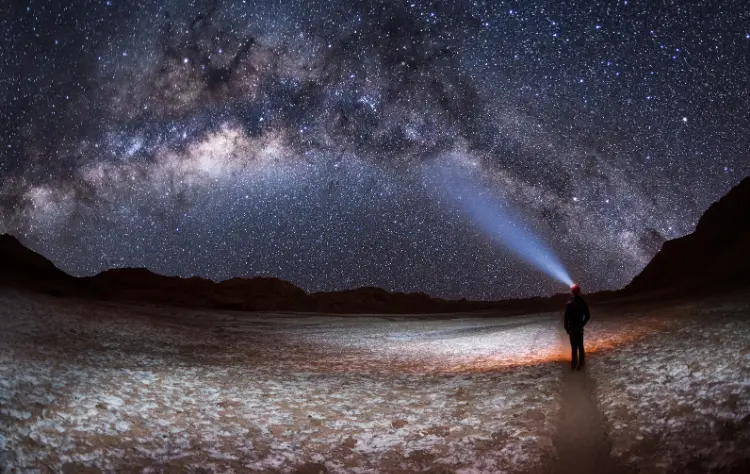
Low humidity, high altitude, and minimal light pollution make the Atacama one of the world’s premier astronomical locations. Major observatories, including ALMA Observatory, operate in this region due to exceptional atmospheric stability.
For travelers, this translates into remarkable stargazing. Constellations appear sharply etched. The Milky Way arcs visibly overhead.
Private astronomy experiences, arranged with expert guides and high-quality telescopes, elevate the evening beyond observation into interpretation. The desert’s silence enhances the sense of scale.
The sky becomes a landscape in itself.
Fact 5: It Is One of the Oldest Deserts on Earth
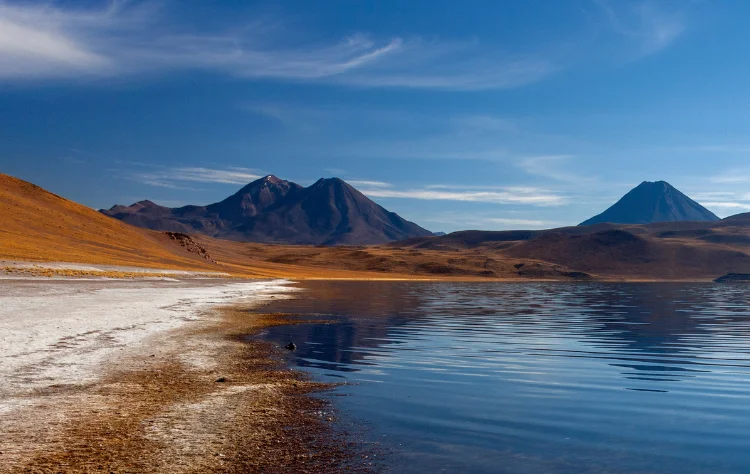
Scientific estimates suggest the Atacama has been arid for millions of years, making it one of the planet’s oldest deserts.
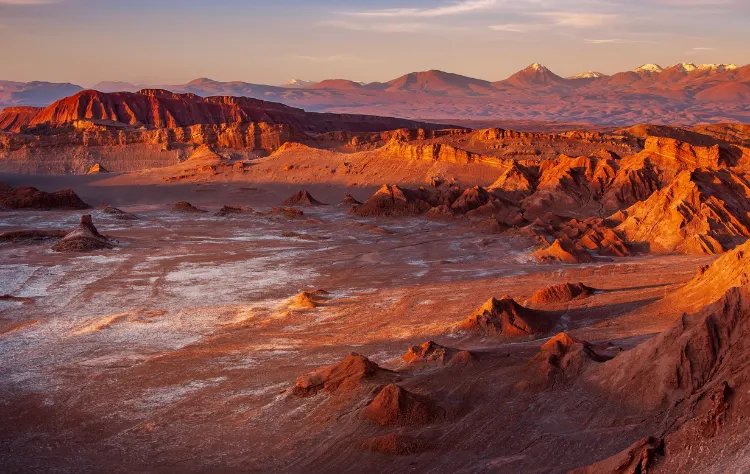
Its geological formations reflect deep time. Salt crusts crack into geometric patterns. Wind shapes rock into abstract forms. The Valle de la Luna appears almost extraterrestrial at dusk.
Knowing this shifts perception. Visitors are not simply observing scenery. They are entering a landscape shaped over epochs.
Designing a Journey Around Atacama Desert Facts
Facts inform preparation. Design determines experience.
A thoughtful exploration of the Atacama centers around a single base in San Pedro, minimizing daily relocation. High-end desert lodges offer architecture that integrates with the environment, often constructed from local materials in muted tones.
Private excursions depart early to capture softer light and cooler temperatures. Afternoons allow for rest or spa treatments designed to counteract dryness and altitude.
Sunset at Valle de la Luna is timed carefully, avoiding peak congestion and selecting vantage points that emphasize stillness.
Excursions to geyser fields such as El Tatio require pre-dawn departure, balanced later by restorative quiet.
The desert is not approached aggressively. It is approached respectfully.
Integrating the Atacama Into a Broader South American Journey
The Atacama pairs naturally with other Andean environments. Combining northern Chile with Bolivia’s Uyuni salt flats creates continuity of high-altitude desert landscapes. Alternatively, integrating the Atacama with Santiago offers contrast between urban sophistication and remote austerity.
Kuoda’s regional expertise ensures that transitions across borders remain seamless. Private transfers, carefully timed flights, and curated accommodations maintain coherence.
The Atacama becomes one movement within a larger composition.
Sustainability and Fragile Balance
Desert ecosystems recover slowly from disturbance. Tire tracks can remain visible for years. Water resources are limited.
Responsible travel practices are essential. Kuoda partners with lodges and guides who adhere to environmental regulations and minimize ecological footprint. Group sizes are controlled. Routes are selected to reduce impact.
Through the Kaypi Kunan Foundation, Kuoda supports long-term community initiatives across South America, reinforcing a philosophy of stewardship grounded in continuity rather than publicity.
Recognition as a Tripadvisor Travelers’ Choice 2025 winner reflects consistent attention to experience and integrity.
Frequently Asked Questions About Atacama Desert Facts
What is the most important Atacama Desert fact for travelers?
Altitude. Many key sites sit above 3,000 meters. Gradual acclimatization and thoughtful pacing are essential for comfort and safety.
Is the Atacama extremely hot?
Days can be warm under intense sun, but nights are often cold due to low humidity and elevation. Temperature variation is significant and requires layered clothing.
How many days are ideal?
Three to four nights allow for exploration of lagoons, salt flats, geysers, and astronomical experiences without fatigue.
Is the Atacama suitable for luxury travel?
Yes, when designed carefully. Boutique desert lodges offer privacy, refined comfort, and curated excursions that respect the environment while ensuring ease.
Where Silence Speaks
The Atacama Desert does not overwhelm with abundance. It clarifies through absence.
Understanding Atacama Desert facts deepens appreciation. Dryness becomes precision. Altitude becomes perspective. Night sky becomes scale.
When approached thoughtfully, the desert offers more than scenery. It offers recalibration.
The experience unfolds slowly, deliberately, and with quiet confidence.
Rainy Season in Peru: When It Is and What to Expect
When is the rainy season in Peru, and what should travelers actually expect? Understanding how the wet season ...
Read Post
Dry Season in Peru: Best Months, Weather & What Travelers Should Know
When is the dry season in Peru, and what can travelers truly expect during these months? Understanding Peru’...
Read Post
Best Time to Visit Peru: When to Go by Region & Experience
Planning a journey to Peru is an exciting step toward exploring a land of extraordinary diversity, from the so...
Read Post
8 DAYS
Luxury Machu Picchu Tours: Unveiling Peru’s Timeless Wonders
Cusco, Lima, Machu Picchu, Sacred Valley

8 DAYS
Peru Family Vacation: Journey to Machu Picchu and Beyond
Cusco, Lima, Machu Picchu, Sacred Valley

11 DAYS
Amazon River Cruise: A Luxury Journey Through the Amazon
Lima, Cusco, Sacred Valley, Machu Picchu, Iquitos, Amazon River