November 19, 2026 | by: Kuoda Authors


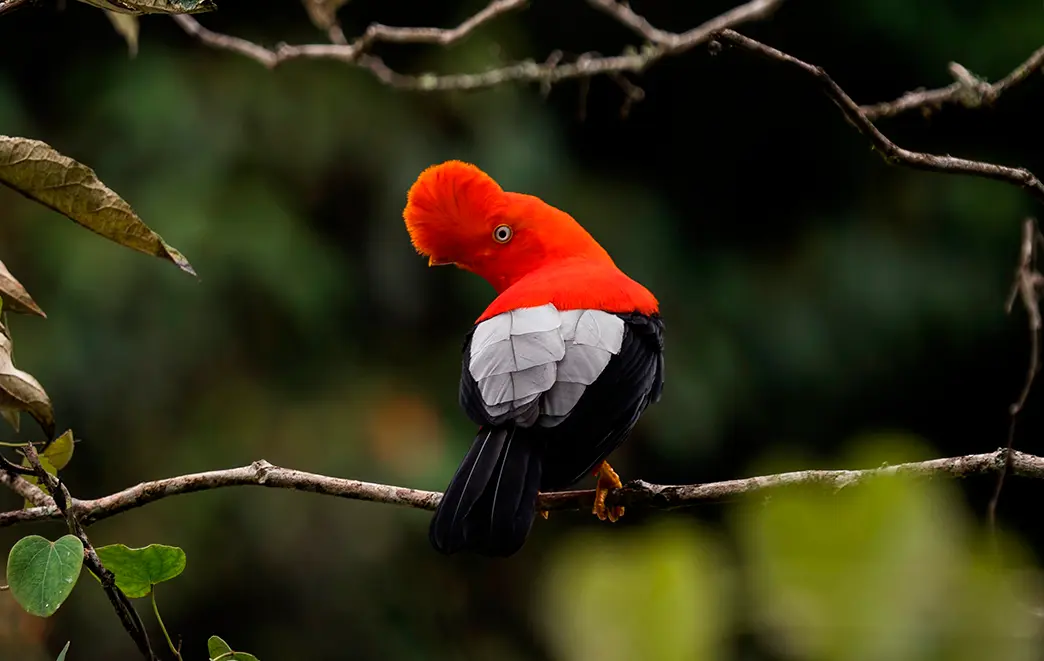
Peru’s national bird is the Andean Cock-of-the-Rock (Rupicola peruvianus), a striking species native to the humid forests of the Andes. Recognized for the male’s vivid orange-red plumage and distinctive fan-shaped crest, this bird is one of the most recognizable inhabitants of Peru’s cloud forests. Known locally as the gallito de las rocas or tunqui, it is also famous for its elaborate courtship displays, during which males gather in groups to attract females.
Found along the eastern slopes of the Andes, from Venezuela to Bolivia, the Andean Cock-of-the-Rock inhabits humid montane forests where dense vegetation, rocky outcrops, and forest streams create suitable conditions for feeding and nesting. In Peru, it represents an important part of the country’s natural heritage and offers travelers a glimpse into the extraordinary biodiversity of its mountain and rainforest ecosystems.
For birdwatchers and nature enthusiasts, encountering this species in the wild is an opportunity to discover more than one remarkable bird. It opens the door to exploring Peru’s cloud forests, learning about the ecological relationships that sustain them, and discovering the wider wildlife experiences that can be incorporated into a private journey through the country.
What Is the National Bird of Peru?
The national bird of Peru is the Andean Cock-of-the-Rock (Rupicola peruvianus), a colorful bird belonging to the Cotingidae family. Known in Spanish as the gallito de las rocas and also called tunqui, it was officially declared Peru’s national bird on December 11, 1941, in recognition of its distinctive appearance and importance as part of the country’s natural heritage.
Although the species is found across several Andean countries, Peru is particularly associated with this bird because of its striking appearance and presence in the country’s humid mountain forests. Its bright plumage has also become a recognizable symbol of Peruvian biodiversity, appearing on the reverse of the country’s 200-sol banknote.
Andean Cock-of-the-Rock: Quick Facts
| Characteristic | Details |
|---|---|
| Common name | Andean Cock-of-the-Rock |
| Scientific name | Rupicola peruvianus |
| Spanish name | Gallito de las rocas |
| Local name | Tunqui |
| Bird family | Cotingidae |
| Average length | Approximately 30–33 cm (12–13 inches) |
| Main habitat | Humid Andean montane forests and cloud forests |
| Geographic range | Venezuela, Colombia, Ecuador, Peru, and Bolivia |
| Diet | Primarily fruits and berries |
| Conservation status | Least Concern (IUCN) |
The Andean Cock-of-the-Rock is particularly interesting because its appearance and behavior are closely connected to the forest environments where it lives. Its diet contributes to seed dispersal, while its unusual breeding displays make it one of the most fascinating birds to observe in the Andes.
Why Is the Andean Cock-of-the-Rock Peru’s National Bird?
The Andean Cock-of-the-Rock became Peru’s national bird in 1941, recognized for its distinctive appearance and importance within the country’s natural heritage. Its vivid orange-red plumage, unusual crest, and connection to the Andean-Amazonian forests make it one of the most recognizable bird species associated with Peru.
Its significance goes beyond its appearance. The species inhabits ecosystems that support an extraordinary variety of plants and animals, particularly the humid forests along the eastern slopes of the Andes. These environments connect mountain landscapes with the Amazon basin, creating ecological corridors that sustain a remarkable diversity of wildlife.
The bird is also an important part of the forest ecosystem. Because fruits make up most of its diet, the Andean Cock-of-the-Rock helps disperse seeds across the forest, contributing to natural regeneration and the continued growth of vegetation. This ecological role makes the species relevant not only as a national symbol but also as part of the natural processes that sustain Peru’s forests.
Its recognition as the national bird reflects the country’s appreciation for its natural heritage. For travelers, learning about the gallito de las rocas provides an introduction to the ecological richness of Peru and the importance of protecting the habitats that make its wildlife possible.
What Does the Andean Cock-of-the-Rock Look Like?
The Andean Cock-of-the-Rock is a medium-sized bird measuring approximately 30–33 cm (12–13 inches) in length. Its most distinctive feature is the large, rounded crest that extends over its bill, giving the species an unmistakable silhouette. However, males and females have noticeably different appearances, a characteristic known as sexual dimorphism that makes the species particularly interesting to observe.
Male Andean Cock-of-the-Rock
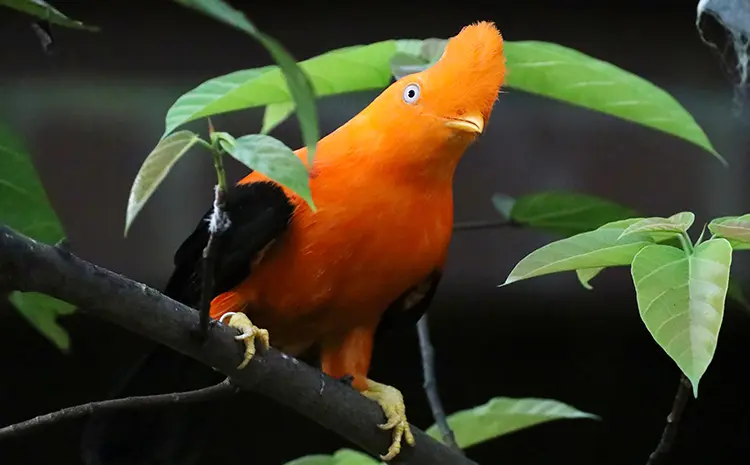
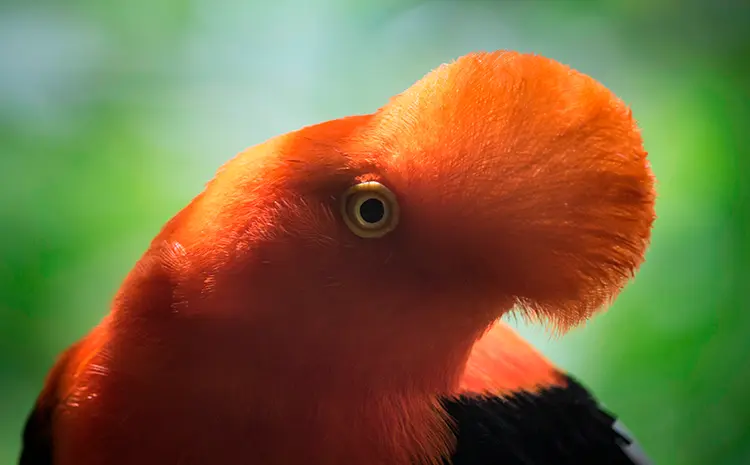
The male is famous for its brilliant orange-red plumage, which covers most of its head, neck, chest, and upper body. Its large fan-shaped crest forms a rounded shape over the bill, while contrasting black wings and tail create a striking color combination that stands out against the deep green vegetation of the cloud forest.
These vivid colors play an important role during courtship, helping males attract the attention of females at communal display sites known as leks. Their appearance is especially remarkable when several males gather in the same area, creating a colorful and energetic display within the forest.
Female Andean Cock-of-the-Rock
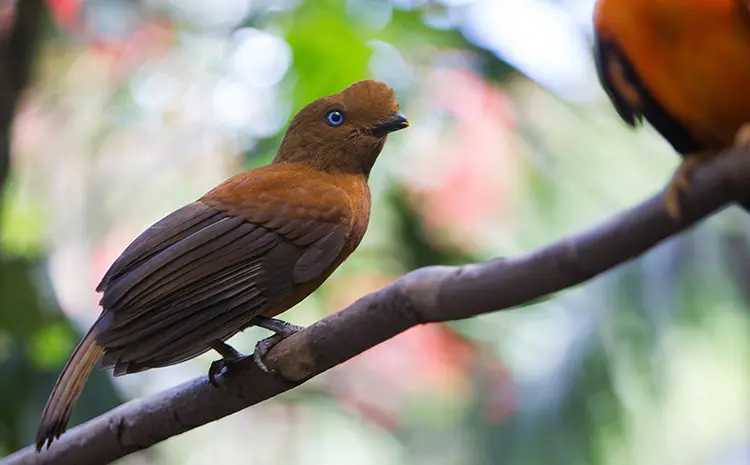
Female Andean Cock-of-the-Rock have much more subdued reddish-brown or chestnut plumage, allowing them to blend into the forest surroundings. Their crest is smaller and less pronounced than the male’s, and their overall appearance provides effective camouflage when nesting among rocks and dense vegetation.
This difference between the sexes is closely connected to their reproductive behavior. While males gather at display sites to attract potential mates, females take responsibility for building the nest, incubating the eggs, and caring for the young. Their less conspicuous coloring helps them remain less visible while carrying out these activities.
Where Does the Andean Cock-of-the-Rock Live?
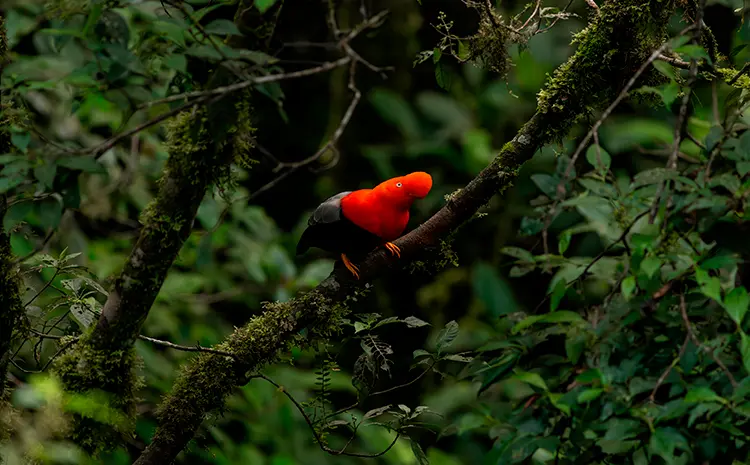
The Andean Cock-of-the-Rock lives in humid tropical and subtropical forests along the eastern slopes of the Andes, ranging from Venezuela through Colombia, Ecuador, and Peru to Bolivia. It is particularly associated with montane cloud forests, where frequent moisture, dense vegetation, and rocky formations provide suitable conditions for feeding, nesting, and courtship displays.
These forests form part of a transition between the high Andes and the Amazon basin. Their changing elevation creates different microclimates and supports a wide variety of plant and animal species, including many birds that depend on the humidity and vegetation of these environments.
The species is commonly associated with elevations of approximately 500 to 2,300 meters (1,640 to 7,550 feet), although its precise distribution varies across its geographic range. Forest ravines, streams, and rocky slopes are particularly relevant to its habitat, as females often build their nests on sheltered rock surfaces near water.
In Peru, the Andean Cock-of-the-Rock can be found in several protected natural areas, including Manu National Park and other forest reserves along the eastern Andean slopes. These environments are important not only for the species itself but also for the broader network of ecosystems connecting the Andes with the Amazon rainforest.
Where Can You See the Andean Cock-of-the-Rock in Peru?
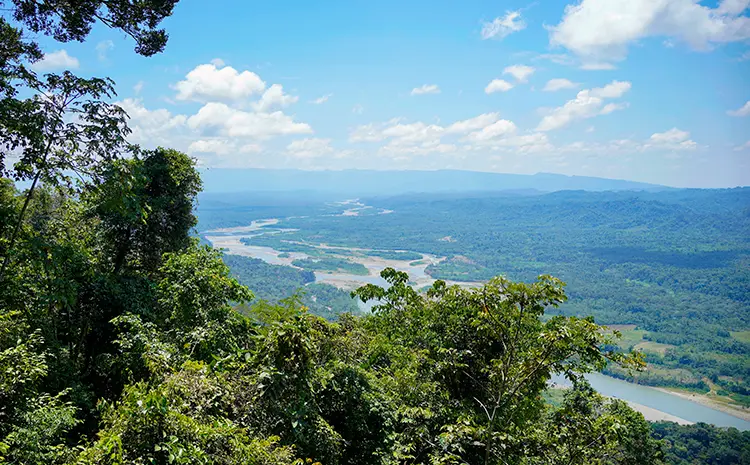
The Andean Cock-of-the-Rock can be observed in several regions of Peru where humid Andean forests provide suitable habitat. Some recognized birdwatching areas include the cloud forests around Manu, the forests near Machu Picchu, Cordillera Escalera in the San Martín region, and Abra Patricia in northern Peru. Sightings depend on location, season, and local conditions, so visiting with knowledgeable naturalist guides can make the experience more rewarding.
Manu and the Andean Cloud Forests
The forests associated with Manu National Park are among the best-known environments for observing the Andean Cock-of-the-Rock in Peru. Located in the country’s southeastern Amazon region, Manu protects a remarkable range of ecosystems, from Andean mountain forests to lowland rainforest, supporting an exceptional diversity of bird species.
The transition between these environments creates suitable conditions for the species, particularly in humid forest areas where traditional lekking sites may be found. Manu is an important ecological reference when discussing the distribution of the Andean Cock-of-the-Rock, as well as the broader biodiversity of Peru’s southeastern forests.
Abra Patricia and Northern Peru
Abra Patricia, located in the Amazonas and San Martín region of northern Peru, is another notable area for birdwatching. Its cloud forests support a variety of bird species, including several with restricted distributions, making the area particularly interesting for travelers with a strong interest in Andean birdlife.
The combination of humid forest, mountainous terrain, and diverse vegetation creates opportunities to observe different species within a relatively concentrated geographical area. For birdwatchers, the northern cloud forests offer an additional perspective on Peru’s avian diversity beyond the more frequently visited destinations in the south.
Cordillera Escalera and the Forests Near Machu Picchu
Cordillera Escalera, near Tarapoto, is another recognized birdwatching area where the Andean Cock-of-the-Rock can be observed in suitable forest habitats. The region’s humid slopes and forested ravines provide conditions that support the species, while also offering opportunities to discover other birds and wildlife associated with northern Peru.
Cloud forest environments near Machu Picchu are also known for the presence of this species. For travelers combining cultural exploration with nature, these forests provide an opportunity to discover the biodiversity surrounding one of Peru’s most important archaeological destinations.
It is worth distinguishing between places where the species naturally occurs and destinations selected for other wildlife experiences. Tambopata and Iquitos, for example, are important gateways to Peru’s Amazon biodiversity, but they should not be presented as the principal locations for observing the Andean Cock-of-the-Rock. Their appeal lies in the different rainforest ecosystems and wildlife encounters they offer.
What Is an Andean Cock-of-the-Rock Lek?
A lek is a communal courtship area where male birds gather to perform displays and compete for the attention of females. The Andean Cock-of-the-Rock is particularly well known for this behavior, with males using vocalizations, movements, and their vivid plumage to attract potential mates. These gatherings are among the most distinctive wildlife spectacles found in Peru’s cloud forests.
During a display, males may bob their heads, bow, hop between branches, and rapidly move their wings while producing distinctive calls. Several individuals may perform at the same time, creating a lively combination of movement and sound within a relatively small area of forest.
Females visit these display sites and observe the males before selecting a mate. Unlike species in which pairs form through shared courtship activities, the lek system involves males concentrating their efforts on attracting females, while the female makes the final choice. Once mating takes place, she is responsible for building the nest and raising the young.
These displays are generally most active during the breeding season, with activity varying according to the region and local environmental conditions. They are often observed in the early morning, when males gather at established sites. For birdwatchers, observing a lek with a responsible local guide can provide a fascinating opportunity to understand the species’ behavior without disturbing its natural environment.
What Does the Andean Cock-of-the-Rock Eat?
The Andean Cock-of-the-Rock feeds primarily on fruits and berries found throughout its forest habitat. Its diet includes a variety of native plants, and the bird plays an important ecological role by dispersing seeds across the forest. It may also supplement its diet with insects and other small animals, although fruit remains its main food source.
As the bird consumes fruits, some seeds pass through its digestive system and are deposited in different areas of the forest. This process helps plants reproduce and contributes to the regeneration of vegetation, particularly in ecosystems where seed dispersal is essential for maintaining biodiversity.
This relationship between the bird and its environment illustrates how individual species contribute to the health of an entire ecosystem. The Andean Cock-of-the-Rock is therefore important not only because of its cultural recognition in Peru, but also because of the ecological functions it performs within the cloud forests.
Is the Andean Cock-of-the-Rock Endangered?
The Andean Cock-of-the-Rock is currently classified as Least Concern on the IUCN Red List, meaning it is not presently considered at high risk of extinction at the global level. However, this classification does not mean the species is free from threats. Habitat loss, forest fragmentation, and human activities can affect local populations and the long-term health of the environments where it lives.
Deforestation is one of the main concerns because the species depends on humid montane forests for food, nesting, and courtship. When forest areas are cleared or divided by agricultural expansion and infrastructure, populations can become increasingly isolated, affecting their access to suitable habitats and established display sites.
Protected areas play an important role in maintaining these forest environments. According to Peru’s National Service of Natural Areas Protected by the State (SERNANP), the Andean Cock-of-the-Rock is conserved in 22 protected natural areas across the country. These include Manu National Park, Machu Picchu Historical Sanctuary, and other protected ecosystems that help safeguard its habitat.
Responsible wildlife observation can also contribute to awareness of the importance of conservation. Keeping a respectful distance, avoiding disturbance around nesting and lekking sites, and following the guidance of local naturalists are essential practices when observing the species in its natural environment.
Discover Peru’s Wildlife with Kuoda Travel
Witnessing the Andean Cock-of-the-Rock in its natural habitat is a reminder of the extraordinary biodiversity that makes Peru so special. At Kuoda Travel, we design private, tailor-made journeys that bring you closer to the country’s remarkable wildlife, breathtaking landscapes, and rich natural heritage, always with a deep respect for the environments we explore. Contact our travel experts to start planning a meaningful Peruvian adventure crafted around your interests.

South American Penguin: Understanding a Species Shaped by Ocean, Latitude, and Rhythm
Why Penguins Matter in the South American Landscape A south american penguin is rarely encountered by chance....
Read Post
Amazon Jungle Tours in Peru: Discover the Soul of the Rainforest with Kuoda
Introduction: Enter the Lungs of the Earth The Peruvian Amazon is not just a destination, it’s a world ...
Read Post
Among Giants: Best Whale Watching in South America
It’s one thing to see a whale. It’s another to feel one. The ocean stills. A hush falls. Then, a tail brea...
Read Post
8 DAYS
Luxury Machu Picchu Tours: Unveiling Peru’s Timeless Wonders
Cusco, Lima, Machu Picchu, Sacred Valley

8 DAYS
Peru Family Vacation: Journey to Machu Picchu and Beyond
Cusco, Lima, Machu Picchu, Sacred Valley

11 DAYS
Amazon River Cruise: A Luxury Journey Through the Amazon
Lima, Cusco, Sacred Valley, Machu Picchu, Iquitos, Amazon River