May 27, 2026 | by: Kuoda Authors


Introduction
Northern Peru does not present itself immediately.
It sits just outside the familiar rhythm of travel in the country, where most journeys concentrate in the south. Yet for those who have begun to understand Peru more deeply, the north offers something different. Not simply new sites, but a different way of reading the country.
Here, the narrative shifts. Civilizations that predate the Inca emerge with clarity. Landscapes move from desert coast to cloud forest within a single arc. The experience feels less mediated, less defined by expectation.
Northern Peru tours, when approached with intention, are not about extending a journey. They are about reframing it.
Northern Peru Tours as a Continuum, Not a Collection
The north is not built around a single defining moment.
Instead, it unfolds through a sequence of places that together form a broader understanding of Peru’s past and present. The Moche, Chimú, and Chachapoya cultures each developed independently, shaped by their environments and their own systems of belief and governance.
Approaching these sites individually can feel fragmented. When connected thoughtfully, they begin to form a coherent narrative.
At Kuoda, northern Peru tours are structured around this progression. Each destination builds on the one before it. Transitions are not simply logistical, but conceptual. The journey gains depth as it moves forward.
The Northern Coast: Where Archaeology Meets Open Landscape
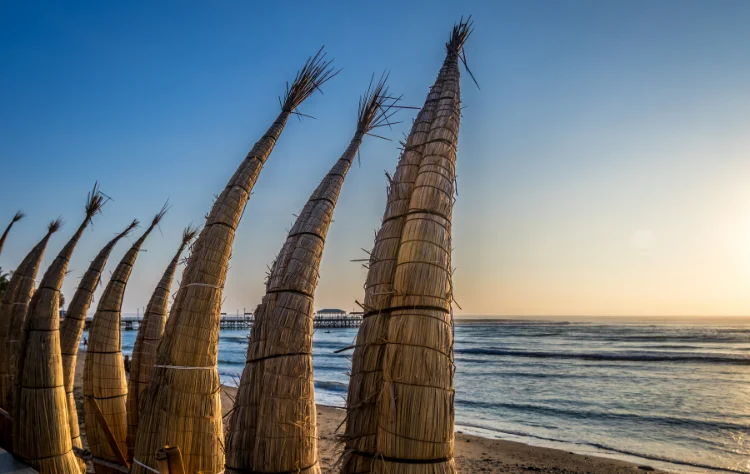
Trujillo and the Moche Legacy
Trujillo provides a clear entry point into the region.
The Huaca del Sol and Huaca de la Luna offer insight into a civilization defined by both artistic precision and ceremonial complexity. Their iconography, preserved in remarkable detail, introduces a worldview that differs significantly from the Inca that followed.
Nearby, Chan Chan expands this understanding. Its scale alone is striking, but what remains with most travelers is the sense of structure. Movement through its corridors reveals a system of organization that feels both deliberate and refined.
These sites are not self-explanatory. With the right interpretation, they become something far more than visual experiences.
The Coastal Rhythm
Beyond its archaeological significance, the northern coast carries a distinct atmosphere.
Fishing communities, open horizons, and a slower pace of life create a contrast that is necessary within the journey. It allows space between experiences. A moment to absorb rather than move forward.
This balance is essential. Without it, the experience risks becoming dense.
Inland to the Andes: A Shift in Perspective
Chachapoyas and the Presence of the Landscape
Moving inland, the terrain changes almost immediately.
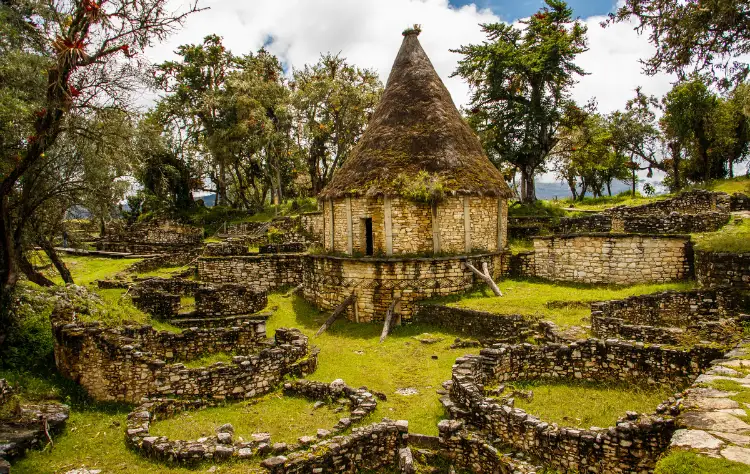
The desert gives way to greener, elevated environments, and with it, a different cultural imprint. The Chachapoya civilization developed within these cloud forests, leaving behind structures that feel inseparable from their surroundings.
Kuélap stands as the most prominent expression of this. Its position, high above the valley, introduces a sense of distance that is both physical and historical. The site feels intact, not reconstructed.
Reaching this region requires coordination. Flights, ground transfers, and timing must align. When managed properly, the transition feels gradual rather than abrupt.
Gocta and the Role of Movement
Close to Kuélap, Gocta Waterfall offers a different kind of experience.
What defines it is not only its height, but the approach. The walk toward the falls creates a progression through changing vegetation and light. It introduces a rhythm that contrasts with the more static nature of archaeological exploration.
For some travelers, this becomes an important counterbalance within the journey.
The Northern Coast as a Complement, Not a Detour
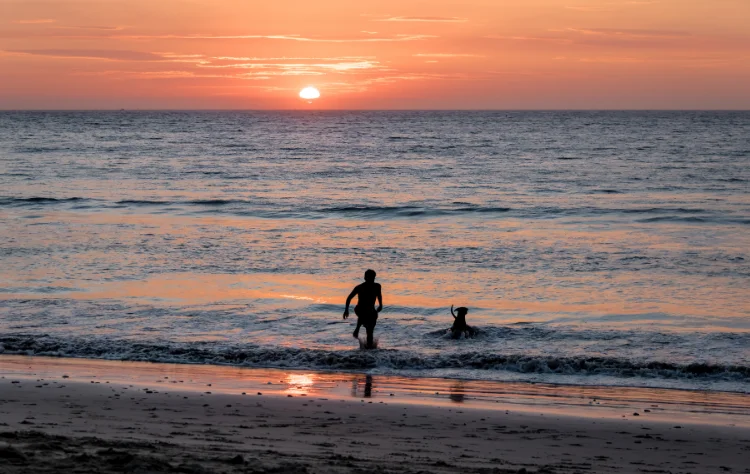
Less frequently associated with northern Peru tours, the coastline further north offers a distinct extension.
Areas such as Máncora, Punta Sal, and Zorritos introduce warmer waters and a more relaxed atmosphere. The pace shifts noticeably. Days become less structured, more open.
These destinations are not approached as primary stops, but as a way to complete the journey. After time spent in archaeological and inland regions, the coast allows the experience to settle.
For many travelers, this transition becomes unexpectedly memorable.
Designing Northern Peru Tours Without Friction
Travel in the north requires a level of coordination that is not immediately visible.
Distances are significant. Infrastructure varies. Without careful planning, the journey can become disjointed.
Kuoda approaches this through detailed design and on-the-ground presence. Transfers are aligned. Timing is precise. Guides are selected not only for their knowledge, but for their ability to adapt.
The intention is simple. The traveler should not feel the structure behind the journey.
Where You Stay Shapes the Experience
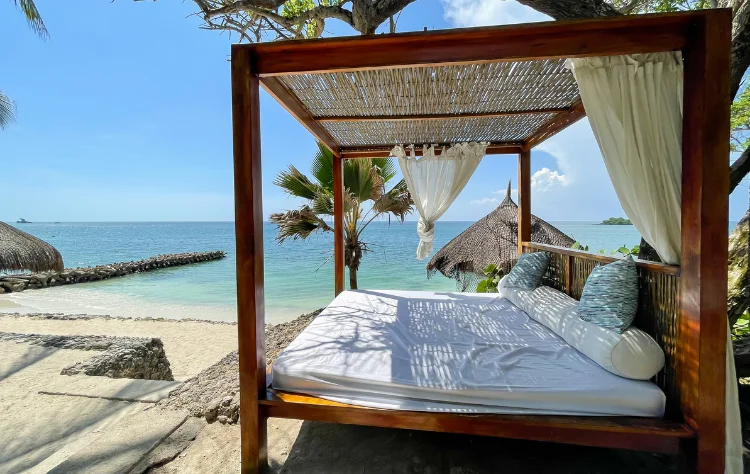
Accommodation in northern Peru is more limited than in other regions of the country. This makes selection more important, not less.
In Trujillo, properties are chosen for proximity and comfort. In the Chachapoyas region, the emphasis shifts toward setting and atmosphere. The goal is not uniformity, but alignment.
Each stay should feel consistent with the journey, even as the environment changes.
Integrating the North Into a Broader Peru Journey
For some, northern Peru stands on its own. For others, it becomes part of a wider exploration.
Combining the north with the southern Andes requires careful calibration. The experiences differ significantly, and the transition must be designed to maintain coherence.
When approached thoughtfully, this combination offers a more complete understanding of Peru’s diversity.
Sustainability and Regional Continuity
Northern Peru’s relative absence from mass tourism creates both opportunity and responsibility.
Experiences are developed through long-term partnerships that support local communities and preserve cultural heritage. Environmental impact is considered at every stage.
These elements are not presented as additions. They are embedded within the way the journey is designed.
FAQs About Northern Peru Tours
How many days are needed for northern Peru tours?
A well-paced journey typically ranges from six to nine days, depending on the depth of exploration and whether coastal extensions are included.
Is northern Peru suitable for first-time visitors?
It can be, though it is often best suited to travelers seeking a more nuanced and less conventional perspective on Peru.
How physically demanding is travel in northern Peru?
Experiences can be adapted. While some sites involve walking or elevation, itineraries are designed around individual preferences.
When is the best time to travel to northern Peru?
The region can be visited year-round, though conditions vary between coast and highland areas.
A Different Lens on Peru
Northern Peru does not compete for attention.
It unfolds gradually, revealing its depth through context and connection rather than immediacy. For travelers willing to approach it with intention, it offers something distinct. A way of understanding Peru that extends beyond the familiar.
Northern Peru tours, when designed with care, are not about discovery in the conventional sense. They are about interpretation.
At Kuoda, this is where the journey begins. With an understanding of how each place connects, and how to bring that connection into focus with clarity and precision.
Best Time to Visit Peru: When to Go by Region & Experience
Planning a journey to Peru is an exciting step toward exploring a land of extraordinary diversity, from the so...
Read Post
The Lost City Colombia and the Meaning of Reaching It
Some destinations are defined by what they are. Others by what it takes to reach them. The Lost City Col...
Read Post
Best Galápagos Cruises: Choosing the Right Way to Experience the Islands
The phrase “best Galápagos cruises” suggests comparison. Ships, cabins, amenities, itineraries. It invite...
Read Post
8 DAYS
Luxury Machu Picchu Tours: Unveiling Peru’s Timeless Wonders
Cusco, Lima, Machu Picchu, Sacred Valley

8 DAYS
Peru Family Vacation: Journey to Machu Picchu and Beyond
Cusco, Lima, Machu Picchu, Sacred Valley

11 DAYS
Amazon River Cruise: A Luxury Journey Through the Amazon
Lima, Cusco, Sacred Valley, Machu Picchu, Iquitos, Amazon River