August 25, 2026 | by: Kuoda Authors


The question of what to do in Bolivia is often approached with curiosity.
Salt flats, high-altitude cities, remote landscapes that feel almost abstract in their scale. The country presents itself as something different from its neighbors, less immediately accessible, more defined by extremes.
What is less obvious is how those extremes shape the experience.
Bolivia is not a destination that reveals itself quickly. It requires adjustment. To altitude, to pace, to environments that do not accommodate haste. The experience is shaped not by how much is included, but by how the journey is structured.
To understand what to do in Bolivia is to understand how to move through it.
Entering Bolivia: Adapting Before Experiencing
Altitude as the First Condition
In Bolivia, altitude is not a detail. It is the framework.
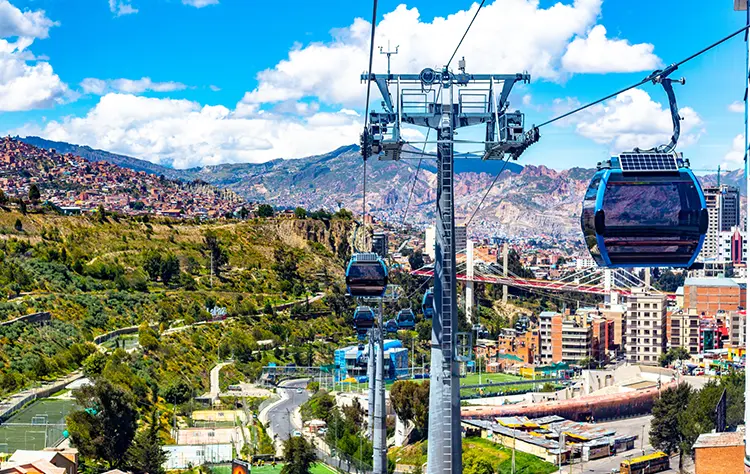
Cities like La Paz sit at elevations that immediately alter how the body responds. Energy slows, movement becomes more deliberate, and the experience narrows if this transition is not managed carefully.
Arriving and immediately engaging with the destination often creates friction.
Allowing time to adjust creates space. The city becomes something that can be explored rather than endured.
This first phase is not a pause. It is part of the experience.
La Paz as an Orientation
La Paz introduces Bolivia through contrast.
Urban density set within a dramatic landscape, where daily life unfolds against a backdrop of altitude and geography that is impossible to ignore. Markets, streets, and neighborhoods reflect a culture that remains deeply rooted in tradition while continuing to evolve.
Time here is not about covering ground.
It is about understanding the rhythm of the country before moving further into it.
The Uyuni Salt Flats: Experiencing Scale Without Distortion
The Illusion of Simplicity
Uyuni is often presented as a singular experience.
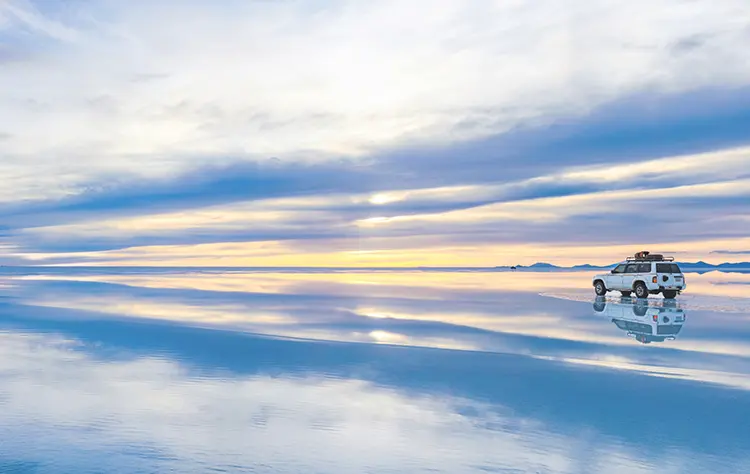
A vast, white expanse that appears almost unreal. It invites the idea that it can be visited quickly, captured, and left behind.
In practice, the experience depends on how it is approached.
Arriving too quickly, without adjustment to altitude or pace, can reduce the experience to visual impact alone. The scale is seen, but not absorbed.
Time as the Defining Element
The salt flats change throughout the day.
Light shifts, reflections appear or disappear depending on the season, and the sense of space evolves as conditions change.
Remaining within this environment allows these variations to unfold.
From our base in South America, this is where the experience transforms. What appears static becomes dynamic. The landscape reveals itself gradually, rather than all at once.
The value lies not in reaching Uyuni, but in allowing time within it.
The Altiplano: Movement Through Isolation
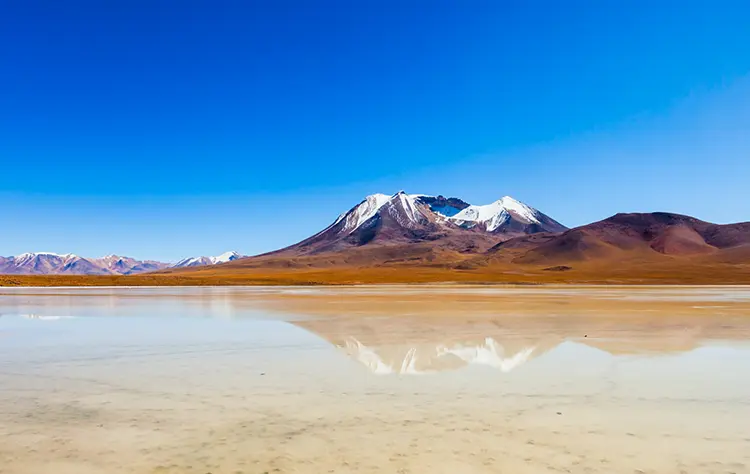
Connecting Landscapes
The Altiplano is often experienced as a passage between locations.
In reality, it is one of Bolivia’s defining environments.
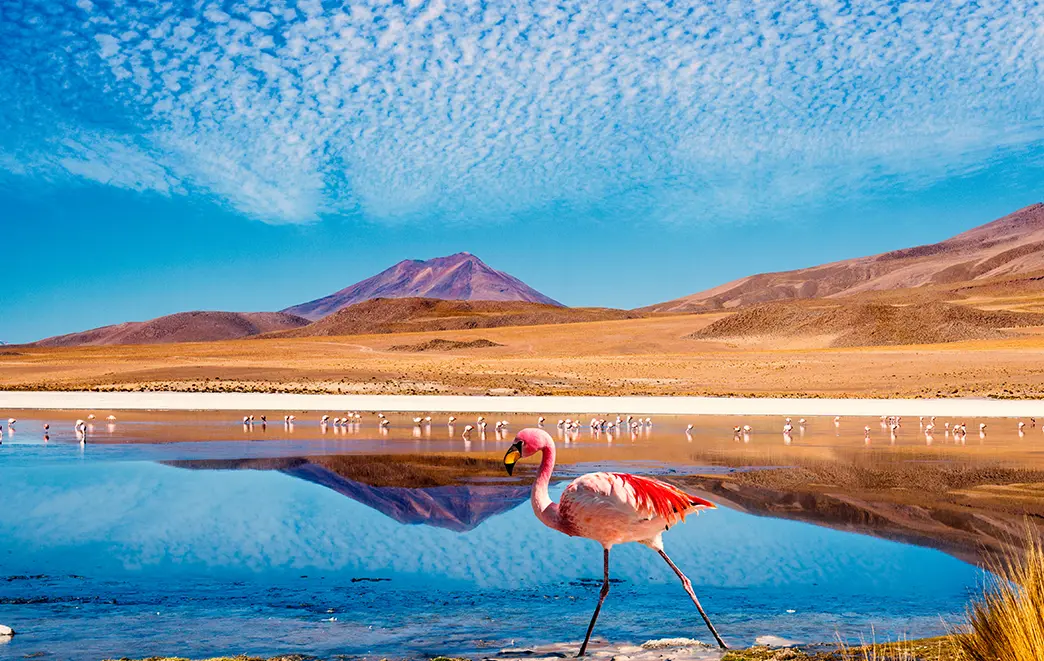
High-altitude deserts, volcanic formations, and remote lagoons create a landscape that feels both expansive and isolated. Movement through this region is not about efficiency.
It is about continuity.
Each point along the way contributes to a broader understanding of the environment. Removing these transitions breaks the experience into fragments.
The Role of Remoteness
Isolation in Bolivia is not incidental.
It shapes how the journey unfolds. Distances are significant, infrastructure is limited, and movement requires coordination.
This creates a different relationship with time.
Experiences cannot be compressed without losing their impact. The journey must be allowed to expand.
Lake Titicaca: A Different Kind of Stillness
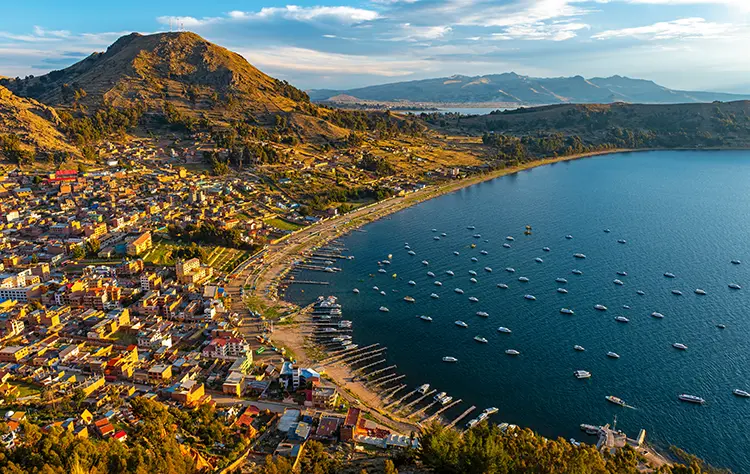
Slowing the Experience
Lake Titicaca introduces a shift.
After the vastness of the Altiplano, the lake offers stillness. Not as absence, but as presence. The landscape becomes quieter, the pace more reflective.
This transition is subtle, but important.
It allows the journey to recalibrate.
Cultural Continuity
Communities around the lake maintain traditions that have existed for generations.
Daily life continues without adaptation for visitors. The experience is not presented, but lived.
Engagement here depends on understanding.
This is where local relationships shape access. Knowing how to enter these spaces respectfully allows for moments that feel natural rather than observed.
What Most Travelers Misjudge in Bolivia
Underestimating the Physical Conditions
Altitude, climate, and remoteness create real constraints.
Ignoring these factors leads to fatigue and limits engagement. The experience becomes focused on managing discomfort rather than absorbing the environment.
Proper sequencing reduces this impact.
Treating Distances as Manageable
On a map, distances appear reasonable.
In practice, terrain defines movement. Roads, weather, and elevation all influence travel time.
An itinerary that does not account for this creates subtle tension throughout the journey.
Expecting Immediate Access
Bolivia does not present itself instantly.
It requires time to understand.
Approaching it with the expectation of immediate immersion can create frustration. Allowing the experience to unfold gradually creates something more meaningful.
The Structure Behind the Journey
Coordination Across Constraints
Travel in Bolivia requires alignment across multiple variables.
Transport schedules, altitude considerations, and remote access points must be coordinated precisely. What appears seamless is the result of careful planning.
This allows the traveler to move through complex environments without interruption.
Access Through Understanding
Experiences in Bolivia are shaped by how they are approached.
Cultural encounters, remote landscapes, and transitions between regions all require awareness. Access is not only logistical. It is relational.
Understanding when and how to engage creates a different quality of experience.
Sustainability in a Fragile Environment
Bolivia’s landscapes are both vast and delicate.
Salt flats, high-altitude ecosystems, and remote communities require thoughtful interaction. Movement through these environments must be managed carefully to preserve their integrity.
A well-designed journey minimizes impact by aligning with local conditions and supporting communities in a meaningful way.
This reflects a broader approach to travel that prioritizes responsibility alongside experience, ensuring that these environments remain intact over time .
FAQs
What are the main things to do in Bolivia?
La Paz, the Uyuni Salt Flats, the Altiplano, and Lake Titicaca form the core of most journeys, each offering a distinct perspective on the country.
How many days are recommended for Bolivia?
A well-paced Bolivia itinerary typically requires 8 to 12 days to allow for altitude adjustment and meaningful exploration.
Is Bolivia difficult to travel in?
Bolivia requires more planning than other destinations due to altitude and remoteness, but a well-structured journey makes it accessible and deeply rewarding.
When is the best time to visit Bolivia?
The dry season offers clearer conditions, while the wet season creates reflective surfaces in Uyuni. Timing should align with the desired experience.
A More Considered Way to Experience Bolivia
What to do in Bolivia is not defined by the places themselves.
It is defined by how those places are experienced.
When altitude is respected, when time is allowed, and when the journey is shaped with intention, the country reveals itself differently. Landscapes are no longer just seen. They are understood.
The experience becomes less about movement and more about presence.
And it begins, as it should, with recognizing that Bolivia is not a destination to be rushed, but one to be entered with care.

Luxury Vacations South America: A More Considered Way to Experience the Continent
Luxury vacations South America are often described through scale. Vast landscapes, iconic sites, a sense of di...
Read Post
Chile Curated Journeys and the Art of Traveling Through Contrast Thoughtfully
Chile is a country shaped by distance and contrast. The Atacama Desert feels almost extraterrestrial in its...
Read Post
Personalized Argentina Travel and the Importance of Designing Around Rhythm
Argentina is not a country that can be experienced meaningfully through a single formula. The landscapes ch...
Read Post
8 DAYS
Luxury Machu Picchu Tours: Unveiling Peru’s Timeless Wonders
Cusco, Lima, Machu Picchu, Sacred Valley

8 DAYS
Peru Family Vacation: Journey to Machu Picchu and Beyond
Cusco, Lima, Machu Picchu, Sacred Valley

11 DAYS
Amazon River Cruise: A Luxury Journey Through the Amazon
Lima, Cusco, Sacred Valley, Machu Picchu, Iquitos, Amazon River