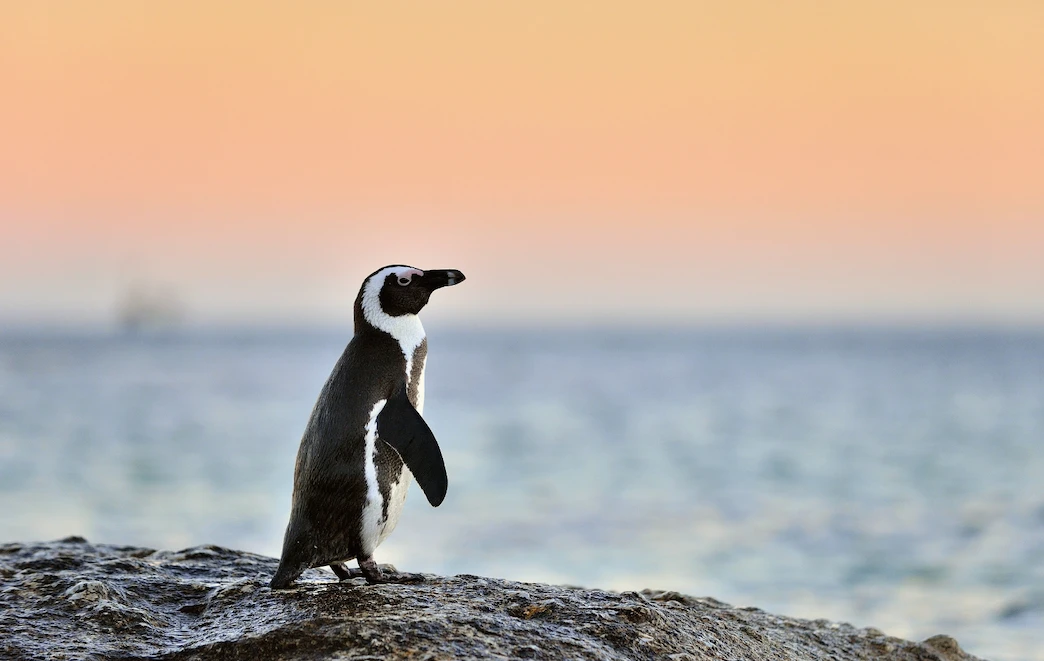
March 18, 2026 | by: Kuoda Authors


Why Penguins Matter in the South American Landscape
A south american penguin is rarely encountered by chance. Its presence signals a particular relationship between land, ocean, and climate that defines the southern reaches of the continent.
Unlike polar imagery often associated with penguins, South America’s species inhabit temperate and subantarctic environments shaped by cold currents, seasonal abundance, and long migratory cycles. These birds are not anomalies. They are indicators of ecological balance and geographic continuity.
For thoughtful travelers, observing a South American penguin is not about novelty. It is about understanding how life adapts at the margins. Kuoda approaches these encounters as part of a broader narrative, integrating wildlife into journeys designed with restraint and perspective.
The Geography Behind the South American Penguin
South America is home to several penguin species, each tied closely to specific coastlines and ocean currents.
The Magellanic penguin is the most widespread, nesting along the Patagonian coast of Argentina and Chile. The Humboldt penguin follows the nutrient-rich Humboldt Current along Peru and northern Chile. Farther south, penguins appear along the Beagle Channel and subantarctic islands near Tierra del Fuego.
Kuoda designs wildlife experiences that respect these natural patterns. Encounters are planned around seasonal presence rather than fixed expectations, ensuring that observation feels authentic rather than engineered.
Patagonia and the Magellanic Penguin
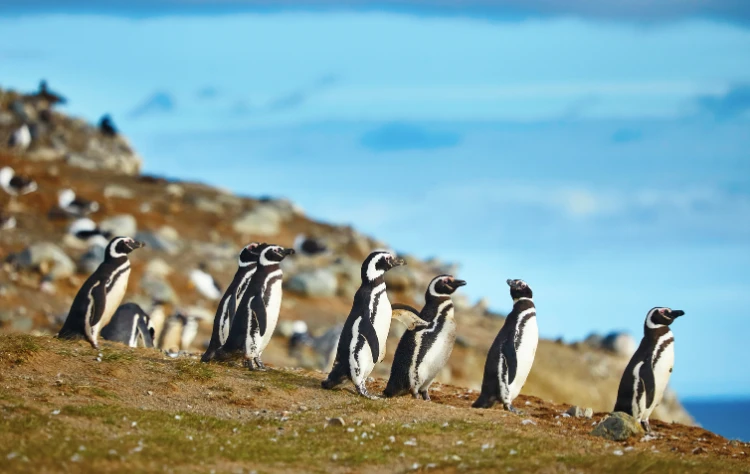
For many travelers, Patagonia provides the most resonant setting to encounter a south american penguin.
Along Argentina’s Atlantic coast, protected areas such as Punta Tombo host one of the largest Magellanic penguin colonies in the world. Here, penguins move freely between burrows, sea, and shore, largely indifferent to human presence.
Kuoda integrates visits to penguin colonies thoughtfully, often as part of a broader Patagonia journey that includes steppe landscapes, glaciers, and southern estuaries. Timing is essential. Visits are scheduled to coincide with breeding and nesting cycles, and routes are designed to minimize disturbance.
The experience is one of proximity without intrusion.
Experiencing a South American Penguin With Perspective
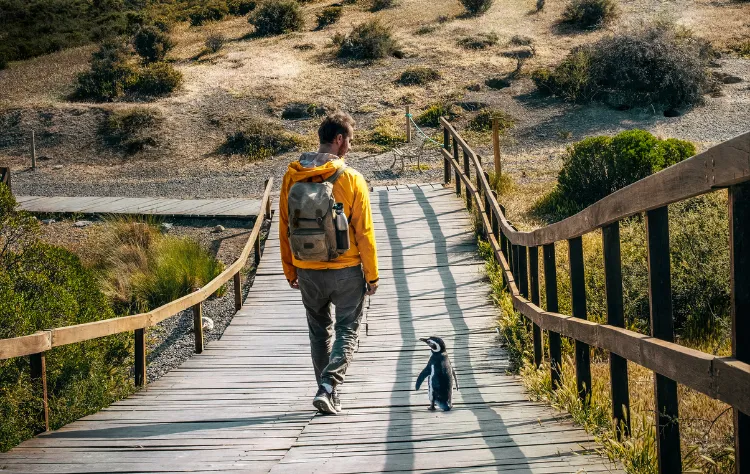
Penguin encounters are most meaningful when they are not isolated events.
Kuoda places penguin observation within the context of the surrounding environment. Coastal winds, shifting light, and vast horizons all contribute to understanding how these birds live and migrate. Guides frame behavior through ecology rather than anecdote, allowing travelers to read patterns rather than collect facts.
This approach ensures that seeing a south american penguin becomes an exercise in attention rather than spectacle.
Tierra del Fuego and the Southern Edge
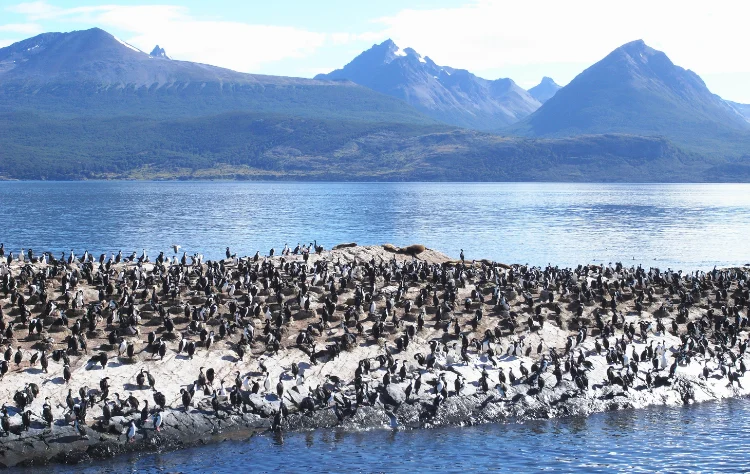
In the far south, penguin encounters take on a different character.
Along the Beagle Channel near Ushuaia, small colonies inhabit rocky islands and protected shores. Here, penguins are part of a larger subantarctic system that includes sea lions, seabirds, and cold-water forests.
Kuoda designs excursions in this region with sensitivity to weather and scale. Boat journeys are paced gently. Observation is quiet. The emphasis is on presence rather than access.
At this latitude, the landscape itself becomes part of the encounter.
Humboldt Penguins and the Pacific Coast
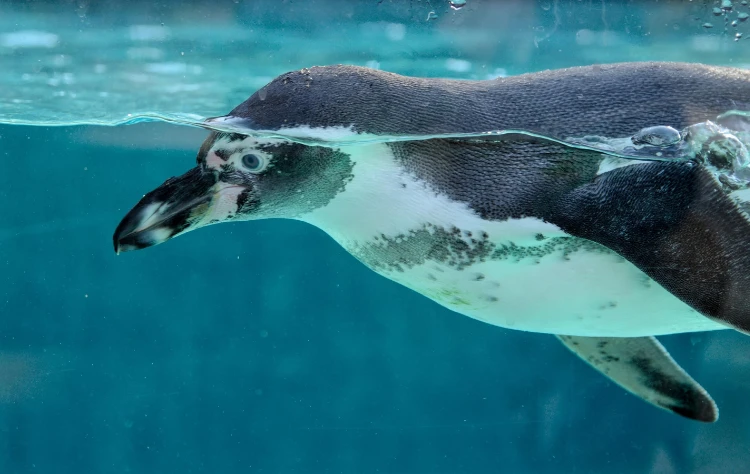
Farther north, the Humboldt penguin offers insight into a different ecological system.
Along Chile’s northern and central coast, these penguins rely on the cold, nutrient-rich waters of the Pacific. Their presence reflects the health of marine ecosystems shaped by upwelling currents and seasonal abundance.
Kuoda introduces Humboldt penguin habitats selectively, often as part of coastal or cultural journeys where wildlife observation complements rather than dominates the experience.
This integration reinforces the idea that a south american penguin is always part of a wider environmental story.
Comfort, Timing, and Responsible Access
Wildlife encounters demand patience and planning.
Kuoda designs penguin experiences that prioritize comfort and continuity. Private transfers reduce pressure. Observation points are chosen for clarity and distance. Days are structured to allow time for weather and conditions to shift naturally.
This approach respects both the traveler and the species, ensuring that encounters feel calm and considered.
Sustainability and Long-Term Stewardship
Penguin populations are sensitive to environmental change.
Kuoda approaches wildlife travel with respect for conservation protocols and local stewardship efforts. Partners are selected for long-term engagement rather than volume. Encounters avoid peak congestion and unnecessary repetition.
Through responsible travel practices and initiatives connected to the Kaypi Kunan Foundation, Kuoda supports continuity across South America’s most fragile ecosystems.
Here, sustainability underpins the experience without overshadowing it.
Frequently Asked Questions
Where can I see a South American penguin?
South American penguins can be observed in Patagonia, Tierra del Fuego, and along parts of the Chilean and Peruvian coast, depending on species and season. Kuoda plans encounters based on natural cycles.
What is the best time of year to see penguins in South America?
Breeding and nesting typically occur between September and March. Kuoda aligns itineraries with seasonal presence rather than fixed dates.
Are penguin encounters physically demanding?
Most observations involve short walks or boat excursions. Kuoda adapts pacing and access to ensure comfort and ease.
Can penguin experiences be combined with other journeys?
Yes. Kuoda integrates penguin encounters seamlessly into Patagonia, southern Argentina, or coastal itineraries when they enhance the journey’s overall rhythm.
When Observation Replaces Expectation
A South American penguin does not perform. It moves according to tide, temperature, and instinct.
Standing quietly near a colony, travelers often find their attention drawn outward. Toward wind patterns, ocean movement, and the subtle choreography of life at the edge of the continent.
Kuoda’s role is to design the conditions where this observation can occur naturally. With care. With context. And with the confidence that when wildlife is encountered thoughtfully, it leaves a lasting impression not because it was rare, but because it was understood.

Amazon Jungle Tours in Peru: Discover the Soul of the Rainforest with Kuoda
Introduction: Enter the Lungs of the Earth The Peruvian Amazon is not just a destination, it’s a world ...
Read Post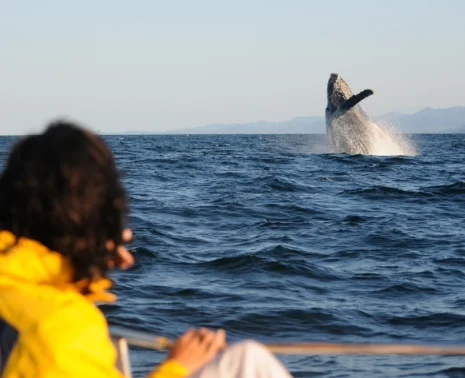
Among Giants: Best Whale Watching in South America
It’s one thing to see a whale. It’s another to feel one. The ocean stills. A hush falls. Then, a tail brea...
Read Post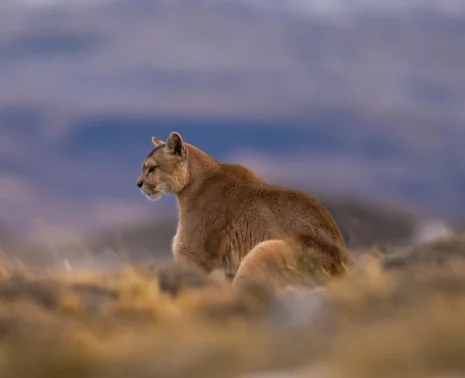
Puma in the Andes: The Elusive Guardian of South America’s Peaks
The Puma: A Symbol of Power and Mystery in the Andes The puma (Puma concolor) is one of South America’s...
Read Post
8 DAYS
Luxury Machu Picchu Tours: Unveiling Peru’s Timeless Wonders
Cusco, Lima, Machu Picchu, Sacred Valley

8 DAYS
Peru Family Vacation: Journey to Machu Picchu and Beyond
Cusco, Lima, Machu Picchu, Sacred Valley

11 DAYS
Amazon River Cruise: A Luxury Journey Through the Amazon
Lima, Cusco, Sacred Valley, Machu Picchu, Iquitos, Amazon River