March 16, 2026 | by: Kuoda Authors


Why Volcanoes Define the Ecuadorian Experience
In Ecuador, volcanoes are not background scenery. They are structure.
The Andean spine that runs through the country shapes climate, agriculture, architecture, and daily life. Snowcapped peaks and dormant cones rise directly above towns, roads, and farmland, creating a sense of proximity that is both humbling and familiar.
For thoughtful travelers, encountering an Ecuador volcano is not about spectacle or conquest. It is about understanding how altitude and geology inform culture and continuity. The experience rewards patience and perspective rather than urgency.
Kuoda approaches Ecuador’s volcanic landscape as a living system, curating journeys that allow travelers to engage with it gradually and meaningfully.
The Avenue of the Volcanoes as Orientation
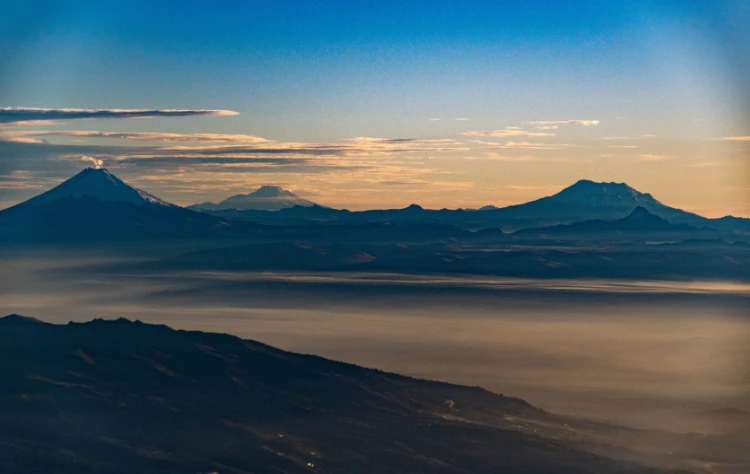
The corridor between Quito and the central highlands has long been known as the Avenue of the Volcanoes.
Here, peaks such as Cotopaxi, Chimborazo, and others define the horizon. Their presence is constant, shaping light, weather, and movement.
Kuoda uses this region as an orientation point rather than a checklist. Travel is paced to allow travelers to absorb the scale of the landscape. Lodges are chosen for their setting and quiet vantage points rather than proximity alone. Drives become moments of observation rather than transition.
Through this lens, an Ecuador volcano becomes part of a larger narrative rather than a single destination.
Cotopaxi: Presence Without Performance

Cotopaxi is one of Ecuador’s most recognizable volcanoes, yet its impact lies in its restraint.
Rising symmetrically above the páramo, Cotopaxi dominates the landscape without demanding attention. Weather shifts quickly here. Light and shadow change the mountain’s character hour by hour.
Kuoda designs Cotopaxi experiences that prioritize atmosphere over activity. Walks across the high-altitude plains, time spent observing wildlife, and moments of stillness are often more revealing than strenuous ascents. For those interested in higher-altitude exploration, routes and pacing are adapted carefully.
The goal is not to conquer an Ecuador volcano, but to experience its presence.
Experiencing an Ecuador Volcano With Care
Altitude shapes how the body and mind respond to the landscape.
Kuoda designs Ecuador volcano experiences with acclimatization and rhythm in mind. Time in Quito or the surrounding highlands allows travelers to adjust gradually. Activities are sequenced to build comfort rather than test limits.
This approach ensures that encounters with volcanic landscapes feel expansive rather than demanding. The environment is engaged with respect, not resistance.
Chimborazo and the Concept of Height

Chimborazo offers a different perspective on altitude.
Though not Ecuador’s tallest peak in meters above sea level, it is the point on Earth farthest from the planet’s center. This distinction reframes how travelers understand height, distance, and scale.
Kuoda introduces Chimborazo as a conceptual experience as much as a physical one. Drives through surrounding highlands, conversations about geography and climate, and carefully timed stops allow the mountain to be understood without imposing physical strain.
Here, an Ecuador volcano becomes a lesson in perspective rather than endurance.
Lodges That Ground the Experience

Ecuador’s volcanic regions are best experienced from places that allow stillness.
Kuoda selects refined haciendas and countryside lodges that sit comfortably within the landscape. These properties offer warmth, space, and views that invite reflection. Days begin and end in calm, allowing travelers to absorb the environment without constant movement.
This grounding is essential. It transforms volcanic landscapes from dramatic backdrops into lived-in spaces.
Beyond the Highlands: Volcanoes and Cultural Continuity
Volcanoes have shaped Ecuadorian culture for centuries.
Agricultural patterns follow volcanic soil. Towns are positioned in response to elevation and climate. Indigenous knowledge systems reflect long-term adaptation to a dynamic environment.
Kuoda integrates cultural context into volcanic journeys subtly. Encounters with local communities, traditional haciendas, and regional cuisine provide insight into how people live with volcanoes rather than around them.
This connection deepens the experience, ensuring that an Ecuador volcano is understood as part of human continuity.
Sustainability and Respect for a Dynamic Landscape
Volcanic regions are both resilient and fragile.
Kuoda approaches these environments with respect for conservation protocols and local stewardship. Routes are chosen to minimize impact. Partners are selected for their long-term engagement with the land.
Through responsible travel practices and initiatives connected to the Kaypi Kunan Foundation, Kuoda supports thoughtful engagement with Ecuador’s natural and cultural landscapes.
Here, sustainability supports understanding rather than interrupting it.
Frequently Asked Questions
Which Ecuador volcano is most commonly visited?
Cotopaxi is among the most visited due to its accessibility and presence, though Chimborazo and other peaks offer different perspectives. Kuoda selects volcanic experiences based on traveler interests and itinerary flow.
Do I need to hike to experience an Ecuador volcano?
No. Many meaningful experiences involve scenic drives, short walks, and time spent observing the landscape. Kuoda adapts activities to comfort and interest levels.
How does altitude affect travel near volcanoes in Ecuador?
Altitude can influence energy and comfort. Kuoda designs itineraries with gradual acclimatization and flexible pacing to ensure ease.
Can volcano experiences be combined with other regions of Ecuador?
Yes. Kuoda integrates volcanic regions seamlessly with Quito, the Amazon, or the Galápagos when it enhances the journey’s coherence.
When Landscape Becomes Perspective
An Ecuador volcano does not demand attention. It offers perspective.
Standing beneath these peaks, travelers often feel a quiet recalibration. Time slows. Scale shifts. The landscape reminds us that power can be present without urgency.
Kuoda’s role is to design the conditions where that perspective can emerge naturally. Through careful pacing, thoughtful lodging, and deep local insight, volcanic Ecuador becomes not a highlight, but a grounding force within a well-considered journey.
Peru Travel Advisory: How Local Expertise Transforms Information Into Confidence
Reading Peru Clearly, Not Cautiously Travel advisories are tools. They are broad by design, written to apply ...
Read Post
Peru Family Tours: Designing Journeys That Engage Every Generation
Family Travel as a Shared Experience, Not a Compromise Travel changes when families travel together. Not ...
Read Post
Cities Near the Amazon Rainforest: Gateways Where Geography Meets Daily Life
Why Cities Matter at the Edge of the Amazon The Amazon rainforest is often imagined as vast and uninterrupted...
Read Post
8 DAYS
Luxury Machu Picchu Tours: Unveiling Peru’s Timeless Wonders
Cusco, Lima, Machu Picchu, Sacred Valley

8 DAYS
Peru Family Vacation: Journey to Machu Picchu and Beyond
Cusco, Lima, Machu Picchu, Sacred Valley

11 DAYS
Amazon River Cruise: A Luxury Journey Through the Amazon
Lima, Cusco, Sacred Valley, Machu Picchu, Iquitos, Amazon River