February 13, 2026 | by: Kuoda Authors


A Gathering Beyond the Language of Festivals
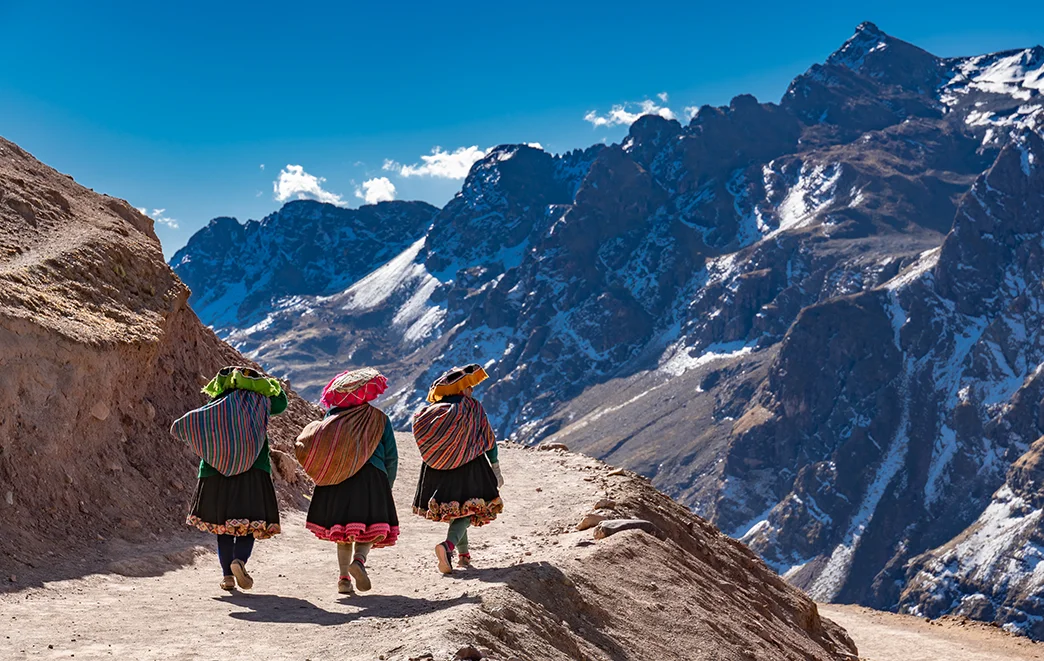
High in the southern Andes of Peru, where altitude thins the air and night temperatures fall sharply, tens of thousands of pilgrims make their way toward a glacial valley each year. They come not to observe, but to participate. Not to celebrate, but to fulfill a responsibility carried across generations.
Qoyllur Riti is often described as a festival, yet that word falls short. It is a pilgrimage that blends Catholic devotion with pre-Hispanic cosmology, shaped by physical endurance and collective memory. For those who encounter it thoughtfully, Qoyllur Riti offers rare insight into how belief systems coexist and endure in the Andes without dilution.
For Kuoda travelers, this is not an experience to be added casually. It is one that requires preparation, context, and a clear understanding of what it represents.
Place, Altitude, and Sacred Geography
The pilgrimage takes place in the Sinakara Valley, beneath the shadow of Ausangate, one of the most revered peaks in Andean cosmology. The valley sits at over 4,700 meters above sea level, a setting that reinforces the seriousness of the journey.
In Andean thought, mountains are living beings. Apus, or mountain spirits, are protectors and forces of balance. Qoyllur Riti unfolds within this worldview. The physical challenge of reaching Sinakara is not incidental. It is integral.
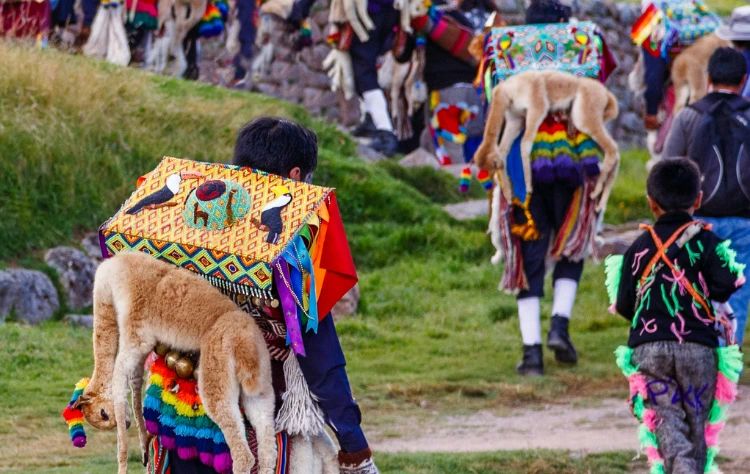
Pilgrims arrive from communities across southern Peru, each group marked by distinctive dances, costumes, and rhythms. Together, they form a temporary city bound not by commerce, but by devotion.
The Meaning of Qoyllur Rit’i
The name Qoyllur Rit’i translates roughly from Quechua as “Star Snow.” It refers both to celestial symbolism and to the glacier that once dominated the valley. The pilgrimage centers on devotion to the Lord of Qoyllur Riti, a Christ figure whose story intertwines Christian narrative with Andean spiritual logic.
Faith here is not abstract. It is enacted through movement, fasting, cold, and communal discipline. Participants walk for days, sleep outdoors, and maintain rituals that demand resilience rather than comfort.
For travelers accustomed to cultural experiences designed for ease, Qoyllur Rit’i presents a different framework. One where meaning is inseparable from effort.
The Ukukus and the Moral Order
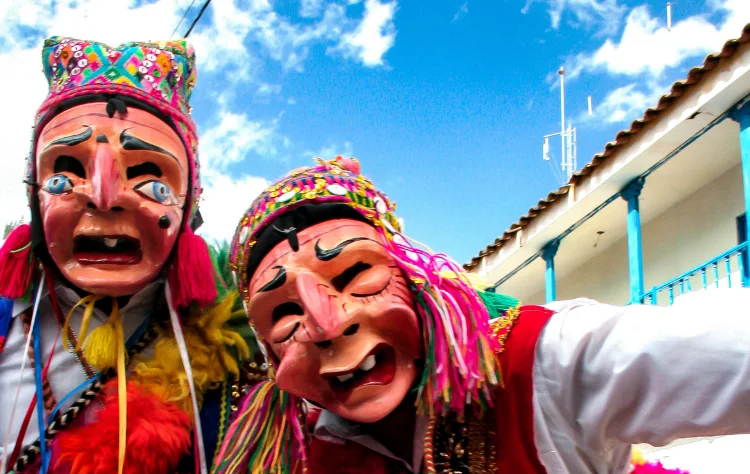
Among the most compelling figures of the pilgrimage are the Ukukus, masked dancers who occupy a liminal space between human and animal, order and chaos.
The Ukukus serve as guardians of the ritual. They maintain discipline, guide movement, and historically ascended the glacier to retrieve sacred ice. Their role is not symbolic alone. It is functional, enforcing rules that ensure the pilgrimage unfolds with respect and balance.
In recent years, glacial retreat has altered some practices, reflecting the changing relationship between ritual and environment. This adaptation underscores the living nature of Qoyllur Riti. Tradition here is not frozen. It responds to reality.
Witnessing Without Interference
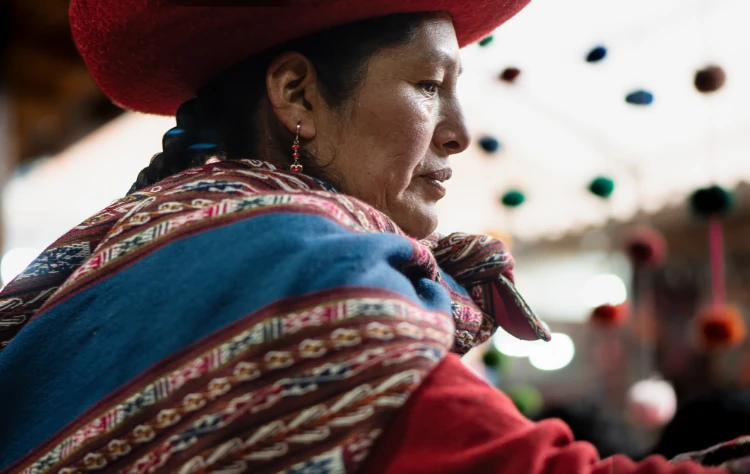
For those unfamiliar with Andean pilgrimage culture, Qoyllur Riti can feel overwhelming. The scale, altitude, and intensity leave little room for passive observation. This is precisely why Kuoda approaches the pilgrimage with restraint.
Travelers are never positioned as participants unless invited by context and community. Observation occurs from the margins, guided by local experts who understand both the ritual and the responsibilities of presence. Timing, vantage points, and duration are carefully considered.
The aim is understanding, not immersion by force.
Why Qoyllur Riti Matters Today
Qoyllur Riti continues not because it has been preserved, but because it remains necessary. For participating communities, it is a reaffirmation of identity, interdependence, and relationship with the natural world.
In a global context increasingly disconnected from place, the pilgrimage offers a counterpoint. It demonstrates how belief systems rooted in land and ancestry adapt without losing coherence.
For culturally curious travelers, Qoyllur Rit’i provides a framework for understanding Peru that extends beyond archaeology and colonial history. It reveals a spiritual continuity that remains active and negotiated.
Kuoda’s Role in Contextual Travel
Kuoda does not promote Qoyllur Riti as an attraction. It is approached as a cultural event that may be included when it aligns with a traveler’s intent, capacity, and respect for context.
Preparation includes altitude acclimatization, physical readiness, and cultural briefing. Logistics are handled discreetly, allowing travelers to focus on observation rather than navigation. Local guides provide interpretation grounded in lived experience rather than academic abstraction.
This approach reflects Kuoda’s broader philosophy. Seamless design in service of meaningful understanding.
Sustainability and Responsibility
The scale of Qoyllur Riti places pressure on a fragile high-altitude environment. Local authorities and communities continue to adapt practices to reduce impact, particularly in response to glacial loss.
Kuoda’s commitment to climate-positive travel and community engagement aligns naturally with these efforts. Small, informed groups minimize disruption. Presence is intentional. Sustainability is treated as stewardship rather than statement.
Connections to broader community initiatives, including the Kaypi Kunan Foundation, reinforce a long-term perspective rooted in respect and continuity.
Frequently Asked Questions
What is Qoyllur Riti?
Qoyllur Rit’i is an annual Andean pilgrimage near Cusco that combines Catholic devotion with indigenous cosmology, centered in the Sinakara Valley beneath Mount Ausangate.
When does Qoyllur Rit’i take place?
The pilgrimage typically occurs in late May or early June, aligned with the Andean ritual calendar and preceding the Feast of Corpus Christi.
Is Qoyllur Riti appropriate for travelers to attend?
Yes, when approached with preparation and respect. Kuoda ensures travelers observe without interfering and understand the cultural significance.
How physically demanding is the experience?
The pilgrimage occurs at high altitude and in cold conditions. Kuoda carefully evaluates whether inclusion is appropriate based on traveler readiness.
Where Belief Takes Physical Form
Qoyllur Riti is not designed to be understood quickly. It reveals itself through patience, context, and humility.
For those who encounter it thoughtfully, the pilgrimage offers a rare glimpse into a worldview where land, faith, and community remain inseparable. Kuoda’s role is not to interpret this experience on behalf of the traveler, but to create the conditions where understanding can emerge naturally.
In the end, Qoyllur Riti is not remembered for what is seen, but for what is sensed. Endurance. Devotion. And the quiet power of traditions that continue to walk forward, step by step, into the present.
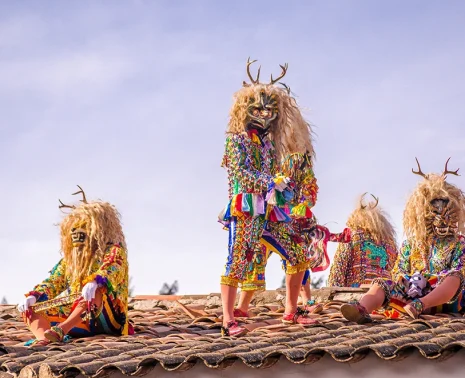
When Devotion Becomes Performance: The Meaning of the Paucartambo Festival
A Festival That Resists Simplification High in the southern Andes, a few hours from Cusco, the town of Pa...
Read Post
Chabuca Granda: Music, Memory, and the Soul of Coastal Peru
A Voice That Still Shapes the City Some artists belong to a moment. Others become inseparable from a place. ...
Read Post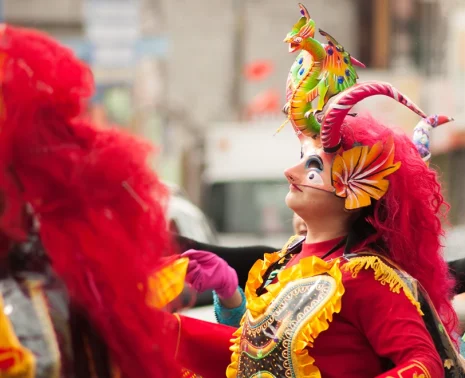
Carnaval Ecuador: A Cultural Celebration Best Experienced From the Inside
Carnaval in Ecuador is not one celebration. It is many, unfolding simultaneously across regions shaped by alti...
Read Post
8 DAYS
Luxury Machu Picchu Tours: Unveiling Peru’s Timeless Wonders
Cusco, Lima, Machu Picchu, Sacred Valley

8 DAYS
Peru Family Vacation: Journey to Machu Picchu and Beyond
Cusco, Lima, Machu Picchu, Sacred Valley

11 DAYS
Amazon River Cruise: A Luxury Journey Through the Amazon
Lima, Cusco, Sacred Valley, Machu Picchu, Iquitos, Amazon River