January 28, 2026 | by: Kuoda Authors


A City That Reveals Itself Slowly
Quito does not announce itself all at once. Set high in the Andean foothills, stretched along a narrow valley beneath volcanic ridgelines, the city unfolds through layers rather than landmarks.
For travelers exploring the attractions in Quito Ecuador, the most meaningful experiences rarely come from moving quickly between sites. They come from understanding how history, geography, and contemporary life coexist in close proximity. Quito rewards patience, orientation, and thoughtful pacing.
Kuoda approaches the city not as a checklist of highlights, but as a cultural landscape that benefits from interpretation and restraint.
The Historic Center as Living Archive
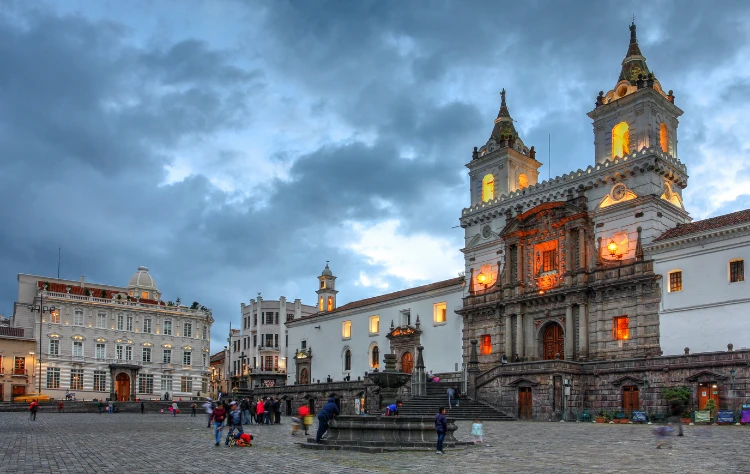
Quito’s historic center is one of the largest and best-preserved colonial districts in the Americas. Recognized as a UNESCO World Heritage Site, it reflects centuries of religious, political, and artistic life layered onto pre-Hispanic foundations.
Churches, convents, and plazas appear in close succession, yet their significance lies less in quantity than in continuity. Buildings remain active. Worship continues. Daily routines unfold alongside architectural grandeur.
When explored with context, the historic center becomes less about admiration and more about comprehension. Kuoda’s private guides focus on narrative rather than dates, helping travelers understand why certain spaces were built as they were and how they continue to function today.
Religious Art and Andean Expression
Much of Quito’s visual identity is shaped by religious art produced during the colonial period. The Quito School of Art blended European techniques with indigenous symbolism, resulting in a distinctive aesthetic that feels both familiar and local.
Sites such as La Compañía de Jesús exemplify this synthesis. Gold-leaf interiors and intricate carvings coexist with Andean motifs and materials. The effect is immersive without being overwhelming when experienced with explanation.
Kuoda frames these visits as moments of cultural literacy rather than visual spectacle, allowing travelers to engage intellectually as well as aesthetically.
The Equator as Concept, Not Novelty
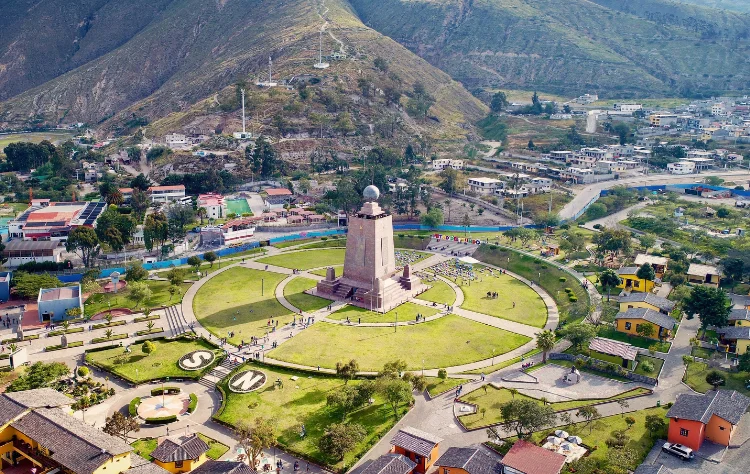
Just outside the city lies the Mitad del Mundo, often approached as a symbolic stop. Without context, it can feel abstract or performative.
With proper framing, however, the equator becomes an entry point into Ecuador’s scientific history, geographic diversity, and national identity. The concept of hemispheres resonates differently when discussed in relation to Quito’s altitude, climate variation, and ecological range.
Kuoda integrates this visit selectively, emphasizing understanding over novelty and pairing it with conversations about landscape and science rather than spectacle.
The City Seen From Above
Quito’s geography becomes legible only when viewed from elevation. The TelefériQo offers access to panoramic views that reveal how the city stretches between mountains, constrained by terrain yet expansive in scale.
This perspective clarifies much about Quito’s development. Why neighborhoods evolved vertically rather than outward. How weather patterns shape daily life. Where historic and modern Quito intersect.
Kuoda times these experiences carefully, considering weather and visibility, ensuring that the view serves understanding rather than distraction.
Neighborhoods Beyond the Center

While the historic core anchors Quito’s identity, contemporary life unfolds elsewhere. Areas such as La Floresta reflect the city’s creative and intellectual pulse. Cafés, independent galleries, and bookstores foster conversation rather than performance.
Exploring these neighborhoods offers insight into how Quito’s cultural life continues to evolve. For travelers, this balance between past and present adds depth to the experience.
Kuoda includes these spaces when they align with traveler interests, allowing time for unstructured exploration supported by local insight.
Museums as Contextual Anchors
Quito’s museums are most effective when approached selectively. Rather than attempting to see everything, Kuoda identifies institutions that complement the broader narrative of the journey.
Museums focusing on pre-Columbian cultures, colonial history, or contemporary Ecuadorian society provide grounding rather than overload. These visits are integrated naturally, offering pauses for reflection rather than obligations.
The goal is coherence. Each museum adds clarity to what has already been seen and felt in the city.
How Kuoda Designs Time in Quito
Kuoda does not design itineraries around volume. Time in Quito is calibrated carefully, balancing exploration with rest and altitude acclimatization.
Private transfers reduce friction. Guides adapt pacing in real time. Accommodations are chosen for comfort, location, and quiet rather than brand recognition alone.
As a local experience curator with deep regional expertise, Kuoda ensures that the attractions in Quito Ecuador feel connected rather than fragmented. Recognition as a Tripadvisor Travelers’ Choice 2025 winner reflects this consistency across destinations.
Sustainability and Community Awareness
Quito’s historic center and surrounding areas face the challenges of preservation, urban growth, and tourism pressure. Responsible travel here means respecting spaces that are lived in, not staged.
Kuoda’s approach supports local economies through thoughtful partnerships and small-scale engagement. Cultural understanding is prioritized over extraction, aligning with Kuoda’s broader commitment to climate-positive travel and community engagement through the Kaypi Kunan Foundation.
Frequently Asked Questions
What are the main attractions in quito ecuador?
Key attractions include the historic center, colonial churches, the Mitad del Mundo monument, panoramic viewpoints, and culturally active neighborhoods.
How much time should travelers spend in Quito?
Two to three days allow for a well-paced experience that balances history, culture, and acclimatization.
Is Quito safe for travelers?
With informed planning and local guidance, Quito is well suited to private, culturally focused travel. Kuoda designs routes and experiences with safety and ease in mind.
Can Quito be combined with other Ecuador destinations?
Yes. Quito pairs naturally with the Galápagos, the Amazon, or Andean highlands, creating a coherent national journey.
A City That Invites Understanding
Quito is not defined by a single skyline or signature site. It is defined by how its layers coexist. Indigenous memory beneath colonial form. Modern life woven into historic streets. Altitude shaping perspective.
For travelers willing to engage thoughtfully, the attractions in Quito Ecuador become less about what is seen and more about what is understood. Kuoda’s role is simply to design the conditions where that understanding can emerge naturally. With clarity. With ease. And with respect for a city that continues to live its history every day.
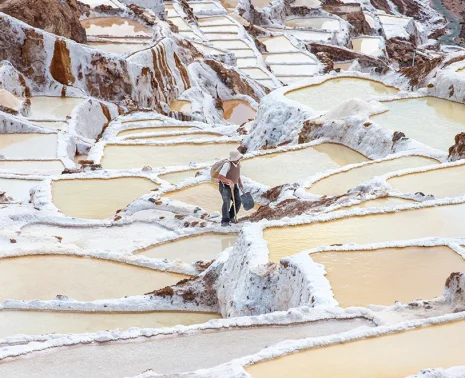
Salt Mines Peru: A Landscape Shaped by Patience and Continuity
Where Time Moves Grain by Grain Some landscapes announce their importance through scale. Others reveal it thr...
Read Post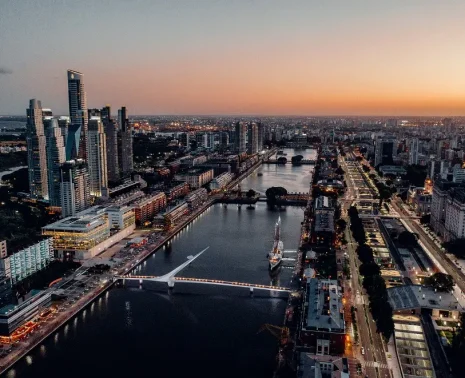
A Thoughtful Trip to Buenos Aires, Shaped by Culture, Rhythm, and Care
Buenos Aires does not try to impress. It reveals itself gradually. At first, the city feels familiar. Europ...
Read Post
Family Travel Colombia, Designed With Care and Perspective
Family travel changes as children grow. At a certain point, travel is no longer about keeping everyone occu...
Read Post
8 DAYS
Luxury Machu Picchu Tours: Unveiling Peru’s Timeless Wonders
Cusco, Lima, Machu Picchu, Sacred Valley

8 DAYS
Peru Family Vacation: Journey to Machu Picchu and Beyond
Cusco, Lima, Machu Picchu, Sacred Valley

11 DAYS
Amazon River Cruise: A Luxury Journey Through the Amazon
Lima, Cusco, Sacred Valley, Machu Picchu, Iquitos, Amazon River