August 10, 2026 | by: kt-admin


Bolivia feels different from many destinations almost immediately.
The landscapes appear larger, quieter, and less mediated by tourism infrastructure than travelers often expect. Altitude sharpens light and atmosphere. Distances feel emotionally expansive. Entire regions seem to exist outside ordinary rhythm altogether.
This is what makes Bolivia remote landscapes so powerful.
The country does not reveal itself through constant activity or highly structured travel. Bolivia changes perception through exposure, stillness, and environmental contrast. Travelers begin noticing silence differently. Scale becomes difficult to measure visually. Movement itself slows because the landscape demands a different relationship with time and attention.
The strongest journeys are not defined by how much travelers cover. They are shaped by how deeply travelers allow Bolivia’s remoteness to alter the rhythm of the experience itself.
Bolivia Is Defined by Environmental Contrast
One of the most remarkable aspects of Bolivia is how dramatically the country shifts between regions.
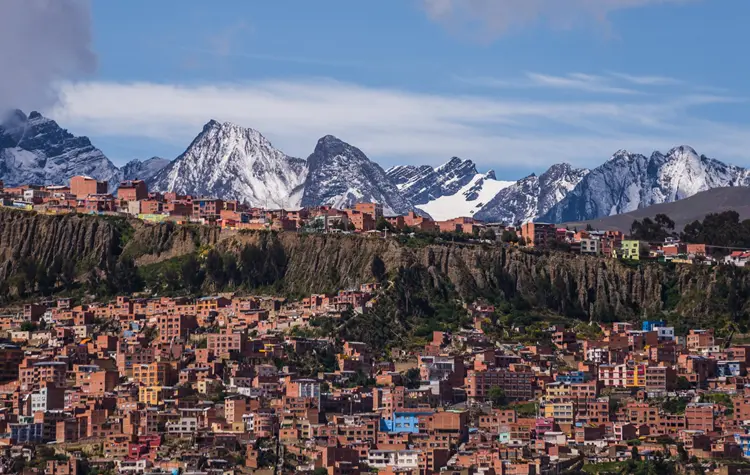
La Paz operates through altitude, urban intensity, and mountain geography that constantly surrounds the city. Lake Titicaca softens the pace entirely through stillness and open water. The Uyuni Salt Flats create visual emptiness so vast that travelers often struggle to orient themselves emotionally within the landscape itself. High-altitude deserts and remote Andean roads introduce another layer of environmental exposure altogether.
These contrasts feel unusually raw.
Bolivia remote landscapes are not heavily softened or interpreted for travelers. The environments remain emotionally intact in ways that can feel deeply immersive when approached thoughtfully.
This is why pacing matters so much here.
Travelers who move too aggressively through Bolivia often experience fatigue rather than immersion. The country responds far better to slower sequencing, longer transitions, and enough stillness for the landscapes to settle emotionally over time.
Uyuni and the Experience of Vastness
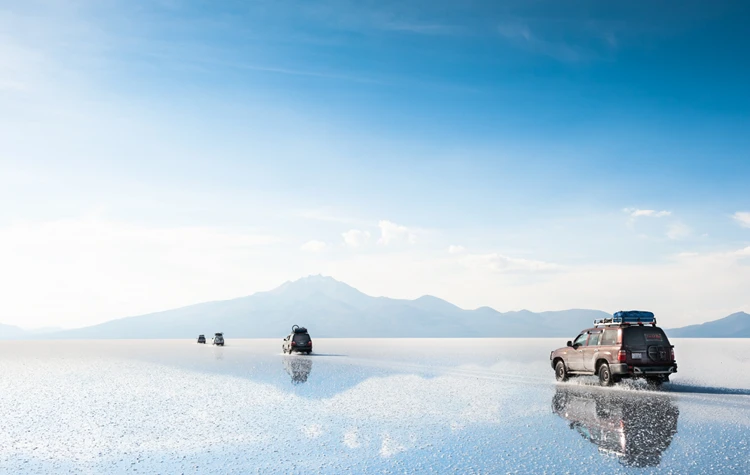
The Uyuni Salt Flats remain one of South America’s most visually extraordinary landscapes.
Yet what makes Uyuni memorable is not simply appearance. It is the emotional effect of scale and emptiness. The horizon dissolves almost completely. During the reflective season, sky and ground seem to merge together until orientation itself becomes uncertain.
Travelers often describe the experience as strangely quiet internally.
The landscape removes visual density and distraction so completely that attention sharpens naturally. Small details become more noticeable: changing light, cloud movement, distant sound, or the complete absence of movement altogether.
This is one reason Bolivia remote landscapes affect travelers so deeply.
The strongest Uyuni experiences are not rushed through as photographic checkpoints. They unfold gradually across changing environmental conditions, altitude shifts, remote lodges, and long stretches where travelers simply move through the landscape without urgency.
The emotional power emerges through stillness and repetition rather than spectacle alone.
Lake Titicaca and the Luxury of Silence
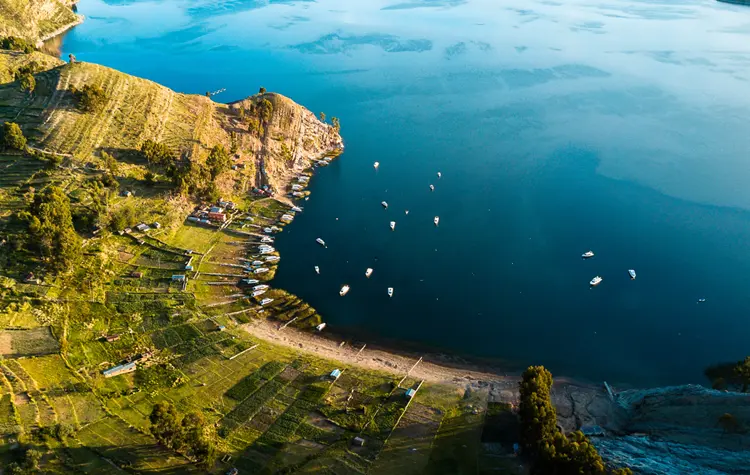
Lake Titicaca introduces another entirely different emotional atmosphere.
After La Paz or the exposure of the salt flats, the lake feels calmer and softer. Water slows perception naturally. Island communities preserve rhythms shaped more by geography and tradition than by tourism density or modern acceleration.
Travelers often notice how quickly movement changes here.
Days become quieter. Observation replaces constant activity. Even conversation tends to soften in environments where landscape and altitude already dominate perception so strongly.
This is what makes Bolivia particularly rewarding for travelers seeking immersion rather than stimulation.
The strongest journeys leave enough time around Lake Titicaca for travelers to experience not simply the scenery itself, but the stillness surrounding it.
La Paz and the Emotional Beginning of Bolivia
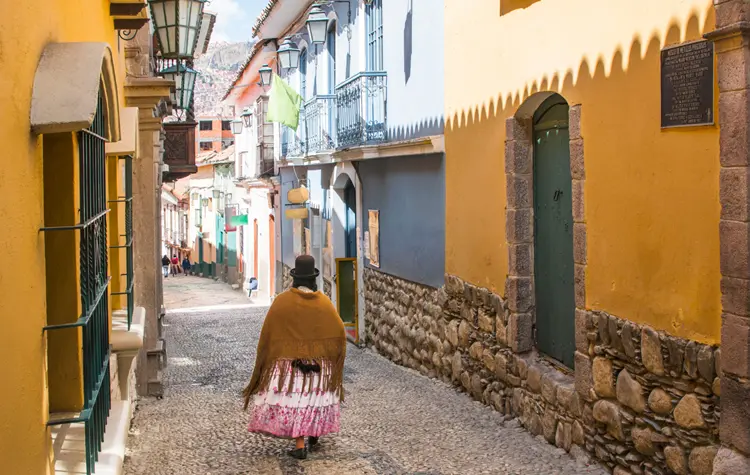
La Paz creates one of the most unusual introductions to South America.
The city sits dramatically within a high-altitude basin surrounded by mountains that remain constantly visible. Altitude shapes everything: movement, light, energy levels, and even the emotional atmosphere of the city itself.
Travelers often need time simply to adjust.
This adjustment matters because Bolivia works best when travelers move gradually into its environments rather than trying to experience the country aggressively from the beginning. La Paz introduces travelers to Bolivia’s intensity carefully: the altitude, Indigenous cultural presence, mountain geography, and layered urban rhythm all establish the emotional tone of the broader journey ahead.
The strongest Bolivia itineraries understand that acclimatization is not only physical. It is emotional as well.
Why Remote Landscapes Change Travel Rhythm
Remote landscapes alter how travelers experience time.
Without constant stimulation, visual density, or structured urban movement, perception begins slowing naturally. Travelers notice environmental shifts more carefully. Weather becomes emotionally present. Silence stops feeling empty and starts feeling immersive.
Bolivia remote landscapes create this effect continuously.
This is why luxury in Bolivia feels very different than in many destinations. The strongest experiences are not built around excess. They emerge through:
- environmental stillness
- thoughtful pacing
- remoteness
- seamless logistics across difficult terrain
- the ability to experience extraordinary landscapes calmly
Comfort matters enormously precisely because the environments themselves can feel so exposed and expansive.
The Importance of Thoughtful Sequencing
Bolivia requires careful journey design.
Altitude changes energy and pacing constantly. Remote travel days can feel emotionally demanding if transitions are too aggressive. The strongest itineraries balance exposure with recovery, environmental intensity with stillness, and movement with enough time to absorb the landscapes properly.
This is especially important because Bolivia’s environments feel emotionally powerful rather than simply scenic.
Travelers benefit enormously from journeys that:
- reduce unnecessary movement
- allow longer stays in remote regions
- soften altitude transitions
- balance the salt flats with quieter immersion around Lake Titicaca or La Paz
The strongest journeys feel composed rather than exhausting.
Local Expertise and the Invisible Structure of the Journey
Bolivia can appear logistically simple on paper, but the emotional quality of the experience depends heavily on sequencing, altitude management, pacing, and operational continuity.
From our base in South America, we regularly see how dramatically Bolivia changes when journeys are designed around how travelers actually experience the country physically and emotionally rather than simply around major highlights alone.
Sometimes the difference comes through slower acclimatization. Other times it involves adjusting environmental contrast more carefully or allowing travelers additional stillness within remote regions.
The strongest experiences feel calm despite the complexity surrounding them.
Sustainability and Respect for Fragile Landscapes
Bolivia’s remote environments also require thoughtful stewardship.
The salt flats, Andean ecosystems, high-altitude deserts, and island communities around Lake Titicaca remain environmentally and culturally sensitive. Slower pacing, smaller-scale experiences, stronger local relationships, and reduced unnecessary movement naturally create more meaningful and responsible travel experiences.
Travelers often connect more deeply to Bolivia when the journey emphasizes attentiveness rather than consumption.
The country rewards restraint beautifully.
FAQs
What are Bolivia remote landscapes?
Bolivia remote landscapes include regions such as the Uyuni Salt Flats, Lake Titicaca, high-altitude deserts, Andean mountain regions, and remote ecosystems shaped by altitude and environmental stillness.
Why is Bolivia known for remote travel experiences?
Bolivia offers vast open landscapes, limited tourism density, extraordinary altitude, and environmental exposure that create deeply immersive travel experiences.
How should Bolivia travel be paced?
The strongest journeys involve slower pacing, thoughtful altitude acclimatization, fewer transitions, and enough time for travelers to absorb the emotional rhythm of the landscapes.
Is Bolivia good for luxury and immersive travel?
Yes. Bolivia is exceptionally rewarding for travelers seeking refined experiences rooted in remoteness, environmental immersion, cultural depth, and thoughtful pacing.
Where Bolivia Begins to Feel Limitless
Bolivia remote landscapes often become memorable because the country gradually changes travelers’ relationship with silence, distance, and scale itself. Over time, the horizon feels less measurable, movement slows naturally, and travelers stop trying to interpret the landscape through familiar reference points. The salt flats dissolve boundaries between sky and earth, Lake Titicaca softens rhythm through stillness, and high-altitude environments reshape perception quietly but continuously. Bolivia reveals itself most fully when travelers allow the remoteness of the country to determine the pace of the journey rather than resisting it.
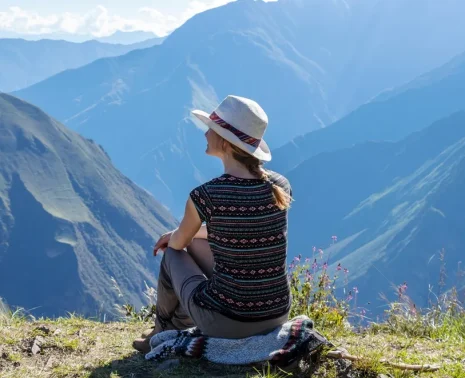
Bucket List Luxury Trips Peru and the Difference Between Seeing a Destination and Experiencing It Deeply
Peru appears on many travelers’ bucket lists long before they ever arrive there. For some, the image is i...
Read Post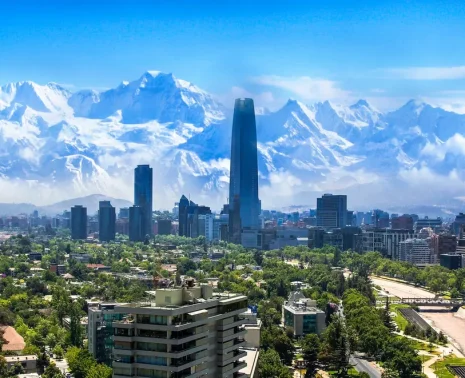
Chile Curated Journeys and the Art of Traveling Through Contrast Thoughtfully
Chile is a country shaped by distance and contrast. The Atacama Desert feels almost extraterrestrial in its...
Read Post
Peru Milestone Travel and Why Certain Journeys Deserve More Intention
Some journeys are planned around availability. Others are planned around significance. Peru milestone trave...
Read Post
8 DAYS
Luxury Machu Picchu Tours: Unveiling Peru’s Timeless Wonders
Cusco, Lima, Machu Picchu, Sacred Valley

8 DAYS
Peru Family Vacation: Journey to Machu Picchu and Beyond
Cusco, Lima, Machu Picchu, Sacred Valley

11 DAYS
Amazon River Cruise: A Luxury Journey Through the Amazon
Lima, Cusco, Sacred Valley, Machu Picchu, Iquitos, Amazon River