February 02, 2026 | by: Kuoda Authors


Knowledge That Refused to Be Written
In the Andes, information did not always rely on ink, parchment, or alphabetic order. It relied on hands, fiber, and memory.
The idea of a quipu knot alphabet challenges how many travelers understand communication and record keeping. Rather than letters arranged into words, the Inca world encoded meaning through knots tied with intention, precision, and social agreement. These objects were not symbolic curiosities. They were administrative tools, mnemonic devices, and carriers of authority.
For travelers drawn to intellectual depth and cultural fluency, quipus offer insight into a civilization that organized complexity without adopting writing as the West defines it.
What Is a Quipu?

A Quipu is a system of cords and knots used by the Inca Empire to record and transmit information. Typically made of cotton or camelid fiber, a quipu consists of a primary cord from which pendant cords hang, each containing knots placed at specific positions.
These knots conveyed numerical values, often related to census data, taxation, agricultural production, or labor obligations. Color, spacing, twist direction, and knot type all carried meaning.
What remains debated is whether quipus also encoded narrative or linguistic content. This is where the concept of a quipu knot alphabet enters the conversation.
The Question of an Alphabet
Unlike alphabetic systems, quipus did not map symbols to sounds. There is no direct evidence of a phonetic alphabet. Yet many scholars argue that quipus functioned as more than numerical ledgers.
Patterns in color sequencing, knot combinations, and cord hierarchy suggest structured meaning understood by trained specialists known as Quipucamayoc. These individuals were responsible for creating, reading, and interpreting quipus within a broader administrative and oral framework.
Rather than a written alphabet, quipus may have operated as a semantic system. One that relied on shared context, memory, and oral narration to complete the message. In this sense, the quipu knot alphabet is less about letters and more about relational meaning.
Memory, Authority, and Power

Quipus were instruments of governance. They allowed the Inca state to manage vast territories without paper archives. Information traveled with people, not documents. Accuracy depended on training, discipline, and accountability.
This system reinforced social hierarchy. Quipucamayocs held specialized knowledge that connected local communities to imperial administration. Their work linked labor, tribute, and ritual obligations to centralized authority in Cusco.
For modern travelers, this reveals an Andean worldview where knowledge is embodied and relational rather than abstracted. Meaning lives in practice.
Why Quipus Matter Today
The fascination with the quipu knot alphabet reflects a broader reassessment of non-Western knowledge systems. For centuries, quipus were dismissed as primitive or purely numerical. This dismissal mirrored colonial assumptions about literacy and civilization.
Today, renewed research treats quipus as sophisticated technologies adapted to Andean realities. They challenge the idea that writing must look a certain way to be valid. They invite reconsideration of how societies choose to store, transmit, and protect knowledge.
For culturally curious travelers, this reframing deepens understanding of Peru beyond architecture and archaeology.
Encountering Quipus in Peru
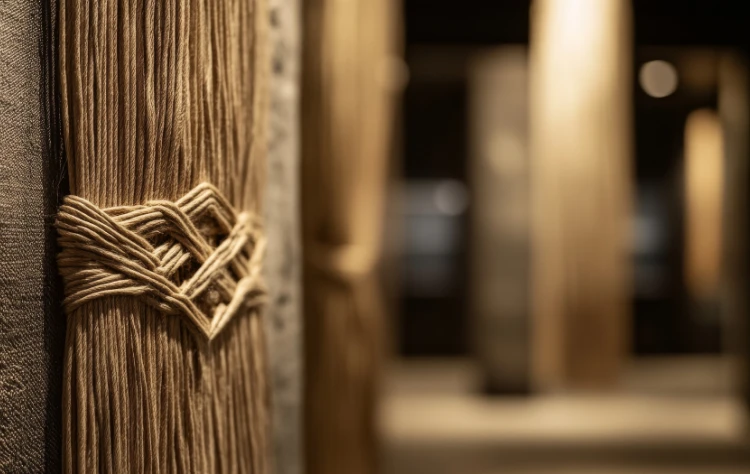
Quipus are preserved in museums and academic collections, but their meaning becomes clearer through context rather than display alone. Seeing a quipu without explanation offers little insight. Understanding emerges through guided interpretation.
Kuoda approaches Andean intellectual heritage with care. In Cusco and the Sacred Valley, travelers may engage with historians, anthropologists, or textile specialists who situate quipus within living traditions of Andean memory and craftsmanship.
This is not presented as spectacle. It is shared as conversation.
From Fiber to Thought
The materials of quipus matter. Cotton from the coast. Wool from the highlands. The twist direction of threads reflecting symbolic dualities central to Andean cosmology.
These details connect quipus to broader Andean textile traditions, where weaving functions as a form of thinking rather than decoration. Patterns are not ornamental. They are conceptual.
Seen this way, the quipu knot alphabet is inseparable from landscape, labor, and worldview. Knowledge is literally tied to place.
Kuoda’s Role in Contextual Understanding

Kuoda does not frame quipus as enigmas to be solved. They are introduced as systems to be understood on their own terms.
Private, well-paced itineraries allow time for reflection rather than accumulation. Conversations unfold organically. Travelers are invited to sit with uncertainty rather than resolve it prematurely.
This approach reflects Kuoda’s philosophy as a local experience curator. Seamless logistics support intellectual engagement without distraction. Recognition as a Tripadvisor Travelers’ Choice 2025 winner reflects this consistency across experiences.
Sustainability and Cultural Continuity
Cultural knowledge survives through relevance, not preservation alone. Engaging thoughtfully with Andean systems like quipus supports scholars, guides, and communities who continue to interpret and transmit this heritage.
Kuoda’s commitment to community engagement through the Kaypi Kunan Foundation reinforces long-term cultural continuity. Sustainability here is intellectual as well as environmental.
Frequently Asked Questions
What is the quipu knot alphabet?
The quipu knot alphabet refers to the idea that Inca quipus encoded structured meaning through knots, colors, and cord arrangements rather than letters or phonetic writing.
Did the Incas have a written language?
The Inca did not use alphabetic writing. Instead, they relied on quipus combined with oral tradition to manage information and memory.
Can quipus be read today?
Some numerical aspects are understood, while other elements remain under study. Interpretation depends heavily on context and expertise.
Can Kuoda include quipu-related learning in an itinerary?
Yes. Kuoda curates context-rich cultural experiences in Peru that may include guided exploration of Andean knowledge systems when aligned with traveler interests.
When Meaning Is Tied, Not Written
The quipu knot alphabet does not ask to be decoded quickly. It asks to be respected.
In a world accustomed to written certainty, quipus remind us that intelligence can be tactile, collective, and situational. They offer a different way of thinking about memory, authority, and communication.
Kuoda’s role is simply to create the conditions where such ideas can be encountered without haste. With time. With context. And with the understanding that some of the most enduring knowledge is not written down, but carefully tied and carried forward.
The Lost City Colombia and the Meaning of Reaching It
Some destinations are defined by what they are. Others by what it takes to reach them. The Lost City Col...
Read Post
Best Galápagos Cruises: Choosing the Right Way to Experience the Islands
The phrase “best Galápagos cruises” suggests comparison. Ships, cabins, amenities, itineraries. It invite...
Read Post
Designing an Ecuador Itinerary with Intention: How to Experience the Country Beyond the Obvious
An Ecuador itinerary is often approached as a checklist. A few days in Quito, a quick passage through the Ande...
Read Post
8 DAYS
Luxury Machu Picchu Tours: Unveiling Peru’s Timeless Wonders
Cusco, Lima, Machu Picchu, Sacred Valley

8 DAYS
Peru Family Vacation: Journey to Machu Picchu and Beyond
Cusco, Lima, Machu Picchu, Sacred Valley

11 DAYS
Amazon River Cruise: A Luxury Journey Through the Amazon
Lima, Cusco, Sacred Valley, Machu Picchu, Iquitos, Amazon River